investment
199 stories filed under investment on Beyond Market Intelligence. The newest of them: “How AI-native accounting helped Rillet raise $100 million in two days”, “Enhanced Games' $60 million loss shows steroids are no shortcut to success”, and “The financial data your startup needs before you pitch investors”. A single board meeting turned into a $100M raise for Rillet, and the company reached unicorn status in just 48 hours. The Enhanced Games promised a bold, steroid-fueled future for sports, but the market just delivered a $60 million reality check. Acme AI is the next-generation, AI-powered spreadsheet platform built to replace Excel and redefine how analysts, data scientists, and enterprise teams work… The list below is every investment story on Beyond Market Intelligence, newest first.

How AI-native accounting helped Rillet raise $100 million in two days
A single board meeting turned into a $100M raise for Rillet, and the company reached unicorn status in just 48 hours. CEO Nicolas Kopp shared growth numbers, and the response from investors like Iconiq and Sequoia was immediate. No aggressive pitch, no drawn-out process; the numbers did the work. It's a reminder that momentum in AI-native finance is becoming its own fundraising strategy. For more on how AI is reshaping infrastructure, our piece on Anthropic's cloud bet is worth a look.

Enhanced Games' $60 million loss shows steroids are no shortcut to success
The Enhanced Games promised a bold, steroid-fueled future for sports, but the market just delivered a $60 million reality check. That's a steep price for a vision that clearly isn't landing with the public or investors yet. We admire the audacity, but transformation requires more than defiance; it requires a solution people actually embrace. While we cover ambitious tech bets elsewhere, like Cloudflare's Blog finding performance gains with EmDash, this particular experiment shows that challenging convention without a viable path forward is a gamble.

The financial data your startup needs before you pitch investors
Raising a billion dollars sounds like the finish line, but Sasha Orloff knows it's really about the starting block. On this episode of Build Mode, he gets honest about what VCs actually want: founders who know their financials cold. Waiting until the bank account is nearly empty is a gamble that can cost you leverage, valuation, and the term sheet itself. Messy data and misunderstood metrics are the real dealbreakers. It's a grounded, practical conversation for anyone tired of the fundraising guesswork.

Why investors return to Disrupt year after year
For investors, the Expo Hall floor is where the real signal lives. Year after year, those who walk the aisles, meet founders, and trade notes with peers walk away with sharper instincts. Missing Disrupt means missing that edge. The agenda is packed, but the connections you make between sessions often carry the most weight. If you want to see where the market is heading, pair the mainstage insights with deeper dives like our recent look at Anthropic's cloud bet. Just be on the ground.

Global founders gain an edge by bridging home markets and Silicon Valley
Foreign founders carry a distinct edge: one foot in their home country, one in Silicon Valley. That dual perspective is an advantage a16z believes in deeply, and its Borderless Founder network exists to back that belief. The firm isn't asking immigrants to choose; it's empowering them to leverage both worlds. It's a confident stance that matches the ambition of the founders it supports. For a deeper look at how global capital is moving, our coverage of Nscale's $3.36B raise offers useful context.

Travis Kalanick rethinks venture capital after raising $1.7 billion
Travis Kalanick, fresh off raising $1.7 billion for his robotics company Atoms, has a blunt take: only 1% of venture capitalists are actually helpful. It's a provocative stance from someone who has navigated the funding gauntlet more than most. He's not dismissing the system, but questioning its value beyond the capital. That honesty is refreshing, even if it feels a bit selective. For founders weighing similar frustrations, our coverage of the founder-investor dynamic is worth exploring.

Rillet doubles revenue in three months, reaching unicorn status with Iconiq
When Rillet emerged from stealth just two years ago, the path to a $1B valuation seemed ambitious. Now, with a $100M Series C led by Iconiq, the AI-native accounting startup has doubled its ARR in a single quarter. That kind of momentum signals more than momentum; it points to genuine market demand for intelligent financial tools. We've been tracking how AI-native companies are reshaping industries, and Rillet's trajectory reinforces that trend.
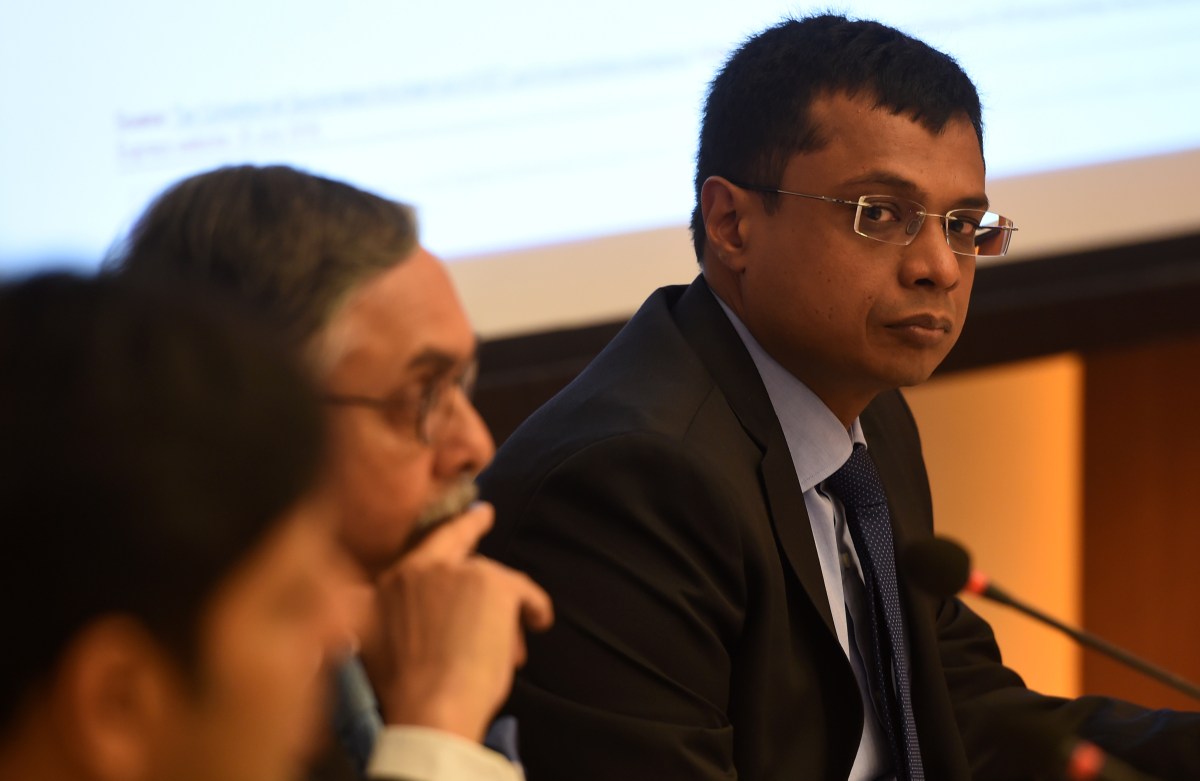
Navi secures $100M from Prosus as it prepares for public markets
Sachin Bansal's Navi has taken a decisive step toward its public debut, securing $100 million from Prosus in its first outside investment. It's a vote of confidence in a fintech built to simplify how Indians borrow and bank. The move signals maturity, not just ambition. As Navi eyes an IPO, this backing adds credibility to a journey that has often felt like a solo mission. For those tracking the startup's evolution, this is a moment worth watching closely.

Also secures $150M to expand from e-bikes to autonomous delivery
Rivian's spinout just closed another $150 million, this time led by Prysm Capital, and that's a clear signal. The company is moving beyond pedal-assist e-bikes and commercial cargo quads, aiming squarely at autonomous delivery vehicles. It's a bold next step, one that feels less like an experiment and more like a deliberate push into logistics. We've watched similar momentum in adjacent spaces, such as Nscale's recent infrastructure funding, and it's encouraging to see capital flow toward practical, scalable mobility.
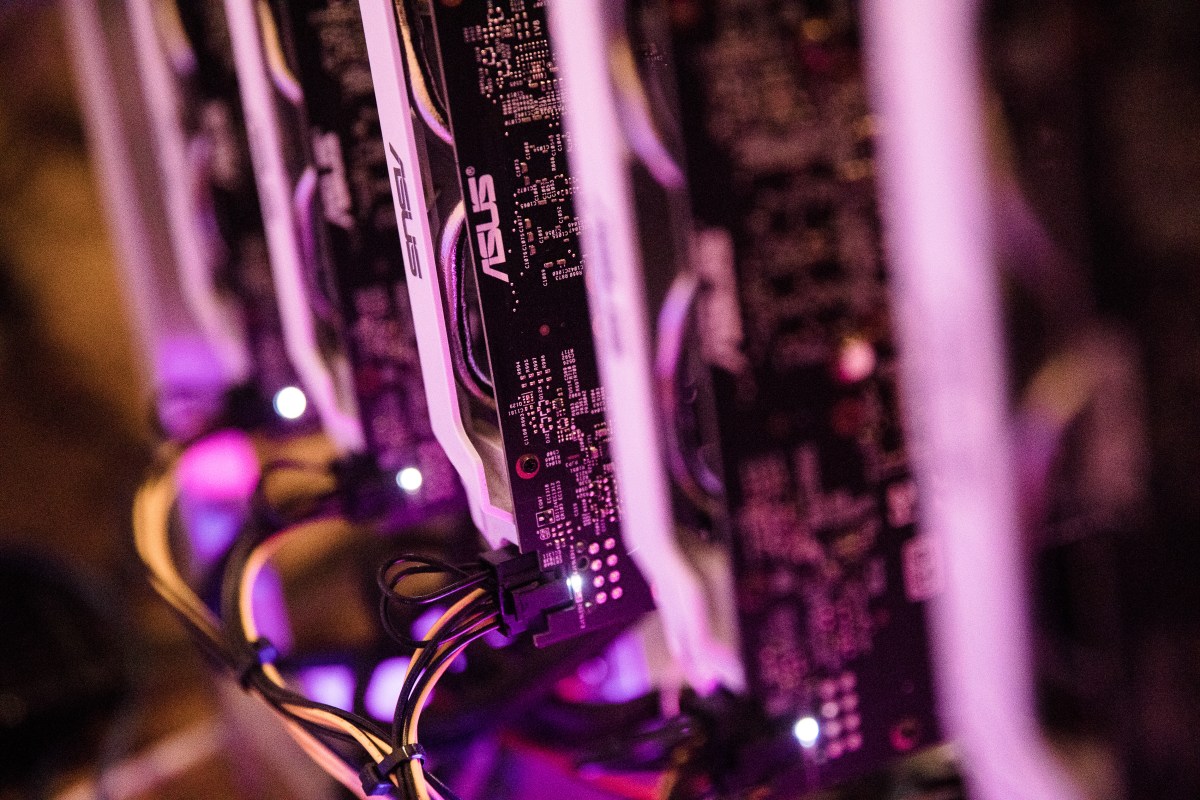
Compute is AI's biggest cost. Finally, a way to price it.
Hundreds of billions of dollars flow into data centers and GPUs each year, yet compute remains the industry's biggest cost without a clear pricing mechanism. Silicon Data is stepping in to fix that, giving Wall Street a way to value and hedge AI infrastructure. It's a necessary evolution for an industry spending at scale. For deeper context on how AI tools shape decision-making, our piece on verifying AI's understanding offers a timely parallel. The buildout is real; pricing it was long overdue.

Reach Capital's new $265M fund empowers founders to expand human potential
Reach Capital has closed an oversubscribed $265M Fund V, backing AI founders who are building tools to expand what people can actually do. That's a meaningful vote of confidence in a space where the real opportunity isn't just automation, but augmentation. We're encouraged by the firm's focus on human potential over raw capability. For a closer look at how AI's promise can sometimes complicate our relationship with technology, our piece "Talking to My AI Clone Taught Me to Question the Tech" offers a thoughtful counterpoint.

Higgsfield secures $400M to expand AI creation beyond static spreadsheets
Higgsfield just closed a $400M Series B that quadruples its valuation to $5.4B in only eight months. That kind of momentum says something about where AI-driven creation is heading. Founded by former Snap exec Alex Mashrabov, the platform lets users generate images and videos directly, removing the friction that keeps many from experimenting. It's a confident bet on accessible tools. If you're curious about how AI reshapes creative workflows, our guide to unlocking ChatGPT for work offers a practical starting point.

Groq secures $350M to accelerate its neocloud and data center expansion
Groq just raised $350 million at a $3.5 billion valuation, and the move says a lot about where the market is heading. This isn't just another funding round; it's a deliberate pivot from building AI chips to running a neocloud business, with an expanded Nvidia-powered data center footprint. We find that shift telling. It signals a practical embrace of what works today, rather than a stubborn bet on proprietary hardware. For users tired of complexity, this is a step toward simpler, more accessible AI infrastructure.

Terra Industries secures $52M to fortify defense infrastructure for the Global South
Terra Industries just closed a $52 million seed round, with an additional $18 million pushing it over the top, to build defense infrastructure tailored for the Global South. That is a serious vote of confidence in a region often underserved by legacy security tech. We see this as a pragmatic step toward empowering nations with tools designed for their realities, not imported templates.

Wispr secures $280M to expand beyond voice dictation into smarter workflows
Wispr's $280 million raise at a $2 billion valuation signals more than momentum; it's a clear bet on where AI-native productivity is headed. The company has now secured over $361 million in total funding, moving decisively beyond its dictation roots. We see this as a logical expansion, not a pivot. For teams tired of clunky workflows, this is the kind of investment that turns ambitious ideas into everyday tools. Curious how AI infrastructure plays into this trend? Check out our coverage of Nscale's $3.

Nvidia's investment secures its chips for a major OpenAI data center.
Nvidia's $1.5 billion bet on SoftBank's data center developer does more than move capital; it locks in a future where its chips anchor the infrastructure behind an OpenAI project. That's a decisive vote for AI's hardware backbone, and it signals confidence in demand that hasn't slowed. For anyone feeling buried by spreadsheet complexity, this kind of scale might feel distant. Yet it points to a simpler truth: the tools we use are evolving fast.

Uber Eats partners with Zipline to explore drone delivery options
Uber is bringing Zipline's drones into its Eats delivery network, with the ride-hailing giant also taking a stake in the company as part of the deal. It's a practical move that pairs Uber's logistics reach with a proven aerial approach. Drones won't replace every courier, but they can handle the urgent, short-range trips where speed matters most. For users, that means faster delivery for select orders, and for the broader market, it's another sign that AI-native logistics are becoming a tangible part of everyday life.

Why trust in AI depends on more than a bold vision
Mark Zuckerberg wants us to believe AI will transform our digital lives, but the latest episode of the Equity podcast suggests many of us aren't sold. His vision feels distant, a promise of a future that doesn't yet address the practical, human concerns we face today. We're not rejecting the technology; we're questioning the certainty. If you're curious about the personal side of this, our related piece on talking to an AI clone offers a thoughtful look at the mixed feelings this tech can stir.

Stripe's reported $7B OpenRouter deal signals a new era for AI payments.
OpenRouter's CEO calls it "Stripe for AI," and Stripe's reported $7B+ acquisition talks suggest that framing is more than ambition. It signals a clear bet on simplifying how AI model access gets paid for. For teams tired of stitching together gateways and billing, this could be the consolidation that makes the ecosystem feel less fragmented. It's a bold move, and one worth watching closely. If you're exploring how AI tools reshape workflows, our piece on questioning AI clones offers a useful counterpoint.

Explore the AI opportunity with discipline, not unchecked euphoria.
Joshua Kushner isn't buying the hype. In his first-ever investment letter, the Thrive founder acknowledges the AI opportunity is massive, but warns that letting excitement weaken investment discipline would be a grave error. That restraint is exactly what the moment calls for. The potential is real, but so is the noise. We've seen how easily enthusiasm outpaces judgment in emerging tech.

Investors seek accountability after $1.2 million mental health startup claim
Selena Gomez's mental health startup faces a serious legal reckoning, with investors alleging fraud after pouring nearly $1.2 million into a venture they say was never built or marketed. That's a steep price for trust, and it underscores how accountability must scale with ambition in the AI and wellness space. We're watching this closely, especially as our related piece on talking to an AI clone raises hard questions about transparency. For now, this suit is a reminder that promises need proof, not just potential.

Ford's Fathom EV prototype builds start in early 2027
Ford's commitment to its electric future is taking shape on the factory floor, with the $2 billion overhaul of its plant on track to support the Fathom EV truck. Prototype builds are expected to begin in the first quarter of 2027, a timeline that signals steady, deliberate progress rather than empty promises.

Cognition aims to raise again, targeting a $40 billion valuation
Cognition is moving fast, and the market is taking notice. Reports say the AI coding startup is already in talks to raise at a new $40 billion valuation, just months after closing a $1 billion round at $26 billion. That kind of jump signals serious momentum, but it also raises questions about sustainability. Investors are clearly betting big on AI-native workflows. For context, similar infrastructure bets are unfolding across the sector, like Anthropic's $11.6 billion commitment to Akamai's cloud.

Thrive Holdings secures $2 billion to bring AI deeper into enterprise workflows
Thrive Holdings has raised $2 billion at a $12 billion valuation, with backing from SoftBank, D1 Capital Partners, and Alitmeter Capital. That's a serious vote of confidence for bringing AI into the enterprise. We see the appeal: AI can make complex data work feel less like a burden and more like a conversation. It's a smart, grounded bet on productivity. For a deeper look at how AI shapes our expectations, our piece on verifying AI's understanding offers a practical starting point.