language
Beyond Market Intelligence keeps language in one place: 13 stories so far. The section currently leads with “Discover how AI is translating the hidden electrical language of plants”, “A 218-Million-Parameter Model Maps Brain Activity From Films You Watch”, and “Meta clarifies data practices as web scraping policy is updated”. Plants speak, and we're finally learning to listen. A 218-million-parameter model now predicts how your brain responds to films, TV, and songs, no scanner required. Acme AI is the next-generation, AI-powered spreadsheet platform built to replace Excel and redefine how analysts, data scientists, and enterprise teams work… The list below is every language story on Beyond Market Intelligence, newest first.

Discover how AI is translating the hidden electrical language of plants
Plants speak, and we're finally learning to listen. Electric Plant has built an AI-powered translator that deciphers the subtle electrical signals coursing through stems, turning a hidden biological language into something humans can understand. It's a genuinely progressive take on data, nature's own data. This isn't science fiction; it's an invitation to explore a new way of connecting with the living world. For more on how AI is reshaping interaction, see our coverage of "When Robotics Gets Its ChatGPT Moment, Assembly Becomes Play."
A 218-Million-Parameter Model Maps Brain Activity From Films You Watch
A 218-million-parameter model now predicts how your brain responds to films, TV, and songs, no scanner required. Trained on fMRI data from 2,000 people, Cajal-1 maps activity across 20,484 cortical points every 1.49 seconds. On Meta's held-out tests, it beat TRIBE v2 by 25% in accuracy. Named for Santiago Ramón y Cajal, who hand-drew neurons in the 1890s, this open model turns a century of neuroscience into practical prediction. Explore the demo on Hugging Face and see your own viewing experience differently.

Meta clarifies data practices as web scraping policy is updated
Meta says its updated terms don't signal a shift in how it scrapes the web, but the clarification raises more questions than it settles. When a company this size insists nothing has changed, it's worth asking why the policy needed updating in the first place. For more on Meta's approach to privacy and AI, see our coverage of how the company brings private AI processing to smart glasses.
Precision scoring models that skip text generation for faster decisions
Precision scoring models that skip text generation are making faster decisions possible, and the latest v2.1 updates to the 27B and 9B Jebadiah models show real progress. Treating a decision as a closed-set scoring problem eliminates parsing and sampling entirely. The results speak clearly: the 27B jumped to 57.03 on the Decision Index, with strong gains in knowledge, language, and retrieval. The tool-use regression on When2Call is worth investigating, though.
Excel in English or German: choose now to grow with your data
Choosing your spreadsheet language as a beginner is a smart investment in your future workflow. Since you already know the basics in German and recognize the switch would be easy, English is the stronger path. Most professional environments, documentation, and advanced AI tools operate in English. You'll grow faster when your data speaks the same language as the resources you'll rely on. Start now, while the learning curve is still low.
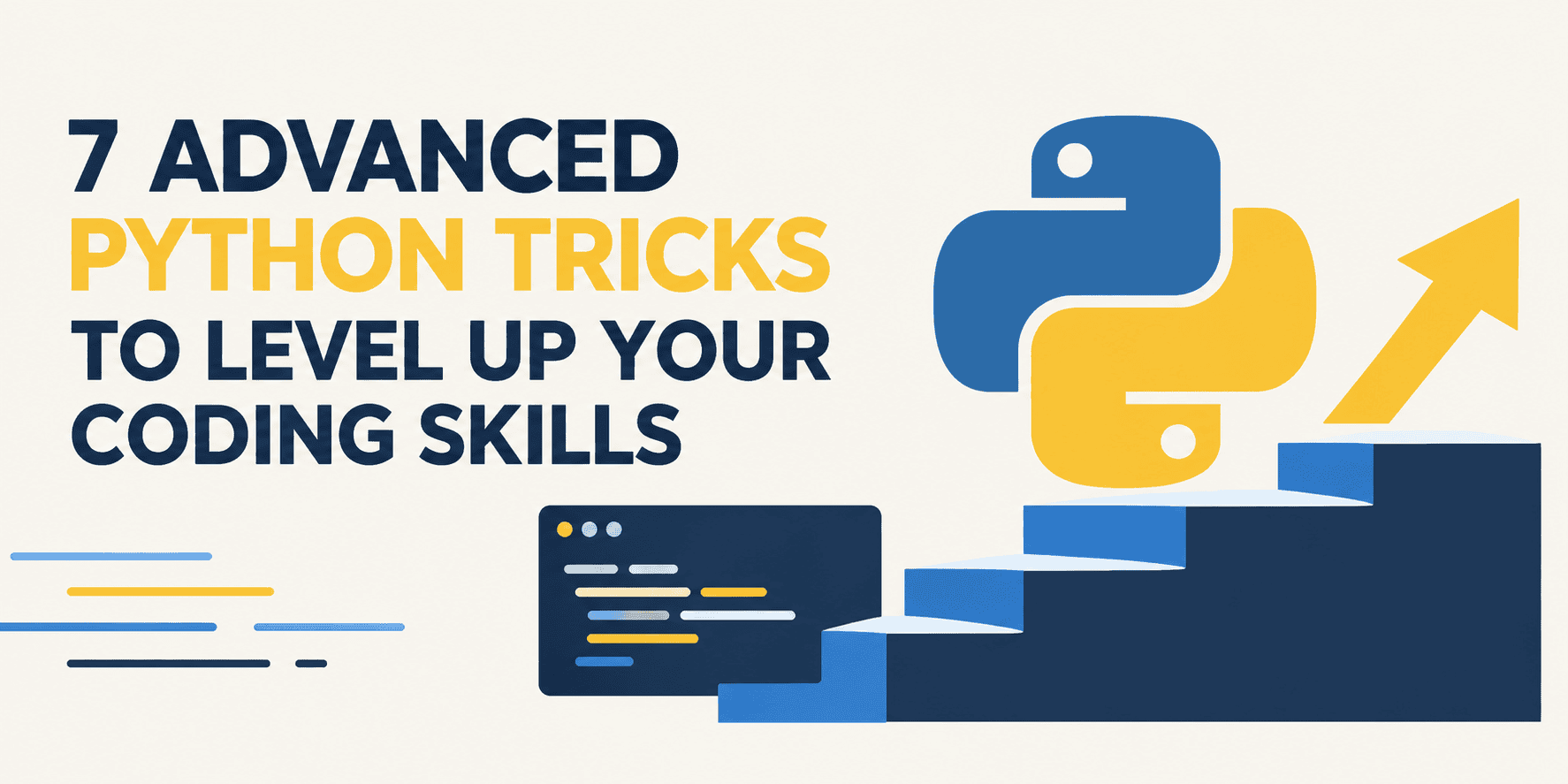
Unlock Python's Potential: Advanced Techniques for Smarter Coding
Python's depth isn't hidden in obscure syntax. It's in mastering what the language already offers, turning familiar code into sharper, more efficient tools. This guide walks through advanced techniques that feel less like learning and more like recognition, a nudge toward the smarter habits you've been circling. For those exploring how AI reshapes workflows, our visual guide to MCP pairs well here, showing how similar principles extend beyond code. The payoff isn't complexity; it's clarity. And that's a skill worth unlocking.

Explore AI-powered video editing: Transform your creative workflow
Video editing has always felt like a battle against the clock and the timeline. We're genuinely excited to see AI step into that space through a conversational chat interface. This approach doesn't just automate tasks; it hands the creative control back to you, making the entire process feel less like a technical hurdle and more like a natural extension of your vision. It's a practical step toward a more intuitive workflow.
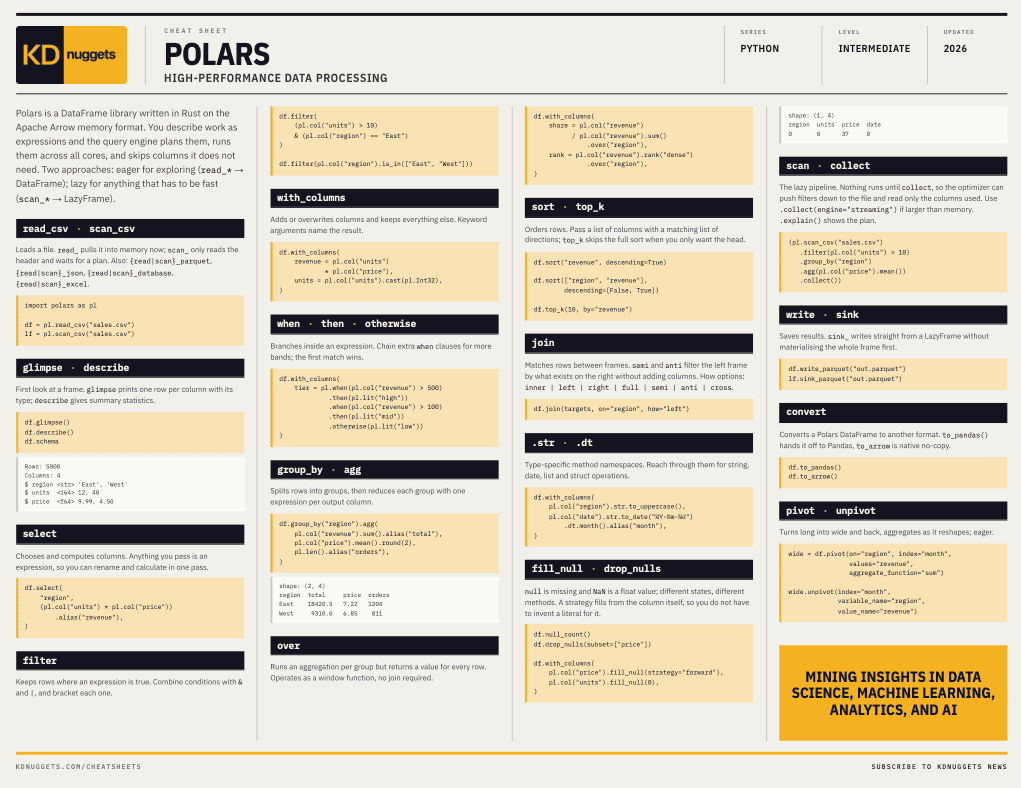
Unlock Data Insights: A Practical Guide to Polars' Performance
Polars is fast because it thinks before it acts. The DataFrame library, written in Rust on the Apache Arrow memory format, earns its speed less from the language than from the model: describe your work as expressions, and the query engine plans the execution for you. That distinction matters. It shifts the burden from your hardware to the engine's intelligence. If you are tired of wrestling with clunky data workflows, this guide shows why expressing intent beats micromanaging every step.

Explore how Workers now connect beyond HTTP with TCP and gRPC.
Eight years is a long time to wait for a protocol. Cloudflare Workers now accept inbound TCP connections through a new `connect(socket)` handler routed via Spectrum, ending that HTTP-only restriction. Containers gain full-duplex gRPC in any language, while Workers get unary and server-streaming through automatic gRPC-web translation. It's a private beta, but the direction is clear: your data workflows just got more flexible. For those exploring broader coding potential, our piece on unlocking Python's advanced techniques pairs nicely with this shift.

Transcribing Long Documents with a More Intelligent OCR Approach
A month after Baidu launched Unlimited-OCR, the model's focus on long-document transcription stands out. Unlike typical vision-language systems, it tackles the real bottleneck of expanding Key-Value caches, which slow down multi-page processing. That is a practical step forward. For readers eager to understand how AI handles context at scale, our guide to distributed training offers a useful parallel. Baidu's approach feels less like a flashy demo and more like a genuine fix for a persistent workflow problem.

Zero lets AI write the code, freeing you to focus on results
Vercel Labs just shipped Zero, an experimental systems language designed for AI agents rather than human developers. It's a bold bet on a future where the machine writes the code, and we're here for it. At version 0.3.4, Zero compiles to native binaries across major OSes, prioritizing speed and agent usability with structured errors and a tight toolchain contract. It's early days, but this feels like a genuine step toward agent-native development.
Small labs can still drive meaningful ML research with single GPU setups
A single RTX 3090 powered InfiniteDiffusion, an independent researcher's terrain-generation model, and that alone should reframe the conversation about compute access. It is easy to feel dwarfed by frontier labs, but this work proves meaningful ML contributions still emerge from constrained setups. Small teams can focus on clever problem framing rather than raw scale. For those questioning the path forward, this is a practical signal that single-GPU research remains viable.
Peering into a single neuron to demystify how AI models truly see
Mechanistic interpretability rarely gets this granular. One researcher dove into a single 1x1 convolution neuron inside InceptionV1 and found something worth pausing on. By taking the Hadamard product of the receptive field and the neuron's weights, he could cluster exactly what that neuron detects. The clean clusters matched expectations: cars, cats, dogs. But the low-valued ones revealed the real story. Letters and faces triggered the neuron too, with dependent neurons firing in balanced positive and negative weights to keep the sum low. That's not noise.