library
10 stories filed under library on Beyond Market Intelligence. The newest of them: “Synthetic data opens a new path to zero-shot time series forecasting”, “Zod Compiles Schemas in Process, Slashing Memory Use by 9x”, and “Architecting Trust: A Blueprint for Enterprise mDL Decisions”. Synthetic data is quietly solving one of time series forecasting's biggest hurdles: getting enough diverse training examples. Zod's latest releases, versions 4.5 and 4.6, bring a practical leap forward for TypeScript developers. Acme AI is the next-generation, AI-powered spreadsheet platform built to replace Excel and redefine how analysts, data scientists, and enterprise teams work… The list below is every library story on Beyond Market Intelligence, newest first.

Synthetic data opens a new path to zero-shot time series forecasting
Synthetic data is quietly solving one of time series forecasting's biggest hurdles: getting enough diverse training examples. This NeurIPS 2026 paper builds a library of synthetic generators and augmentations to train a linear RNN foundation model, proving that carefully constructed fake data can unlock zero-shot performance on real tasks. The approach already powers Toto-2 and TS-ICL, which gives it practical weight. For anyone wrestling with sparse or messy temporal data, this is a path worth exploring.

Zod Compiles Schemas in Process, Slashing Memory Use by 9x
Zod's latest releases, versions 4.5 and 4.6, bring a practical leap forward for TypeScript developers. By compiling schemas during processing, the library now slashes memory use by 9x while accelerating data parsing. This isn't abstract optimization, it directly unburdens validation workflows for the millions who rely on Zod weekly. For teams exploring smarter, more efficient tooling, this update pairs naturally with our coverage of AWS's new open-source projects for building controlled AI agents.

Architecting Trust: A Blueprint for Enterprise mDL Decisions
The wrong mDL provider can lock an enterprise into brittle trust assumptions. Praveen Kumar Gopalakrishnan's framework cuts through that risk. It shows which cryptographic properties to verify, which trust boundaries must stay visible, and how requirements shift across real-world use cases. This is the blueprint for asking hard architectural questions before committing. For teams building smarter AI agents, our coverage of AWS's new open-source tools offers a complementary look at control and abstraction.

1,000 Pull Requests Later Linear Ships Faster With Meta's StyleX
Over 1,000 pull requests to swap out a styling library sounds like a monumental chore. For Linear, it was a strategic win. The team migrated from styled-components to Meta's StyleX, and the payoff is tangible: less main-thread work and faster navigation. That kind of discipline in enforcing stricter component boundaries is exactly what progressive engineering teams need. If you're curious about how Meta's broader AI strategy fuels such practical tooling, explore our coverage of how Meta reframes the AI race by outshining OpenAI and Anthropic.
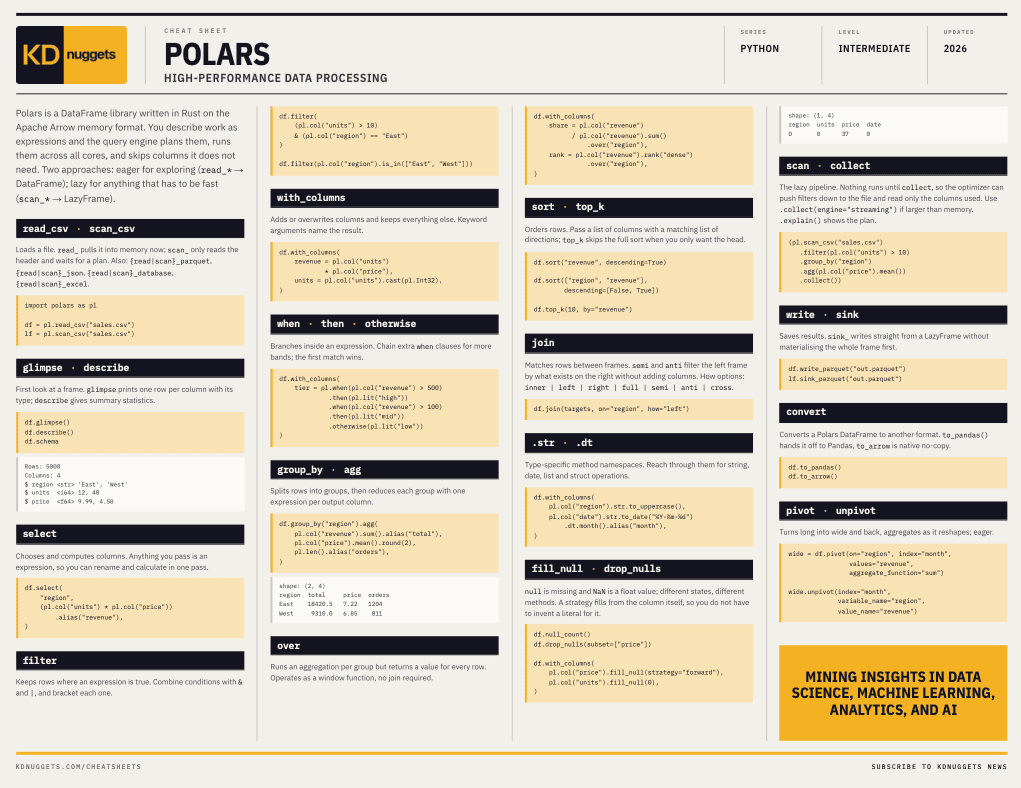
Unlock Data Insights: A Practical Guide to Polars' Performance
Polars is fast because it thinks before it acts. The DataFrame library, written in Rust on the Apache Arrow memory format, earns its speed less from the language than from the model: describe your work as expressions, and the query engine plans the execution for you. That distinction matters. It shifts the burden from your hardware to the engine's intelligence. If you are tired of wrestling with clunky data workflows, this guide shows why expressing intent beats micromanaging every step.

Evolve Your Web Interactions: htmx 4 Streamlines Data and DOM Updates
htmx 4 trades the aging XMLHttpRequest for the fetch() API, and that single move makes streaming data far more fluid. Built-in morphing swaps keep your DOM state intact, while the new hx-partial tag cleans up updates without extra scripting. We appreciate that attribute inheritance is now explicit and event names follow a standard. It is a focused, practical upgrade for those who want less JavaScript, not more. If you are navigating shifting tech expectations, our piece on AI/ML job requirements offers a useful parallel.
Explore how TanStack Charts lets you compose visualizations, not just pick chart types.
TanStack Charts enters the alpha stage with a clear promise: stop forcing data into fixed chart types and start composing the visuals your project actually needs. This framework-agnostic library for TypeScript, now pulling around 160,000 weekly downloads, speaks to a developer base eager for flexibility. It is not yet production-stable, so treat it as a tool for exploration rather than a drop-in dependency.

Jotai 3.0 Streamlines State Management with a Leaner, Modern Core
Jotai 3.0 arrives as a leaner, ESM-only package, and that's a move we respect. By dropping legacy builds and deprecated APIs, the team signals a clear commitment to modern React workflows without forcing users into a painful migration. The backward compatibility keeps the transition practical, while the deferred feature work shows patience over hype. It's a focused release that prioritizes stability. For those tracking how teams modernize infrastructure, Cloudflare's EmDash migration offers a parallel story worth exploring.

jQuery's Legacy Shows How Accessible Tools Empower Web Innovation
When jQuery arrived in 2006, it handed developers a bridge across the browser wars. John Resig's library made HTML manipulation, events, and Ajax approachable when the web felt fragmented. It didn't just solve problems; it invited a generation to build without fear. Its decline alongside modern frameworks isn't a failure, but a legacy. Most of the web still runs on its shoulders. That staying power matters. For more on how legacy tools shape today's skill demands, explore our related piece on navigating AI/ML job requirements.

React Compiler Moves to Rust for Faster Builds and Smoother Upgrades
Meta has moved the React Compiler into its main repository as a Rust port, and the payoff is hard to ignore: up to 50% faster compilation without touching the public API. That's a practical win for developers who want speed without relearning their tooling. The memoization happens automatically, which is the kind of quiet efficiency that adds up. It's a smart, grounded step toward tighter Rust-based integration.