lightweight
Beyond Market Intelligence keeps lightweight in one place: 8 stories so far. The section currently leads with “Restate secures $20M to power the next era of AI-driven infrastructure”, “Explore AI-Powered Glasses: Lightweight Design, Extended Battery Life”, and “Explore Meta’s New VR Glasses: Immersive Entertainment, Lighter Design”. Restate just secured $20 million to build the kind of infrastructure that makes AI workflows actually reliable. Meta's next step in wearable tech is refreshingly practical. Acme AI is the next-generation, AI-powered spreadsheet platform built to replace Excel and redefine how analysts, data scientists, and enterprise teams work… The list below is every lightweight story on Beyond Market Intelligence, newest first.

Restate secures $20M to power the next era of AI-driven infrastructure
Restate just secured $20 million to build the kind of infrastructure that makes AI workflows actually reliable. Instead of layering its durable execution engine on top of an off-the-shelf database, the company built its own storage, replication, and redundancy layers from scratch. That architectural choice makes Restate exceptionally fast and lightweight, a pragmatic bet on performance over shortcuts. It's the sort of foundational thinking that deserves attention.

Explore AI-Powered Glasses: Lightweight Design, Extended Battery Life
Meta's next step in wearable tech is refreshingly practical. The company says its camera-free glasses will shed significant weight while stretching battery life to a full 12 hours, a clear nod to users who want all-day wear without the bulk. That focus on endurance and comfort suggests Meta is listening to real friction points, not just chasing specs. It's a sensible evolution, and for anyone tracking this space, our related piece on Meta's broader smart glasses vision pairs well with this update.

Explore Meta’s New VR Glasses: Immersive Entertainment, Lighter Design
Meta is returning to VR glasses with a lighter build and a sharper focus on entertainment, and that's a combination worth your attention. The reduced weight matters because comfort often determines whether you actually keep a headset on for that next episode or game. We see this as a practical step forward, not just a spec bump. If you're curious about how Meta's broader hardware strategy fits together, our piece on Meta's Smart Glasses Expand Vision for Connected Experiences offers useful context.

Give your AI agents context with structure, not just more strings
Flattening context into a single string is a recipe for confusion. When instructions, memory, and tool outputs lose their boundaries, the model has to guess what matters. That is why I appreciate this practical approach to typed context. The author built a zero-dependency Python runtime that keeps those semantic edges intact and rejects invalid transformations before they reach the model. It is a focused solution to a real problem. For more on how structured thinking applies elsewhere, *Exploring Paragraph Structure* offers a useful parallel.
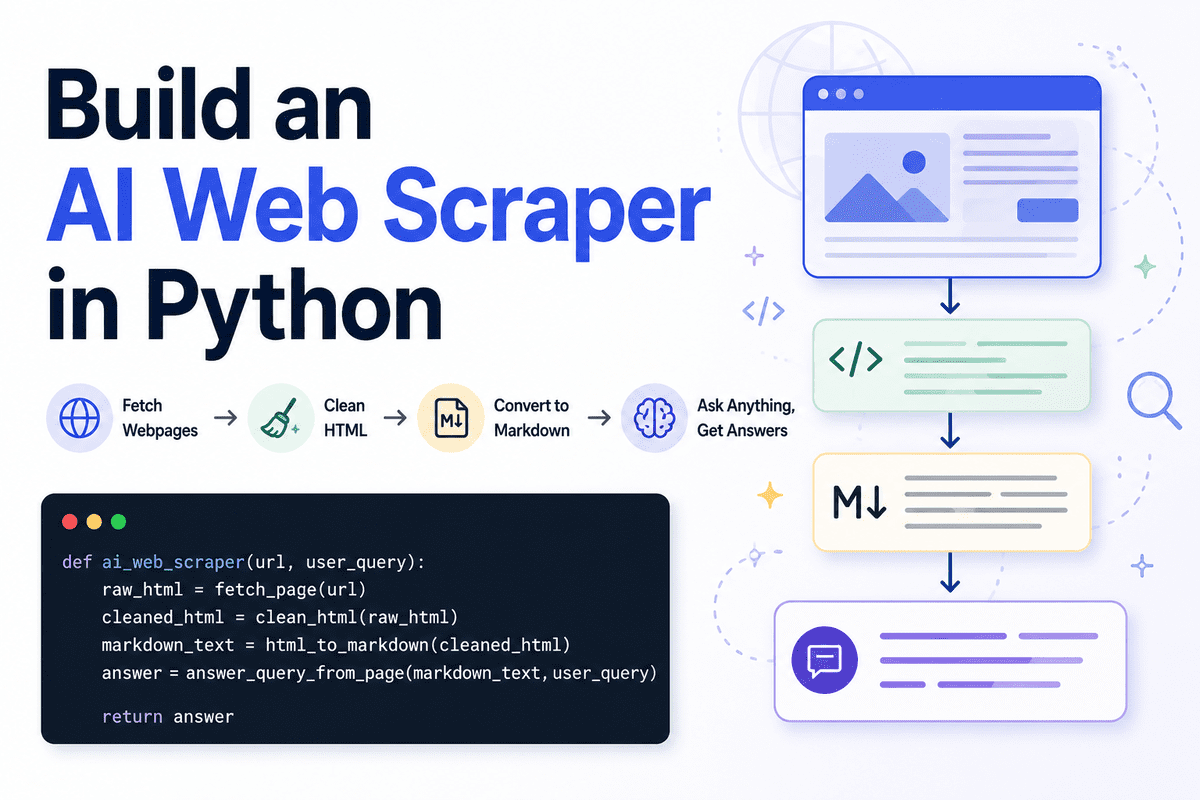
Turn Web Pages into Smart Q&A Engines with AI
Most tutorials make web scraping sound harder than it needs to be. This one strips away the noise: clean the HTML, convert it to Markdown, and let an LLM answer focused questions. The payoff is real, especially when you want answers without burning through tokens on messy page structures. It's a practical, no-nonsense approach that respects your time and your budget. If you're tired of wrestling with raw scraped data, this method feels like a quiet win.

Redefining Memory Safety Without the Code Rewrite
Memory-safety issues have haunted C and C++ for decades, but CHERI offers a different path forward. David Chisnall's presentation focuses on how this hardware architecture redefines pointer safety, tackling spatial and temporal flaws while scaling down to microcontrollers through CHERIoT. What stands out is the practical angle: replacing heavyweight OS-level RPC with lightweight, auditable compartmentalization. This isn't a call for rewrites; it's an accessible upgrade path.

Explore a lighter, pricier Kindle Scribe that's fun, not essential.
The Kindle Scribe Colorsoft is undeniably fun. It's light, it's pretty, and the color display adds a fresh layer of enjoyment to note-taking and reading. However, that enjoyment comes with a hefty price tag and a size that isn't for everyone. For the everyday person, it's a luxury, not a necessity. It's a delightful gadget, but it won't replace your daily driver. If you're curious about other premium gadgets, our piece on Meta's Smart Glasses offers a different take on connected experiences.

Smarter Traffic Management and Greater Efficiency with Linkerd 2.20
Linkerd 2.20 lands with sharper traffic management and meaningful efficiency gains, reinforcing why the CNCF-graduated service mesh remains a compelling lightweight choice for Kubernetes networking. The updates feel purposeful, targeting performance and observability without adding unnecessary complexity. For teams tired of wrestling with heavier meshes, this release invites a simpler path forward. If adaptive systems intrigue you, Mallika Rao's insights on real-world recommendations pair well with this momentum. Explore Linkerd's latest strides, and see how smarter routing can lighten your operational load.