long-term memory
Beyond Market Intelligence keeps long-term memory in one place: 3 stories so far. The section currently leads with “Give your AI agent lasting memory across conversations and context”, “Master Context, Not Prompts, to Build Production-Grade AI Systems”, and “How AI Memory Can Learn What Truly Matters to You”. Memory is the missing piece for agents that feel truly intelligent. A well-crafted prompt is only the beginning. Acme AI is the next-generation, AI-powered spreadsheet platform built to replace Excel and redefine how analysts, data scientists, and enterprise teams work… The list below is every long-term memory story on Beyond Market Intelligence, newest first.
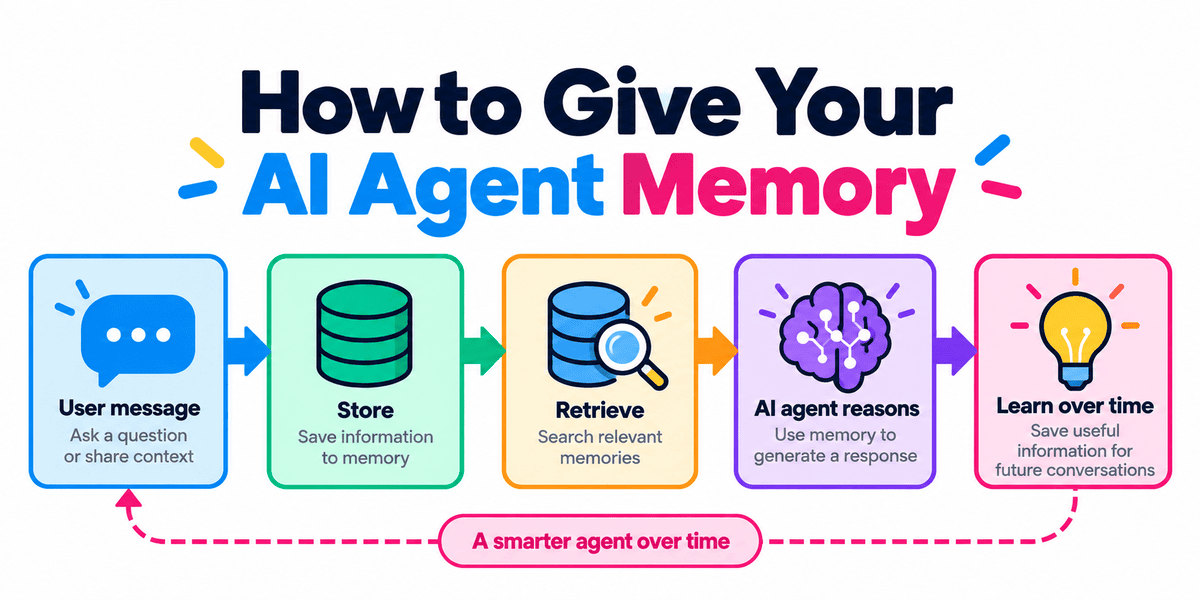
Give your AI agent lasting memory across conversations and context
Memory is the missing piece for agents that feel truly intelligent. Without it, every conversation starts from scratch. The OpenAI Agents SDK, combined with Mem0 and MCP, now solves that. You can give your AI agent lasting recall of preferences, context, and past decisions across sessions. It is a practical leap forward. For deeper guidance on building persistent memory, explore our related piece on using a single JSON file to give your agent long-term recall.

Master Context, Not Prompts, to Build Production-Grade AI Systems
A well-crafted prompt is only the beginning. Ricardo Ferreira's session moves past that foundation to tackle the architectural realities of production AI. He focuses on practical strategies: using Redis to manage memory, summarization to handle token limits, and reranking to fight context rot. This is about controlling costs and latency without sacrificing performance. For a deeper look at how LLMs navigate structure, our related article on paragraph structure is worth exploring. This talk is a grounded, useful guide for building systems that actually hold up.

How AI Memory Can Learn What Truly Matters to You
Most AI memory systems assume recency equals relevance. That assumption fails when what matters most is what you actually use. A usage-reinforced decay engine built on the Ebbinghaus forgetting curve walks through a smarter approach. It's a practical rethinking of how LLMs should prioritize memory, one that prioritizes salience over novelty. For those already exploring how AI structures knowledge, it pairs naturally with our guide on distributed training. This is a thoughtful, human-centered fix for a real limitation.