loop
Beyond Market Intelligence keeps loop in one place: 6 stories so far. The section currently leads with “A 2016 Patent Reveals the Agentic Loop Behind Analytics”, “Explore the Future: When AI Designs Its Own Hardware”, and “Anthropic’s Biology Lab: Human Oversight Drives Early Discoveries”. In 2016, I filed a patent on real-time concert feedback. When a chip learns to design itself, the role of human engineers shifts from architect to partner. Acme AI is the next-generation, AI-powered spreadsheet platform built to replace Excel and redefine how analysts, data scientists, and enterprise teams work… The list below is every loop story on Beyond Market Intelligence, newest first.
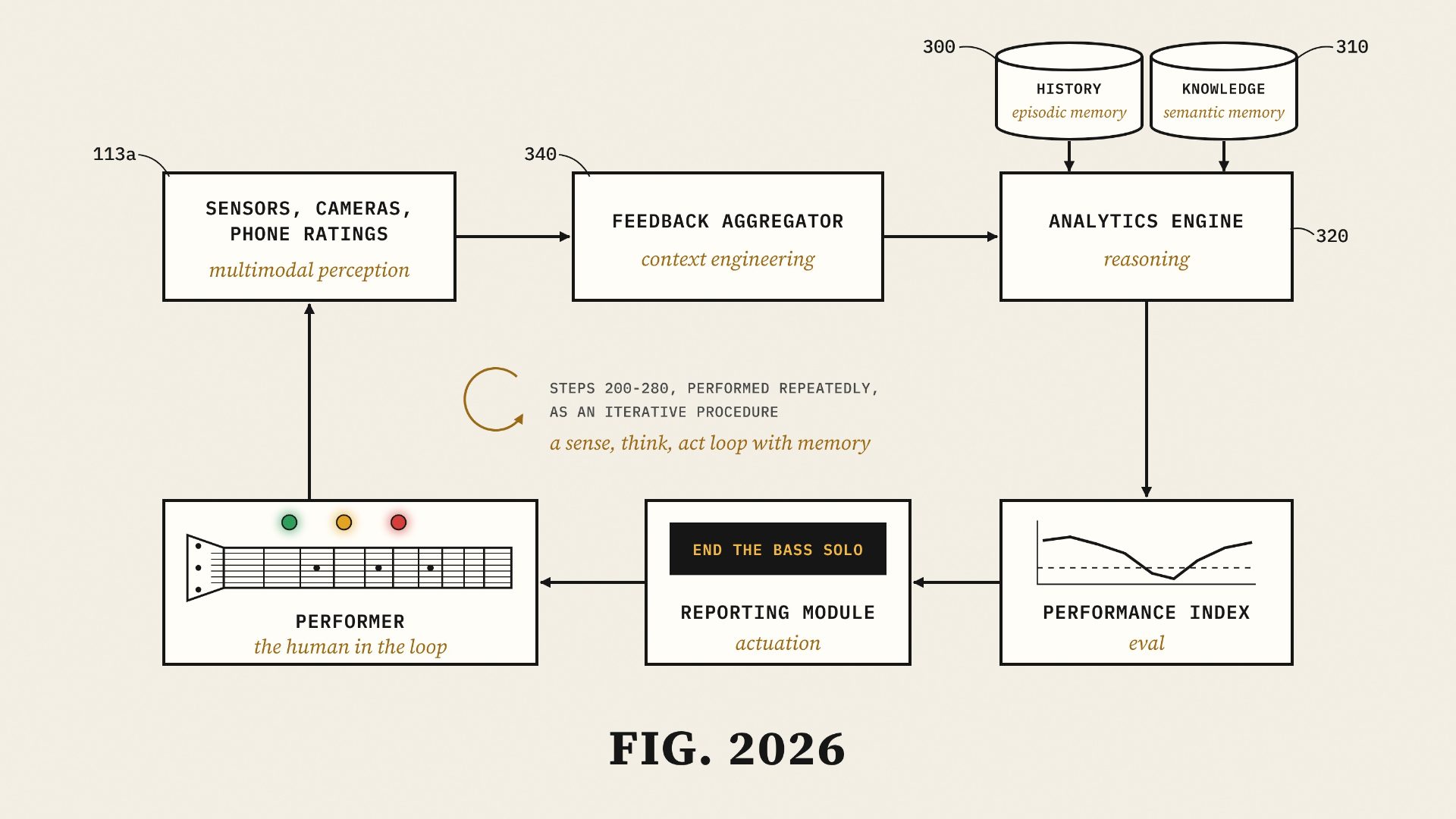
A 2016 Patent Reveals the Agentic Loop Behind Analytics
In 2016, I filed a patent on real-time concert feedback. Re-reading it now, the frame was wrong. We called it analytics. What we actually specified was an agentic loop: multimodal perception, memory-grounded inference, and a human in the decision path. That architecture was right. A decade of hindsight shows what agent builders still miss. For deeper context on how AI models handle perception differently, see our coverage of the vision AI benchmark where GPT-4o invented answers and Claude stuck with B.

Explore the Future: When AI Designs Its Own Hardware
When a chip learns to design itself, the role of human engineers shifts from architect to partner. At TechCrunch Disrupt 2026, Ricursive Intelligence co-founders Anna Goldie and Azalia Mirhoseani take the Disrupt Stage to explore closing the loop between AI and hardware development. It's a conversation about trust, iteration, and machines that build better versions of the tools we use. For deeper context on how AI thinks through structured problems, our piece "Exploring Paragraph Structure" pairs well here.

Anthropic’s Biology Lab: Human Oversight Drives Early Discoveries
Anthropic's biology lab is making early discoveries, but the real headline is quieter: Claude isn't running free. Humans remain firmly in the loop, and that restraint is exactly what makes this work worth watching. It's a thoughtful counter to the usual rush toward full autonomy. We appreciate the discipline here; it signals maturity over hype. If you're curious how AI handles oversight in other high-stakes settings, our piece on real-world computer vision deployments offers a useful parallel. For now, this measured approach feels right.

Designing the dispatcher that makes agentic RAG workflows smarter
The dispatcher in an agentic RAG system isn't just a router; it's the judgment call that decides when to loop back for another retrieval and when to trust what's already in context. This piece from our series on enterprise document intelligence finally puts the patterns together, and it's a refreshingly clear look at why that decision is the real engine of reliability. If you're still wrestling with when your workflow should stop, this is the guide you've been waiting for.

Three Layers That Define Every RAG System You Build
Every RAG system stands on three engineering layers, each stacked on a single LLM call: the prompt that makes the call, the context that fills the model's window, and the loop that decides when the next call fires and when it stops. Knowing which layer you are on is half the battle in building and debugging. This breakdown keeps things practical and grounded. For deeper exploration of where AI understanding gets murky, our piece on verifying your AI's understanding offers a timely companion.

Before retrieval begins, a small loop refines your question
The small loop runs before retrieval, and that sequencing is the insight. Read the doc, ask what is missing, re-parse. It is a tight, deliberate cycle that treats question parsing as its own engineering problem, not a footnote to context building. We appreciate the restraint here. This is prompt engineering, then context engineering, then loop engineering, each step earning its place. For readers tracking how LLMs navigate structure, our related piece on paragraph structure in token space pairs well with this disciplined approach.