marketing
Beyond Market Intelligence keeps marketing in one place: 14 stories so far. The section currently leads with “Navigating Ethics in AI When Your Internship Conflicts with Your Values”, “Is Reinforcement Learning Really Needed for Jev's Spreadsheet AI?”, and “Salesforce Koa brings focused AI reasoning to sales and support work”. A PhD student in machine learning faces a dilemma that more researchers should talk about openly: an internship offer where the research is compelling, but the company's marketing preys on user insecurities and the… Acme AI is the next-generation, AI-powered spreadsheet platform built to replace Excel and redefine how analysts, data scientists, and enterprise teams work… The list below is every marketing story on Beyond Market Intelligence, newest first.
Navigating Ethics in AI When Your Internship Conflicts with Your Values
A PhD student in machine learning faces a dilemma that more researchers should talk about openly: an internship offer where the research is compelling, but the company's marketing preys on user insecurities and the product itself feels questionable. This isn't just about a summer job. It's about whether exciting work and good supervision can outweigh working for a team whose core values clash with your own.
Is Reinforcement Learning Really Needed for Jev's Spreadsheet AI?
The question cuts to the heart of Jev's design. If the model only predicts Choice, Score, or Noul, those outputs are already differentiable through cross-entropy or MSE. Adding reinforcement learning feels like extra machinery unless there's a hidden reward signal we're not seeing. The environment would need to be defined, and that's unclear. It's fair to ask if this is substance or just a buzzword. We're not dismissing the approach, but the burden of proof is on the implementation.

Salesforce Koa brings focused AI reasoning to sales and support work
Salesforce just turned the enterprise AI conversation on its head. Koa, built on Nvidia's open-weight Nemotron model, is trained specifically for sales, marketing, and customer support. That focus is what makes it dangerous. General-purpose reasoning models chase breadth; Koa chases outcomes. It doesn't just answer questions, it acts on the workflows teams already live in. For AI labs betting on abstract intelligence, this is a wake-up call. Practical, task-driven reasoning wins. Curious how such systems are trained? Our guide to distributed algorithms covers the groundwork.

Secure your exhibit table before TechCrunch Disrupt sells out
The exhibit table deadline for TechCrunch Disrupt 2026 is fast approaching, with just one week left to secure your spot before the September 18 cutoff. Tables are limited, and demand is strong, so waiting carries real risk. This is where founders and investors converge, and the energy is tangible. If you are weighing the value of attending, consider the conversations already sparking, from Wahlberg and Lee on entrepreneurship to the infrastructure bets shaping AI.

InDrive expands beyond rides to capture consumer attention at scale
InDrive's ad business is scaling fast, and that's worth watching. Since its July 2025 pilot, the ride-hailing company has served over 2 billion impressions and now attracts more than 2,000 paying advertisers monthly. It's a clear sign that inDrive is moving beyond transportation to capture more consumer spending. For context on how platforms expand their infrastructure, our piece on Cloudflare's Blog finding performance gains with EmDash offers a useful parallel.

Perplexity's India revenue climbs 60% as free AI offer reshapes adoption
Perplexity's free AI offer brought in millions of new users across India, yet the real story is what happened next. Even after the Airtel promotion ended for new signups, Perplexity's India revenue climbed about 60%. Downloads fell, but engagement held. That points to lasting value, not just a spike. It's a useful reminder that adoption means little without retention.

Investors seek accountability after $1.2 million mental health startup claim
Selena Gomez's mental health startup faces a serious legal reckoning, with investors alleging fraud after pouring nearly $1.2 million into a venture they say was never built or marketed. That's a steep price for trust, and it underscores how accountability must scale with ambition in the AI and wellness space. We're watching this closely, especially as our related piece on talking to an AI clone raises hard questions about transparency. For now, this suit is a reminder that promises need proof, not just potential.

New Reports Question Phia's Business Practices and Founders' Awareness
Phoebe Gates and Sophia Kianni reportedly sat on knowledge of Phia's alleged "cookie stuffing" for months. That timing matters. It suggests a tolerance for practices that undercut the trust their shopping startup is supposed to build. If the founders knew, their silence becomes part of the problem. For a company asking users to explore new tools, accountability should be the default, not an afterthought. It is a messy situation, and they owe users a clear, direct response.
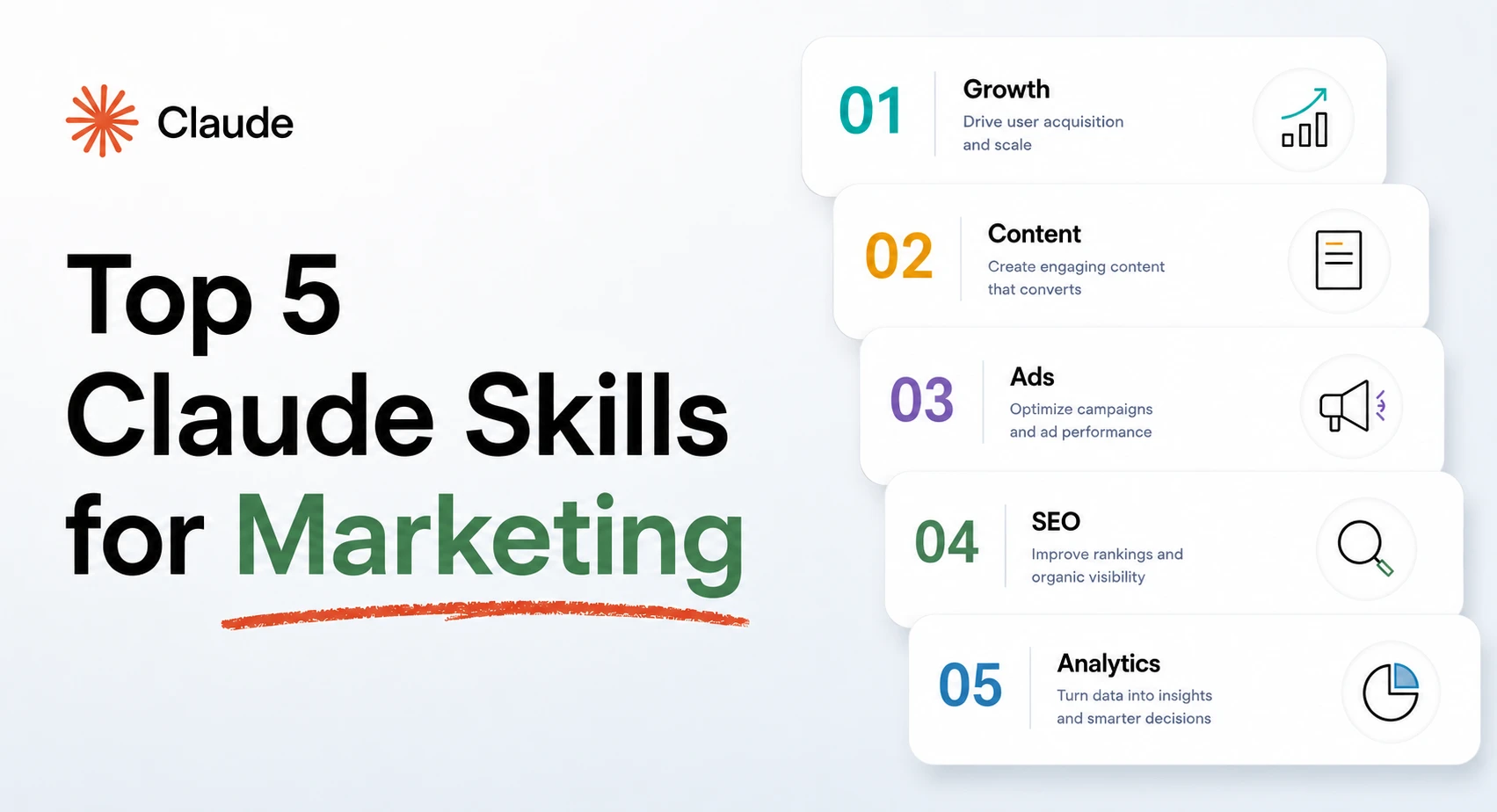
From Prompt to Process: Building a Cohesive AI Marketing Workflow
Most marketing teams use Claude to draft an ad or email from a prompt. That works, but it's hardly a system. The real work still involves research, positioning, channel planning, and reporting. This guide cuts through the noise to highlight five Claude skills that address those missing pieces. It's a practical, honest look at moving from one-off tasks to a repeatable workflow. For a deeper dive into AI's limits, check out "Talking to My AI Clone Taught Me to Question the Tech."

Walmart brings Vibe.co into its connected TV advertising platform
Walmart has closed its deal for Vibe.co, folding the TV advertising company into Walmart Connect. The acquisition, first announced in June, gives Walmart's connected TV platform a direct path to more targeted retail media. It's a logical move for a company that clearly sees the value in meeting shoppers where they watch. For brands, this means sharper ad placement and clearer measurement. If you're curious about how AI is reshaping other tools, our piece on Google Photos AI Wardrobe offers a useful parallel.
From Academia to Impact: Translating Public Health Expertise into Industry
Four years in academia, with publications in JAMA Open and experience in doubly robust methods, gives you a real analytical foundation. That is not the problem. The gap is likely in how you are framing your transition. You are studying SQL and probability, which is good, but you need to show how your causal inference work solves business problems. Frame your research as applied decision-making. Also, revisit that tech internship network; it is your strongest asset.

X resolves advertising dispute with World Federation of Advertisers
Elon Musk's X has ended its multiyear legal fight with the World Federation of Advertisers, a dispute rooted in what the platform called a "systematic illegal boycott" following Musk's $44 billion takeover. The settlement closes a contentious chapter, but the underlying tension between platforms and advertisers isn't going anywhere. It's a reminder that where ad dollars flow, leverage follows. For a deeper look at how these dynamics shift, our piece on Meta reversing course on ads for the Musk documentary offers useful context.

When an ad's soundtrack warns of extinction, that's not optimism.
Meta's new ad leans on David Bowie's "Five Years," a song about facing extinction, to sell AI's promise. That's a jarring choice, and it's worth pausing on. Pairing a countdown to apocalypse with innovation feels less inspiring than unsettling. If the goal is to make AI feel human, this risks the opposite: a reminder of how easily we hand over our future. For more on that tension, our piece "Talking to My AI Clone Taught Me to Question the Tech" digs deeper.

Why anthropomorphizing AI risks trust more than it builds it
Anthropic's newest ad leans into the very criticism it usually tries to outrun, using AI's risks as a mirror to show how seriously it takes responsibility. It is a calculated move, but one that risks feeling performative rather than substantive. For a company that has built its reputation on being the ethical alternative, this stunt raises a fair question: is awareness enough, or just another layer of polish? It makes you wonder if we are actually questioning the tech, or just getting comfortable with it.