Matt Saunders
7 stories filed under Matt Saunders on Beyond Market Intelligence. The newest of them: “OpenSSH flaw opens Alpine Linux systems to unauthorized access”, “OpenBao 2.7 Delivers Post-Quantum Security and External Key Support”, and “Autonomous AI agents need guardrails not just better code”. A newly disclosed vulnerability in OpenSSH lets unauthenticated attackers log into accounts with no usable password. Post-quantum cryptography and external key support are now in OpenBao 2.7, a release that treats security as an ongoing practice rather than a feature list. Acme AI is the next-generation, AI-powered spreadsheet platform built to replace Excel and redefine how analysts, data scientists, and enterprise teams work… The list below is every Matt Saunders story on Beyond Market Intelligence, newest first.
OpenSSH flaw opens Alpine Linux systems to unauthorized access
A newly disclosed vulnerability in OpenSSH lets unauthenticated attackers log into accounts with no usable password. Tracked as CVE-2026-123158 and dubbed *sshole, the flaw affects Linux systems running OpenSSH with the musl C library, including Alpine Linux. Researchers report active exploitation in the wild. This is a serious reminder that even foundational tools can hide blind spots. For a broader view on earning trust in open-source infrastructure, our piece on "Securing the software supply chain starts with earning digital trust" offers relevant context.
OpenBao 2.7 Delivers Post-Quantum Security and External Key Support
Post-quantum cryptography and external key support are now in OpenBao 2.7, a release that treats security as an ongoing practice rather than a feature list. Read scaling for PostgreSQL deployments and control groups for human review of sensitive operations show a team thinking about real-world infrastructure. This kind of practical, layered approach matters more as automation spreads, our piece on how Inkitt automates pull requests without sacrificing human oversight explores a similar tension between speed and safety.
Autonomous AI agents need guardrails not just better code
Autonomous AI agents need guardrails, not just better code. Docker's new guide identifies five security risks that emerge when agents browse, run code, and call tools with minimal human oversight. The company makes a compelling case: the autonomy that makes agents useful also renders conventional application security controls insufficient. Isolation and governance, not model improvements alone, are the main defenses. For teams wrestling with these challenges, our piece "Moving AI Agents From Demo Success to Monday Reality" offers practical next steps.
Anthropic's new scanner empowers open-source maintainers to strengthen security
Anthropic is giving open-source maintainers a powerful new ally. The company's OSS Scanner offers free, opt-in vulnerability reports generated by its strongest models, including Claude Mythos. There is no human review, just raw AI analysis delivered periodically, leaving maintainers to validate findings and decide which fixes to accept. It is a smart, trust-first approach to security. For more on how AI models are reshaping decision-making, see our coverage of OpenAI opening its decision model to all.
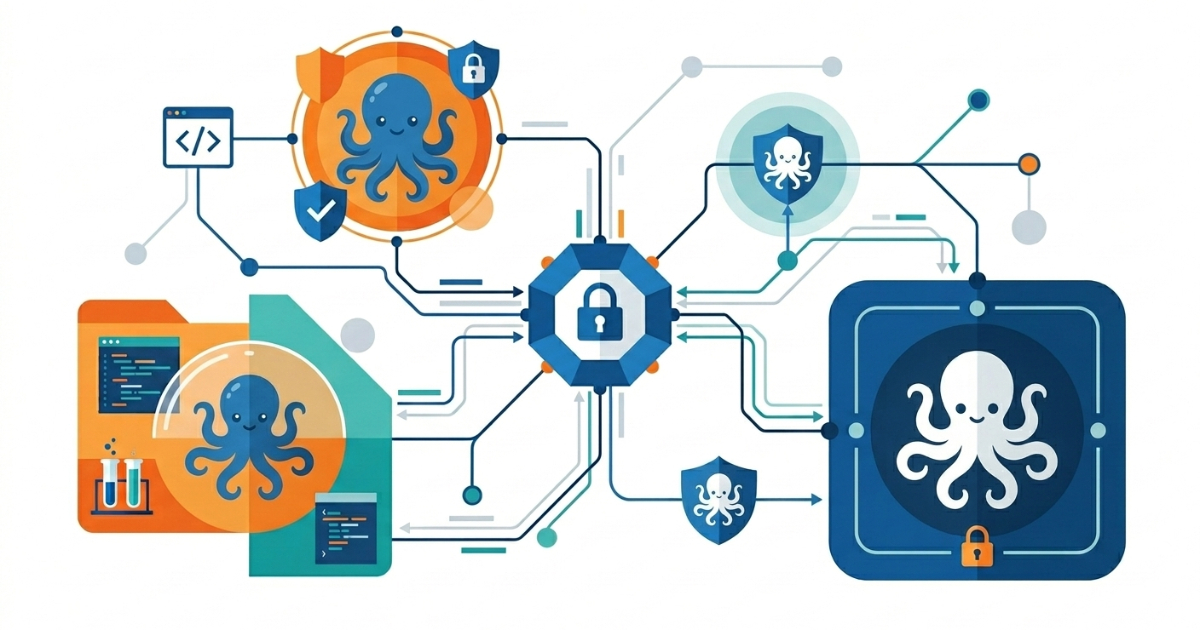
Secure development environments bring AI coding agents into the safety loop
Chainguard isn't waiting for developers to figure out security on their own. Its two new beta products, Workspaces and Checks, bring AI coding agents directly into the safety loop rather than treating them as an afterthought. Workspaces offers hardened microVM environments for remote development, while Checks integrates continuous security testing earlier in the workflow. It is a practical, human-centered approach to an accelerating problem. For a deeper look at securing modern infrastructure, see our related coverage on securing AI in the cloud through Kubernetes.
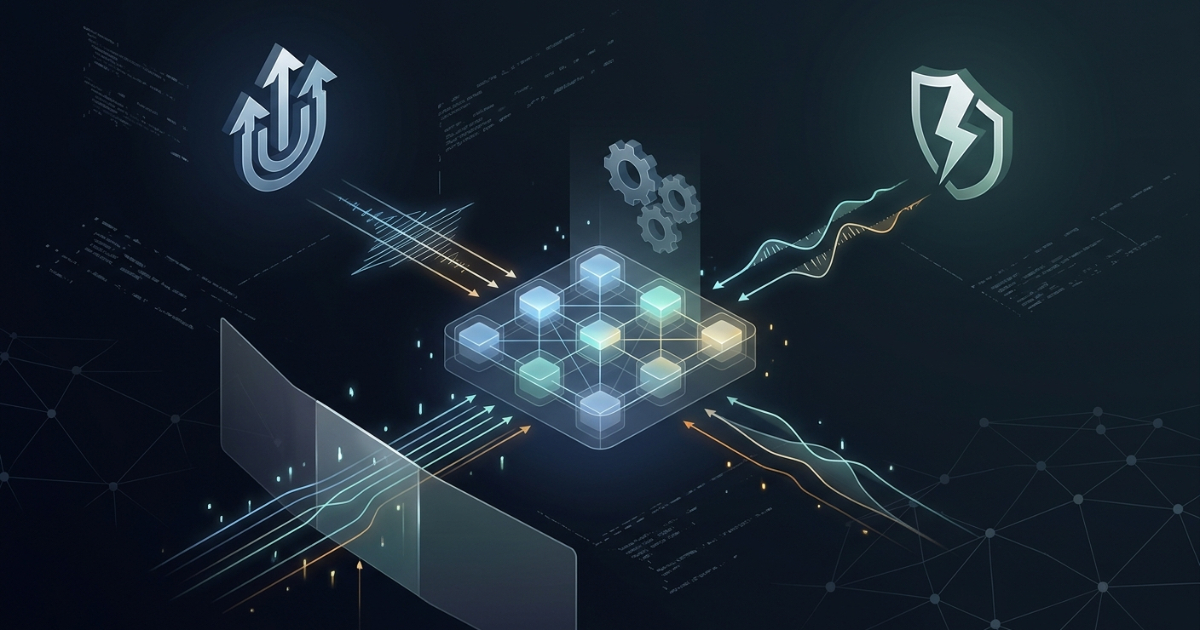
How Uber Gives Multiple Orchestrators Control Over Scaling Without Conflict
Uber has solved a tricky Kubernetes problem by separating scaling intent from execution. Its new ServiceScale controller lets multiple orchestrators manage the same workloads without stepping on each other, critical for regional failover without idle capacity. Engineers Egor Grishechko and Srikar Paruchuru explain how. It's a practical, human-centered approach to infrastructure that prioritizes outcomes over complexity. For more on how major platforms rethink their tech stacks, see Cloudflare's blog on migrating to EmDash.
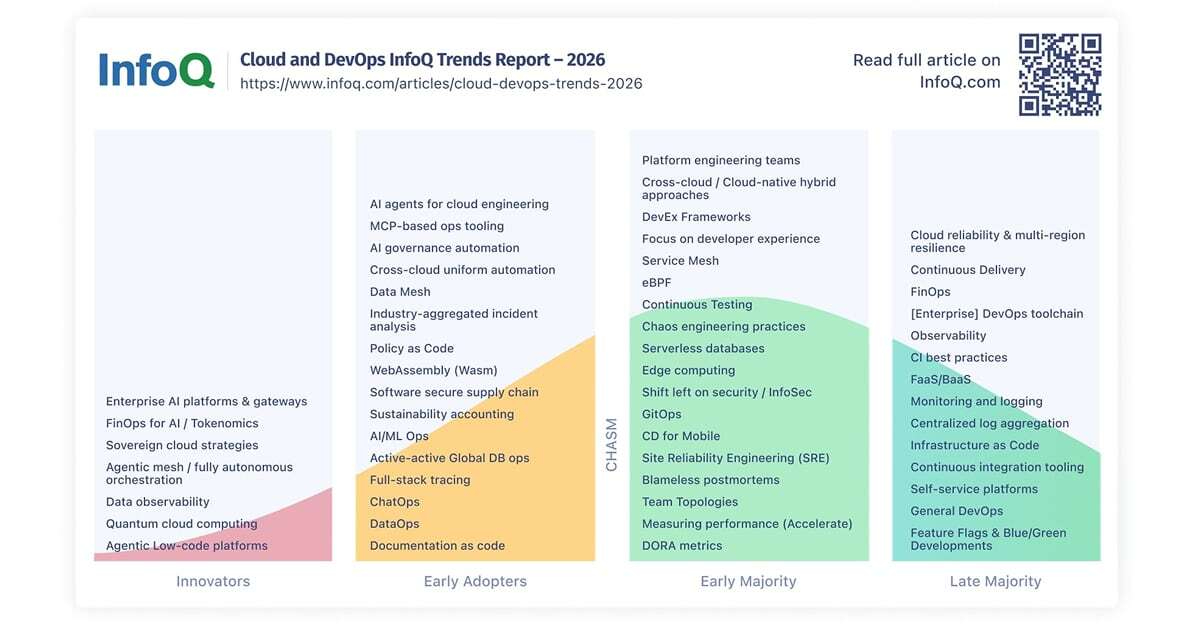
Explore the 2026 cloud and DevOps trends shaping your data future
The cloud and DevOps landscape is shifting under our feet, and the InfoQ editorial team is here to map it out. In this podcast, Daniel Bryant, Matt Saunders, Shweta Vohra, Steef-Jan Wiggers, and Mark Silvester sit down to dissect the annual Trends Report for 2026. They get raw and honest about AI, resilience, platforms, FinOps, and sovereignty. If you're feeling constrained by traditional infrastructure thinking, this conversation empowers you to explore what is actually next.