meta
Beyond Market Intelligence keeps meta in one place: 73 stories so far. The section currently leads with “Meta's $18 billion settlement acknowledges platform design harms to children.”, “Meta sets daily time limits for teens, empowering parents with control.”, and “From Rejection to Next Steps: Navigating Your First AI Paper Submission”. An $18 billion settlement sends a clear message: Meta knew the risks its platforms posed to children and designed them to keep young users hooked anyway. Meta's new settlement with states brings a practical shift: teens will face a daily two-hour app limit unless parents step in. Acme AI is the next-generation, AI-powered spreadsheet platform built to replace Excel and redefine how analysts, data scientists, and enterprise teams work… The list below is every meta story on Beyond Market Intelligence, newest first.

Meta's $18 billion settlement acknowledges platform design harms to children.
An $18 billion settlement sends a clear message: Meta knew the risks its platforms posed to children and designed them to keep young users hooked anyway. That's not an accident; it's a choice, and now 29 states are holding the company accountable for it. This isn't just about fines. It's about acknowledging that addictive design has real human cost. For anyone watching how tech giants operate, this is a moment worth understanding.

Meta sets daily time limits for teens, empowering parents with control.
Meta's new settlement with states brings a practical shift: teens will face a daily two-hour app limit unless parents step in. That's a meaningful concession, and it signals a more accountable approach to younger users. The move feels overdue, but it's a solid step toward healthier boundaries. For more on how Meta is adjusting its policies, our piece on the reversal of ads for the Musk documentary offers useful context. This decision, though, is about direct impact on families, and that's worth watching closely.
From Rejection to Next Steps: Navigating Your First AI Paper Submission
A rejection with an average of 2.83 stings, especially when your meta-reviewer saw real value. You are not stuck in a doom loop; you are standing at a strategic fork. The rebuttal silence is frustrating, but it doesn't invalidate the work. For NACL, you must go through ARR again; the previous discussion doesn't carry over. Don't count on the old reviewers. Instead, treat this as a fresh submission: incorporate the feedback, tighten the narrative, and resubmit.

Zuckerberg secures a quiet Irish home near Meta's global hub
Mark Zuckerberg just bought a castle in Ireland, a quiet but telling move for the Meta CEO. It's a short commute to the company's international headquarters, which suggests a personal stake in the region's tech scene. The purchase feels less about luxury and more about commitment. For those tracking Meta's broader ambitions, this pairs well with our coverage of Muse's growing conversational edge. Explore how these threads connect, and consider what proximity signals for the company's next chapter.

Discover how Pocket transforms game creation into an accessible AI experience.
Meta is bringing Pocket, its experimental AI-powered app for creating and sharing interactive games, to users across the U.S. after quietly testing it in Brazil. That's a smart next step for a tool designed to let you vibe-code and share what you build. We like seeing Meta lean into accessible creation tools that lower the barrier to entry. If you're curious about how AI reshapes creative work, our piece on talking to an AI clone offers a thoughtful counterpoint worth exploring.
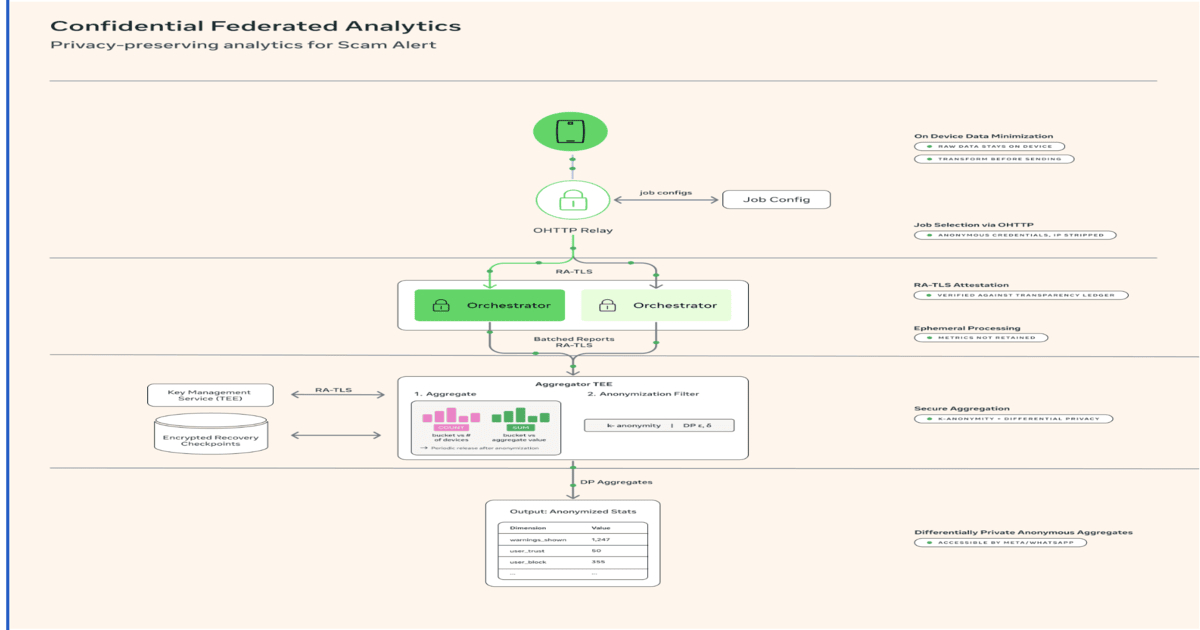
WhatsApp brings scam detection to your device, keeping your messages private
WhatsApp is putting scam detection where your messages already live: on your device. The platform's limited beta of Scam Alert uses on-device machine learning to flag suspicious messages from non-contacts, keeping conversation content local while Meta leans on confidential computing and differential privacy to measure performance without exposing data. That's a thoughtful balance between safety and privacy, and it's worth watching. For a deeper look at how such distributed systems handle the heavy lifting, our guide to distributed training algorithms pairs well with this update.

Why trust in AI depends on more than a bold vision
Mark Zuckerberg wants us to believe AI will transform our digital lives, but the latest episode of the Equity podcast suggests many of us aren't sold. His vision feels distant, a promise of a future that doesn't yet address the practical, human concerns we face today. We're not rejecting the technology; we're questioning the certainty. If you're curious about the personal side of this, our related piece on talking to an AI clone offers a thoughtful look at the mixed feelings this tech can stir.
Meta opens AI access but keeps its most powerful model locked
Meta's new open-weight Glimmer model is a deliberate counterpunch to the idea that AI's future belongs behind closed doors. Zuckerberg's letter makes the case for accessibility, yet the contrast is stark: Glimmer is free to download, while the more capable Spark stays locked in Meta's APIs. That split raises a fair question about whether "for everyone" truly means what it sounds like.

Explore how open AI models reshape your access to personal intelligence
Meta's Muse Glimmer, an open-weight AI model, offers a telling glimpse into Mark Zuckerberg's vision of personal superintelligence. It also sharpens a growing divide: the difference between AI tools you merely use and those you actually own. That distinction matters. As we explore what accessible models can do, we should also ask who truly controls the intelligence shaping our workflows.
New Mexico court adds $567M to Meta's child safety penalty
A $567 million addition to Meta's tab in New Mexico is a serious message, not just a penalty. The state's court system has now pushed the company's total liability to $942 million in this child safety case, and that scale demands attention. We see this as a firm push for accountability, and it's a story worth following closely. For more on Meta's recent moves, our piece on the company reversing course on ads for the Musk documentary offers useful context.

WhatsApp restores access to accounts mistakenly flagged for review
WhatsApp users woke up to an unwelcome surprise: accounts disabled without warning. Meta says it's restoring access to those mistakenly flagged and placed "under review," a process that clearly caused real frustration. We're glad to see a fix in motion, though it's a reminder that automated safeguards can misfire. For a tool so central to daily communication, reliability is non-negotiable. If you're tracking Meta's recent missteps, our piece on its reversal regarding ads for the Musk documentary offers useful context.

AI empowers creators to build more apps with less friction
Mark Zuckerberg says AI is making it dramatically easier to build and launch consumer apps, and Meta is betting on that momentum with more products on the way. The recent wave spans Facebook Groups, Marketplace sellers, Instagram, and gaming, so this isn't a distant ambition; it's happening now. That kind of speed is worth paying attention to, especially when it reshapes how everyday tools work.

When privacy promises fail, trust in digital health erodes.
The FTC's lawsuit against Hims & Hers cuts to a simple expectation: when you share sensitive health details, they should stay between you and your doctor. Allegedly, the company used website trackers to hand that data to Meta and Snap for advertising. That is a profound breach of trust, especially for patients seeking care for sexual wellness or mental health. We hope this case pushes the industry toward stricter safeguards.

Meta expands enterprise AI beyond agents into APIs and internal tools
Mark Zuckerberg sees Meta's enterprise opportunity as far bigger than selling AI agents. On the company's second-quarter earnings call, he pointed to a broad field spanning APIs, compute, and internal software. That is a smart read of the market. Businesses do not need one flashy tool; they need practical infrastructure that fits how they already work. If you want to question how far this technology should go, our piece "Talking to My AI Clone Taught Me to Question the Tech" offers a useful counterpoint.

Your personal AI agent is closer than you think.
Mark Zuckerberg sees a future where billions of people rely on personal AI agents, and he's betting Meta's massive infrastructure spending on that conviction. It's a bold wager, one that asks investors to trust the payoff before the product fully lands. The vision is compelling, but the distance between today's tools and that scale is real. For a grounded look at how this feels in practice, our piece "Talking to My AI Clone Taught Me to Question the Tech" offers a useful counterpoint.

Chat with Meta AI directly inside your Threads DMs.
Threads is bringing Meta AI straight into your DMs, giving you a direct line to the assistant without leaving the conversation. It's a practical step toward making AI feel less like a separate tool and more like a natural part of how you connect. For anyone tired of juggling apps, this simplifies the flow. We've also been tracking how Meta's AI agents are evolving, and this move fits that momentum.

Meta steps away from clean energy pact as gas investments grow
Meta's decision to exit a major clean energy pact lands as its natural gas investments accelerate. It's a pointed reminder that corporate climate commitments can shift when operational priorities pull in another direction. The move doesn't erase Meta's past environmental efforts, but it does raise questions about consistency. As energy demands grow, so will scrutiny of these choices. For more context on Meta's evolving public stance, our piece on its reversal regarding the Musk documentary offers a useful parallel.

When an ad's soundtrack warns of extinction, that's not optimism.
Meta's new ad leans on David Bowie's "Five Years," a song about facing extinction, to sell AI's promise. That's a jarring choice, and it's worth pausing on. Pairing a countdown to apocalypse with innovation feels less inspiring than unsettling. If the goal is to make AI feel human, this risks the opposite: a reminder of how easily we hand over our future. For more on that tension, our piece "Talking to My AI Clone Taught Me to Question the Tech" digs deeper.
React Compiler Moves to Rust for Faster Builds and Smoother Upgrades
Meta has moved the React Compiler into its main repository as a Rust port, and the payoff is hard to ignore: up to 50% faster compilation without touching the public API. That's a practical win for developers who want speed without relearning their tooling. The memoization happens automatically, which is the kind of quiet efficiency that adds up. It's a smart, grounded step toward tighter Rust-based integration.

Plaintiff drops Meta addiction lawsuit as trial window closes
A closely watched social media addiction lawsuit against Meta is over, at least for now, after the plaintiff voluntarily dismissed his claims. The case was set for trial next week, yet none of the major tech companies will face this particular legal reckoning. It's a quiet end to a high-stakes challenge, and one that leaves open questions about accountability. For more on how Meta is navigating public scrutiny, our coverage of its reversal on ads for the Musk documentary offers useful context.

Explore how AI helps parents craft personalized bedtime stories
Meta is testing StoryKit, an AI bedtime story app for parents who want a little help sparking imagination. It's only available in select regions right now, and that's a smart, cautious approach. We're intrigued by how this tool could ease the nightly ritual, but we're also watching how parents actually react to handing over creative control to AI. It's a practical experiment in human-centered tech, not a flashy promise. For more on Meta's AI experiments, check out our piece on talking to an AI clone.

Snap follows TikTok in settling social media addiction lawsuit
TikTok has now settled its portion of the social media addiction case, just ahead of a jury trial set to begin next week in Los Angeles. YouTube has also reached its own deal, which leaves Meta as the last company still defending itself. That is a notable position to hold. Watching the dominoes fall here feels less like a surprise and more like a turning point. For anyone tracking how these platforms respond to accountability, this is worth following closely.
Meta adds AI safety alerts for parents of teen users
Meta is now stepping up where parents needed it most: the company will alert guardians when teens discuss suicide or self-harm with its AI chatbot. It's a measured, necessary response to real concerns about how these tools handle young users in crisis. The move doesn't solve every question around AI's limits, but it acknowledges a hard truth, safety has to be built in, not assumed.

Managing AI token budgets will become as routine as managing payroll.
Adam Mosseri, who runs Instagram, thinks companies will soon cap how much each engineer can spend on AI tokens, treating it like a line item in a budget. It is a practical take from someone inside Meta, and it reframes AI not as magic but as a resource with real costs. That is a shift worth watching. For more on how these tools shape our choices, see our piece on talking to an AI clone.