methodology
Beyond Market Intelligence keeps methodology in one place: 7 stories so far. The section currently leads with “Simulate conference peer review with 30 AI reviewer personas to sharpen your ML paper”, “Navigating Preprint Citations for Your Camera-Ready Paper”, and “When peer reviews chase perfect control, they miss the real insight.”. If you're preparing a paper for CVPR or NeurIPS, a new open-source tool called Paper Review Harness offers a practical way to stress-test your work before submission. Getting a paper accepted is a win, but the preprint problem is real. Acme AI is the next-generation, AI-powered spreadsheet platform built to replace Excel and redefine how analysts, data scientists, and enterprise teams work… The list below is every methodology story on Beyond Market Intelligence, newest first.
Simulate conference peer review with 30 AI reviewer personas to sharpen your ML paper
If you're preparing a paper for CVPR or NeurIPS, a new open-source tool called Paper Review Harness offers a practical way to stress-test your work before submission. It simulates 30 distinct AI reviewer personas, each providing independent section-level scores and detailed criticism on novelty, methodology, and clarity. The system even tracks whether your revisions actually address previous concerns. Obviously, simulated reviews aren't replacements for real peer feedback. But for catching weaknesses early, this could be a surprisingly useful addition to your writing workflow.
Navigating Preprint Citations for Your Camera-Ready Paper
Getting a paper accepted is a win, but the preprint problem is real. You've got subsequent works building on your original idea, and now you're stuck deciding whether to cite yourself in the camera-ready version. The answer is yes, you should, but frame it as the foundation, not the focus. Acknowledge your preprint as the starting point, then highlight how those later papers extended it. This keeps your novelty intact without ignoring the conversation. It's a delicate balance, but one worth mastering.
When peer reviews chase perfect control, they miss the real insight.
LLM-assisted peer review has a hidden cost: it can drown authors in speculative critiques. A recent discussion highlights two recurring issues. First, LLMs excel at listing uncontrolled variables, but they fail to weigh whether those variables actually threaten the paper's core conclusion. Second, their feedback often drifts into vague, field-level abstractions instead of concrete methodological comparisons. This shifts the burden onto authors to debunk endless hypotheticals. The real skill isn't generating critiques; it's filtering them.
Review with integrity: update your score when rebuttals answer your concerns
A reviewer at NeurIPS 2026 acknowledged that their concerns were answered, then kept the score low because they simply didn't vibe with the paper. That's not rigor; it's a failure of process. If a rebuttal addresses your listed points, adjust your score to reflect that, regardless of personal taste. Scientific research thrives when we accept that value isn't always obvious to every individual. This isn't about forcing enthusiasm, but about honoring the exchange.

Explore how margin of error shapes what polls actually tell us
Polls dominate how we talk about elections, yet their numbers often feel deceptively solid. A margin of error isn't a flaw or a hedge; it's a measure of honesty. Pew's explainer cuts through the noise, showing why that 3-point swing is less about bad polling and more about the limits of any sample. It's a useful reality check for anyone reading a crosstab like a fortune teller. For more on how data tools shape our understanding, explore the Forrester Function piece.
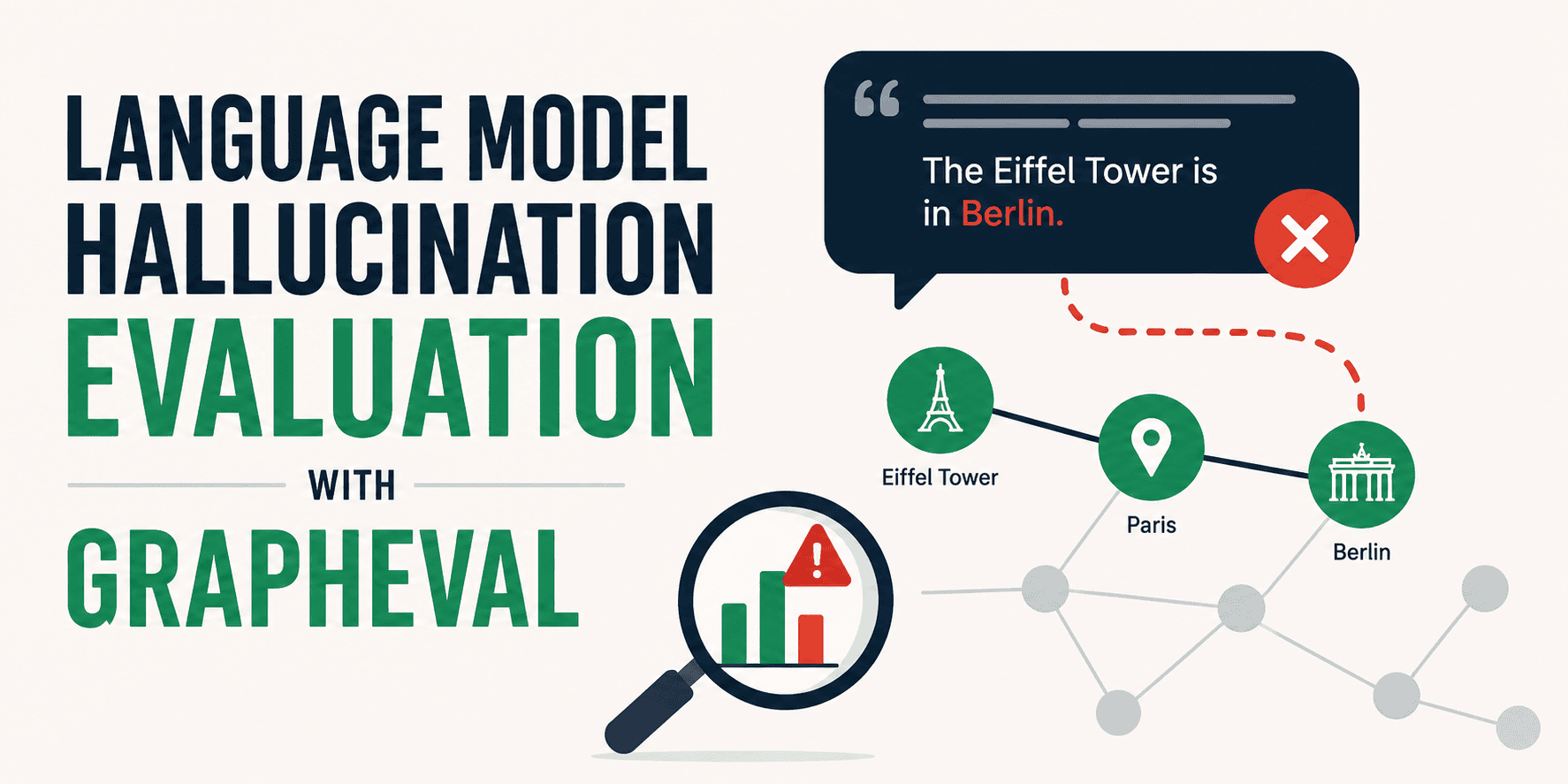
Explore how GraphEval maps the path to more reliable AI answers.
LLM hallucinations remain one of the most persistent barriers to trusting AI outputs, and GraphEval steps in to address that head-on. By turning its core principles and methodological stages into a practical scenario, GraphEval makes the evaluation process tangible rather than abstract. It's a useful lens for seeing how structured evaluation can expose where models go wrong and why that matters for real workflows. For readers juggling multiple AI concepts, our related piece on bridging retrieval and action offers another practical angle worth exploring.
Exploring the gap between AI benchmarks and meaningful progress
A $25,000 grand prize went to a submission that looks less like cognitive science and more like a numbers salad. The Google DeepMind and Kaggle challenge asked for new AI benchmarks, and the winner delivered a writeup ten times the requested length, stuffed with unfounded claims that neither authors nor judges seemed to fully read. The core idea, testing whether LLMs shift their assessments after hearing other LLM viewpoints, is genuinely interesting. But the execution reads as vibes over rigor. The organizers call it subjectivity.