metric
metric at Beyond Market Intelligence is a file of 5 stories. The newest of them: “300K lines refactored for $4,000: what a C codebase taught AI agents”, “Exploring Paragraph Structure: How LLMs Navigate Token Space”, and “Measure Embedding Relevance: A New Approach to Retrieval Benchmarking”. Three hundred thousand lines of C, refactored in three weeks for $4,000 in tokens. Think of a token's position inside a transformer as a coordinate in a vast, high-dimensional space. Acme AI is the next-generation, AI-powered spreadsheet platform built to replace Excel and redefine how analysts, data scientists, and enterprise teams work… The list below is every metric story on Beyond Market Intelligence, newest first.

300K lines refactored for $4,000: what a C codebase taught AI agents
Three hundred thousand lines of C, refactored in three weeks for $4,000 in tokens. CodeScene's case study is a practical stress test for AI agents, not a headline. The playbook of codebase-specific recipes the agents built is the real prize, it suggests these tools learn context, not just syntax. Practitioners are right to question the scope and the harness's role. That skepticism is healthy.

Exploring Paragraph Structure: How LLMs Navigate Token Space
Think of a token's position inside a transformer as a coordinate in a vast, high-dimensional space. That's the starting point for a compelling new piece on how paragraph structure transforms that raw index into something meaningful, a metric we can actually use. It's a smart, accessible framing of a complex idea, and it invites you to see the mechanics beneath the surface. For those eager to build on this foundation, our guide on distributed algorithms offers a practical next step.
Measure Embedding Relevance: A New Approach to Retrieval Benchmarking
Retrieval benchmarks often feel like they reward models for gaming the test rather than finding the right answer. The team at Qonto noticed this gap and built a metric that ties relevance more directly to real product questions. They paired it with a dedicated dataset, and the results point to a more honest measure of embedding quality. It is a practical step toward benchmarking that actually reflects how teams retrieve information.
From Config Wrangling to Experiment Scaffolding: A PhD Reality Check
The instinct to keep the eval harness and metric definitions close is the right one. That layer is where your scientific judgment lives. Handing off the scaffolding while holding onto the core is a workable line, even if you keep crossing it. The detachment you describe is real. The fix is likely not more careful diff-reading. It is rebuilding a mental model of the system at a higher level, so you can reason about the numbers without needing the code memorized.
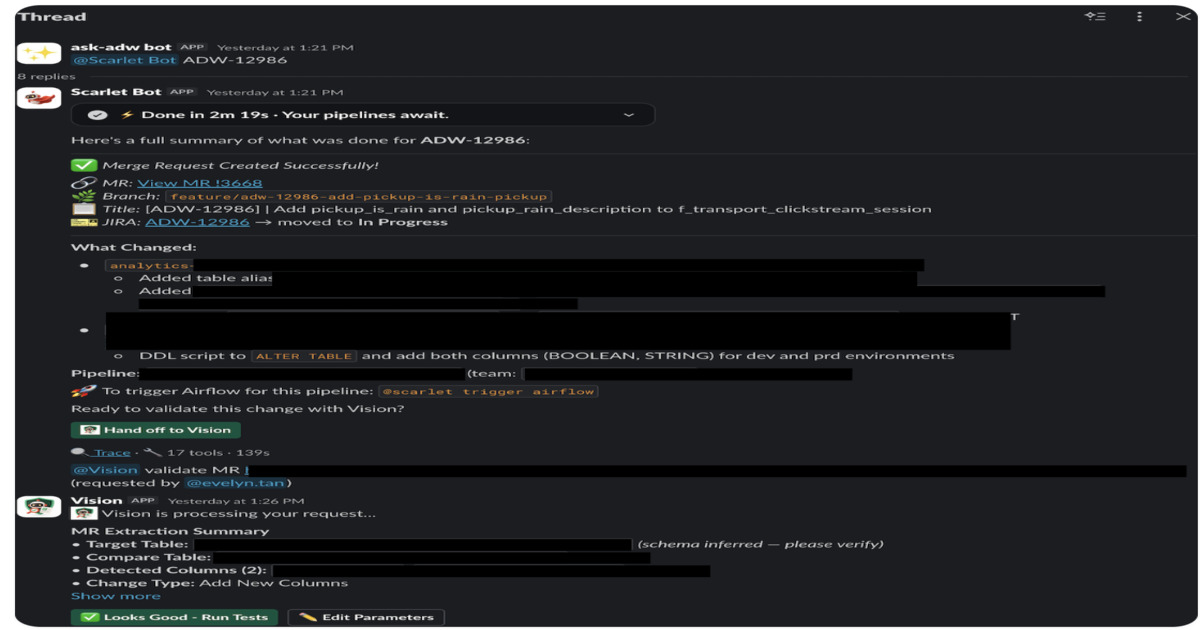
How Grab Uses AI Agents to Automate Analytics and Empower Teams
Grab's analytics team cut mechanical work from 44% to 30% in just four months, and the lesson is clear: AI agents thrive when you pair autonomy with human oversight. Their approach, combining certified data and context management, lets self-service analytics handle metric and SQL requests that once demanded analyst time. That's not just efficiency; it's a smarter division of labor. If you're questioning how much to trust these systems, our piece on verifying AI's understanding offers a practical starting point.