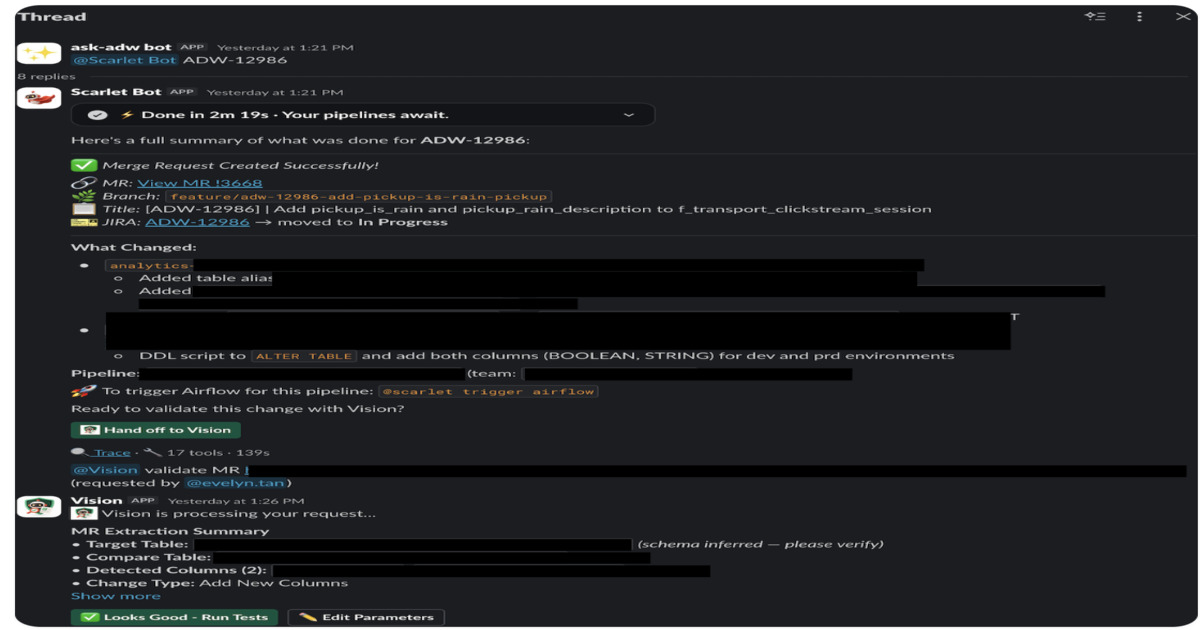
Grab's decision to lean on AI agents for analytics work is a quiet milestone, and the numbers tell a story worth pausing over. Mechanical analyst work dropped from 44% to 30% in just four months. That is not a tweak around the edges; that is a fundamental shift in what an analytics team does all day. But the more interesting detail is that Grab didn't just hand the keys to the agents and hope for the best. They paired autonomy with certified data, context management, and human oversight. That is the discipline most teams skip when they rush to adopt AI, and it is exactly why the results hold up.
We have seen this pattern before in adjacent spaces. The recent conversation about Talking to My AI Clone Taught Me to Question the Tech reminds us that interacting with AI is not the same as trusting it. And the challenges around Navigating AI/ML Job Requirements: A Shift in Expected Skills suggest that the human side of these systems is becoming more demanding, not less. Grab's approach fits right into that tension: the agents handle the repetitive lifting, but the humans are still responsible for context, edge cases, and judgment calls. The AI did not replace the analysts; it replaced the part of the job that no one should have to do manually.
What stands out here is the self-service angle. Metric, data, and SQL requests are increasingly being handled without analyst intervention. For most organizations, that is the dream scenario: fewer interruptions, faster answers, more time for deep analysis. But it also raises a practical question that we would push back on: who validates the output when no one is watching? Grab's answer appears to be certification and oversight, which is sensible, but it is not a one-time setup. It is a living process. As the system handles more requests, the failure modes change. The takeaway we would offer is direct: if you are not building your own version of certified data and human checks into your AI workflow, you are not doing AI analytics. You are just doing analytics with extra steps.
The other thing worth noting is the pace of change. Four months is a short window. That kind of movement suggests this is not a pilot or an experiment; it is an operational decision. For teams still hesitating, the message is less about whether to adopt AI agents and more about how quickly you can build the guardrails around them. The future is not about replacing analysts with agents. It is about giving analysts better tools and letting the agents handle the mechanical grind. The Verify Your AI's Understanding: A Simple Check for Tax Season article touches on exactly that need for verification, and Grab's own numbers suggest verification is not slowing them down. The real metric to watch is not the 30% floor. It is how much lower that number goes before the work stops being mechanical and starts becoming genuinely judgment-driven. That is the line worth watching.