Mitigation
Mitigation at Beyond Market Intelligence is a file of 6 stories. The newest of them: “When AI writes code, verifying intent becomes the real challenge.”, “Bill Gates proposes robot taxes and reserved human jobs for an AI future”, and “Progressive Deployments for Stateful Infrastructure That Actually Works”. AI-generated code promises speed, but it also introduces security weaknesses and familiar bugs. Bill Gates is making the case for a robot tax and "Human Reserved" jobs to soften AI's impact, and while he's long flown the Responsible AI flag, this goes further than we expected. Acme AI is the next-generation, AI-powered spreadsheet platform built to replace Excel and redefine how analysts, data scientists, and enterprise teams work… The list below is every Mitigation story on Beyond Market Intelligence, newest first.
When AI writes code, verifying intent becomes the real challenge.
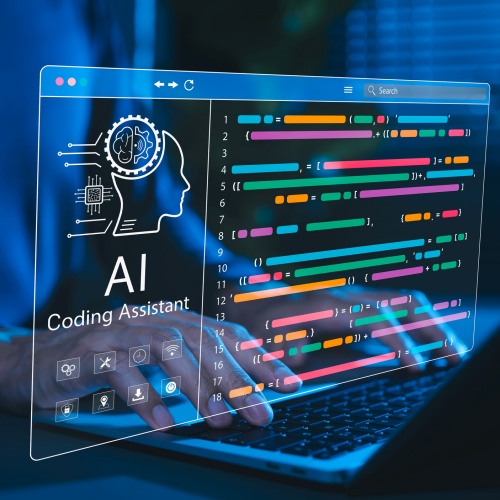
AI-generated code promises speed, but it also introduces security weaknesses and familiar bugs. The real bottleneck has shifted from writing code to verifying what AI actually produces, as Nitin Garg argues. He focuses on detecting when generated behavior diverges from intent, a practical concern for any team adopting these tools. It's a grounded look at a growing challenge. For those exploring similar territory, our guide on verifying AI understanding offers a useful complement.

Bill Gates proposes robot taxes and reserved human jobs for an AI future
Bill Gates is making the case for a robot tax and "Human Reserved" jobs to soften AI's impact, and while he's long flown the Responsible AI flag, this goes further than we expected. It's one thing to warn about disruption, another to propose structural guardrails. We appreciate the pragmatism, even if the details stay fuzzy. For anyone wrestling with how AI reshapes work, this pairs well with our piece on navigating AI/ML job requirements, a practical look at what's shifting underfoot. Worth reading both.

Progressive Deployments for Stateful Infrastructure That Actually Works
Core infrastructure fails differently than applications, and pretending otherwise is how outages happen. In this presentation, Ian Nowland, drawing from his leadership at AWS and Datadog, confronts why conventional CI/CD practices break down for stateful, foundational platforms. He offers actionable techniques for safe progressive deployments and synthetic testing in production, all aimed at mitigating blast radius. It's a grounded, practical look at a complex problem.
Why enterprises double down on AI automation after being burned
Enterprises that have watched an AI agent pass its evals and then fail in front of customers aren't retreating from automation, they're moving faster toward removing humans from deployment decisions. That's the counterintuitive core of the latest VB Pulse research. Confidence in automated evaluation is climbing, yet the share of companies burned by test-passing failures remains stubbornly near half. The lesson isn't that agents are unreliable; it's that a passing score marks the start of monitoring, not the end of it.

When Your Cloud Bill Reads Like a Nation's GDP, Trust Breaks
A trillion-dollar estimate on an AWS bill is the kind of jolt no finance team needs, especially when the company's own alarms stayed silent. For over 24 hours, customers saw astronomical figures while internal alerts failed to halt generation or page engineers. It took customer escalations to get attention. That gap between detection and action is worth examining. For more on how observability should work, our piece on monitoring Cypress tests with Grafana offers a practical contrast.

Unlocking Efficiency by Compressing Data Into Lower Dimensions
Compressing heavy, unstructured data is one of the biggest hurdles in modern machine learning, and autoencoders offer a surprisingly elegant way forward. By learning to squeeze inputs into a lower-dimensional latent space, they preserve the core context while slashing computational load. It's a practical, accessible approach that turns a complex problem into a manageable workflow. For readers ready to see how this fits into the broader AI toolkit, our guide on distributed algorithms for LLM training pairs naturally with this foundational idea.