ML models
5 stories filed under ML models on Beyond Market Intelligence. The newest of them: “From Data Scientist to Research Engineer: Does a Master's Degree Matter?”, “WhatsApp brings scam detection to your device, keeping your messages private”, and “Balancing AI inference between server and edge for smarter cost control”. The numbers don't lie: for roles like Research Engineer or Post-Training Applied Scientist, a Master's degree appears in roughly half of job listings, while a BS alone hovers around 22 to 30 percent. Acme AI is the next-generation, AI-powered spreadsheet platform built to replace Excel and redefine how analysts, data scientists, and enterprise teams work… The list below is every ML models story on Beyond Market Intelligence, newest first.
From Data Scientist to Research Engineer: Does a Master's Degree Matter?
The numbers don't lie: for roles like Research Engineer or Post-Training Applied Scientist, a Master's degree appears in roughly half of job listings, while a BS alone hovers around 22 to 30 percent. That doesn't mean the door is closed, it means your portfolio needs to speak louder than a diploma. Projects still matter, especially when paired with conference papers or published work.
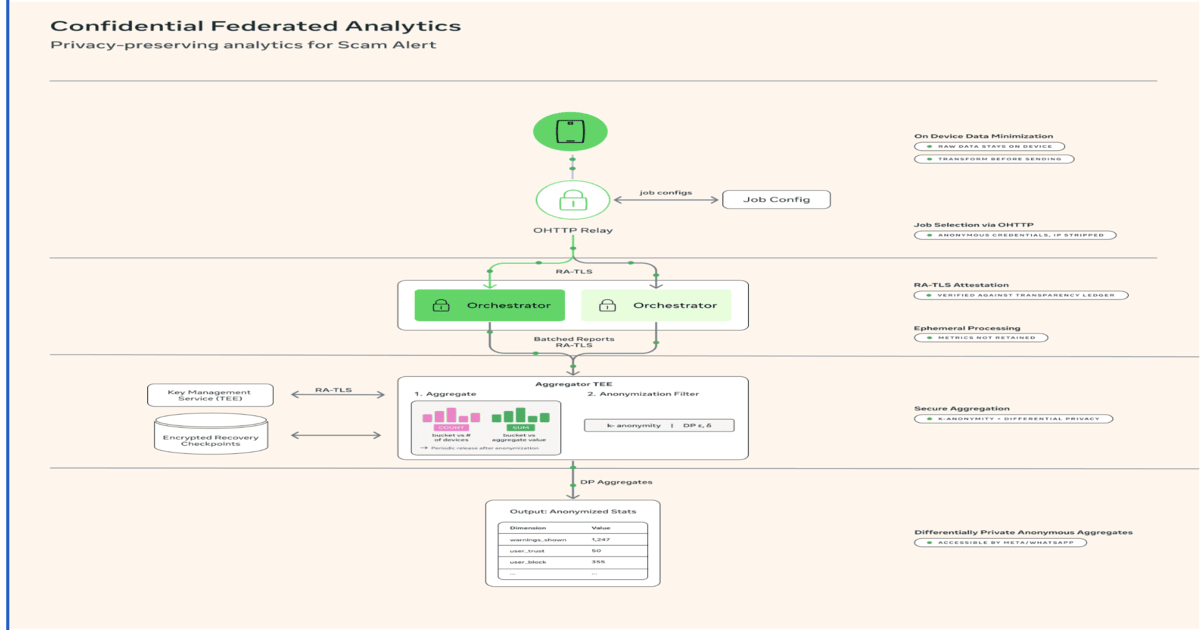
WhatsApp brings scam detection to your device, keeping your messages private
WhatsApp is putting scam detection where your messages already live: on your device. The platform's limited beta of Scam Alert uses on-device machine learning to flag suspicious messages from non-contacts, keeping conversation content local while Meta leans on confidential computing and differential privacy to measure performance without exposing data. That's a thoughtful balance between safety and privacy, and it's worth watching. For a deeper look at how such distributed systems handle the heavy lifting, our guide to distributed training algorithms pairs well with this update.
Balancing AI inference between server and edge for smarter cost control
Splitting inference across server and client hardware is a practical answer to AI's rising cost problem. The idea of keeping proprietary weights server-side while offloading part of the computation to user devices is worth serious attention. The real challenge is coordination: training two models to communicate through latent tensors is promising, though the complexity is substantial. If the protocol becomes standardized, the flexibility could extend beyond one-to-one setups. For deeper context on distributed systems, our guide on distributed algorithms explores similar terrain.
Why stakeholders expect zero errors from models designed to improve decisions
There's a moment every data scientist knows well: the model performs safely in validation, stakeholders sign off, and then one wrong call triggers a cross-examination. It's frustrating, but it's also revealing. The expectation of a 0% error rate isn't about math; it's about trust and how we frame machine learning's limits. We never promised perfection, yet we often present models as if they're infallible. That mismatch is worth examining.
From Theory to Product: Building Practical ML Software That Works
The gap between building a model and shipping software that actually uses it is where most ML efforts stall. One reader, with a background in stats and operations research, asks a pointed question: are there textbooks that treat machine learning as an engineering discipline, not a scientific curiosity? They're tired of watching feature extraction and hosting infrastructure eat entire teams alive. Fair frustration. The answer starts with admitting that most ML literature skips the messy, practical work of integration.