model inference
model inference at Beyond Market Intelligence is a file of 3 stories. The newest of them: “What Happens in That Split Second Before AI Responds”, “Exploring how KV cache transforms LLM inference into an interactive runtime”, and “From Fab to Token: Navigating AI's Infrastructure Bottlenecks”. That brief pause before an AI starts typing isn't dead time, it's the first of two distinct jobs your GPU is handling. Most LLM agents feel reactive because they move token by token, pausing for the model to catch up. Acme AI is the next-generation, AI-powered spreadsheet platform built to replace Excel and redefine how analysts, data scientists, and enterprise teams work… The list below is every model inference story on Beyond Market Intelligence, newest first.
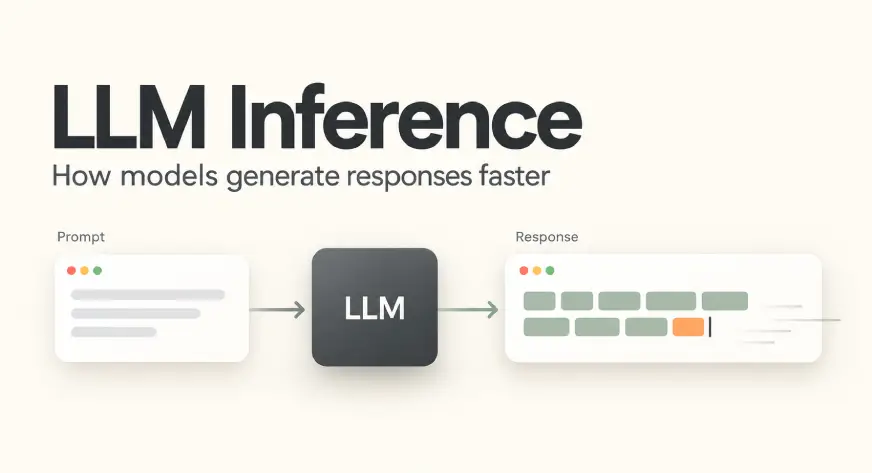
What Happens in That Split Second Before AI Responds
That brief pause before an AI starts typing isn't dead time, it's the first of two distinct jobs your GPU is handling. First comes comprehension: parsing your question into computational intent. Then comes generation: producing each word in sequence, one after another. Understanding that split-second workflow transforms how you build responsive AI applications. For deeper context on how these models work autonomously, explore "Your AI team works through the night so you wake to a finished newsletter."
Exploring how KV cache transforms LLM inference into an interactive runtime
Most LLM agents feel reactive because they move token by token, pausing for the model to catch up. Our team has been exploring a different path: modifying the model's inference state, the KV cache, to make it a true runtime. This approach, outlined in a post by our researchers, powers more interactive systems. We see this as a key axis for agent capability, sitting between costly model changes and abstract harnesses.

From Fab to Token: Navigating AI's Infrastructure Bottlenecks
The gap between chip fabrication and the models that actually process data is where the real pressure builds. Jordan Nanos unpacks this friction in his presentation, connecting semiconductor constraints and data center buildout to the tokenomics that shape AI software today. What stands out is the focus on real-world GPU scaling and benchmark performance, grounding the conversation in practical reality. It is a useful perspective for anyone navigating this market, and it pairs well with our guide on distributed training algorithms.