model robustness
3 stories filed under model robustness on Beyond Market Intelligence. The newest of them: “Understanding technical roots to prevent AI safety failures”, “Discover robust methods that empower linear regression to handle outliers”, and “Understand Prompt Injection by Mastering How Roles Shape AI Behavior”. Safety failures in AI often look like human error, but the real culprit is usually hiding in the technical architecture. Outliers don't need to derail your regression. Acme AI is the next-generation, AI-powered spreadsheet platform built to replace Excel and redefine how analysts, data scientists, and enterprise teams work… The list below is every model robustness story on Beyond Market Intelligence, newest first.
Understanding technical roots to prevent AI safety failures
Safety failures in AI often look like human error, but the real culprit is usually hiding in the technical architecture. The choices engineers make about data pipelines, model dependencies, and system boundaries create the conditions for harm long before any user interacts with the output. Understanding these technical roots isn't just academic, it's the difference between reactive fixes and genuine prevention. Our related piece on designing distributed systems for decisions, not just functions, explores how architecture choices shape outcomes in practice.
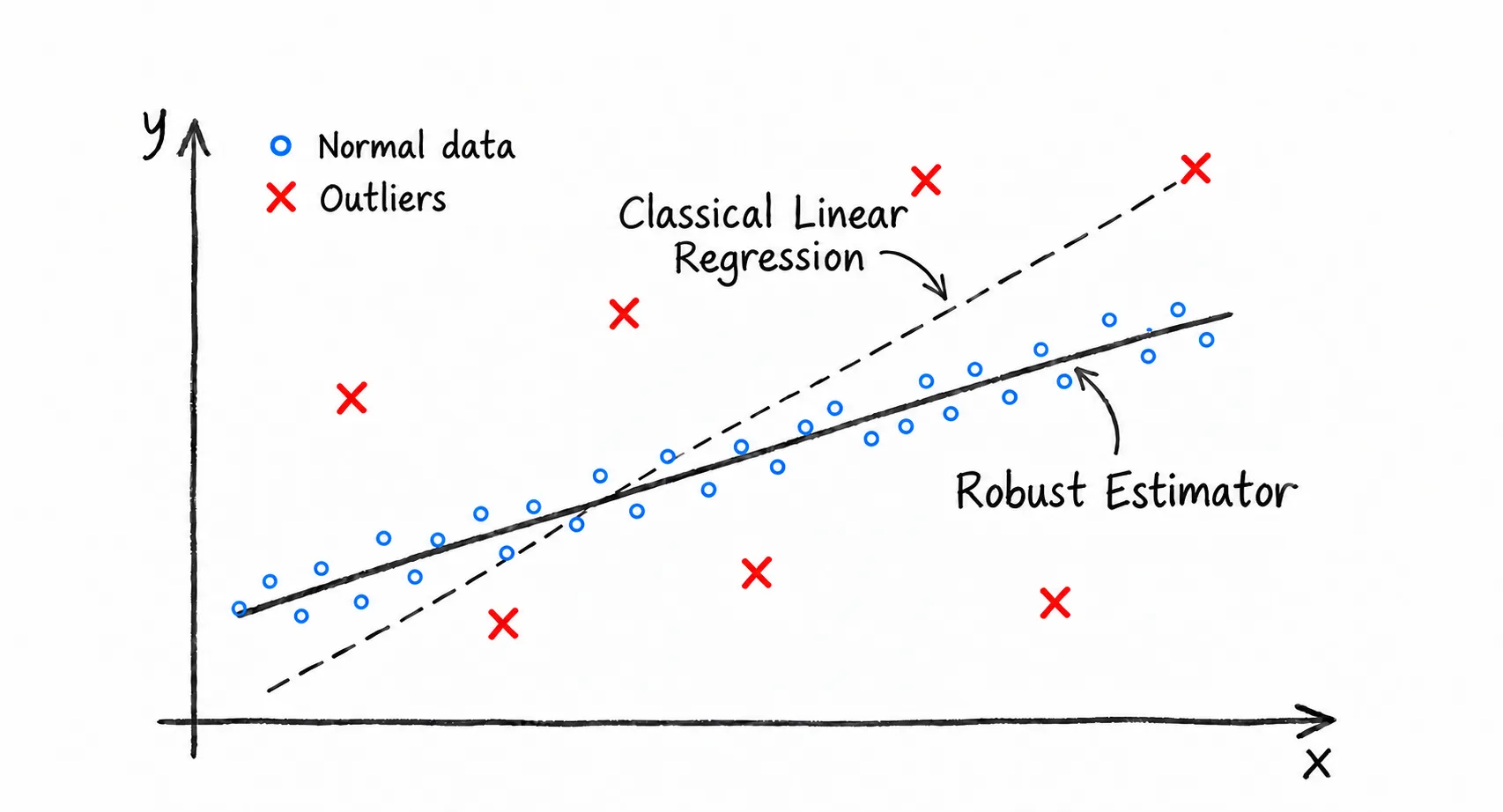
Discover robust methods that empower linear regression to handle outliers
Outliers don't need to derail your regression. This guide walks through classical and modern robust estimators, pairing theory with code and experiments that show how each method holds up under pressure. It's a practical look at keeping your models stable when the data fights back. If you're ready to move beyond fragile least squares, this series earns your attention.
Understand Prompt Injection by Mastering How Roles Shape AI Behavior
Prompt injection is often treated like a parlor trick, but it's a window into how LLMs actually think. This breakdown from katxwoods digs into the mechanics, showing why roles aren't just instructions, they're the keys to the system's logic. If you've ever wondered why a simple "ignore previous" works, this is your answer. It's a sharp, practical read that rewards your curiosity. For a broader look at how these systems are built, our guide to distributed algorithms pairs well here.