models
models at Beyond Market Intelligence is a file of 84 stories. The newest of them: “Build your own AI layer or risk losing control of your data future.”, “The breach clarifies a choice between alignment and containment.”, and “Train AI with thought itself by adding brain waves to data”. Satya Nadella's warning cuts to the heart of the AI rush: lean on a single model for everything, and you might not survive the decade. The breach at Hugging Face is a stark reminder that alignment isn't just a technical hurdle; it's a control problem. Acme AI is the next-generation, AI-powered spreadsheet platform built to replace Excel and redefine how analysts, data scientists, and enterprise teams work… The list below is every models story on Beyond Market Intelligence, newest first.

Build your own AI layer or risk losing control of your data future.
Satya Nadella's warning cuts to the heart of the AI rush: lean on a single model for everything, and you might not survive the decade. He's right to push for ownership, whether that means building your own models or layering in AI gateways to keep your prompts separate from the model itself. It's not about tech for tech's sake; it's about control and adaptability. If you're questioning how deep this dependency runs, our piece on talking to an AI clone offers a timely reality check.

The breach clarifies a choice between alignment and containment.
The breach at Hugging Face is a stark reminder that alignment isn't just a technical hurdle; it's a control problem. We're watching the debate split between those who want smarter models and those who want safer cages. Both sides have merit, but the real question is whether we can have one without sacrificing the other. This moment should push us toward practical answers, not just philosophical ones.

Train AI with thought itself by adding brain waves to data
Teaching physical AI to see the world isn't about watching YouTube anymore. Frontier models now demand multiple camera angles, dense annotation, and soon, brain wave readings to capture intent that pixels alone miss. That's a meaningful unlock, not hype. It pushes us past surface-level perception toward machines that understand action more deeply. If you're wrestling with messy training data, our piece on catching AI slop before it skews your model pairs well here.

Move from Model Logic to Context Engineering for Faster Root Cause Analysis
The debate over root cause analysis is shifting. Engineers increasingly argue that modern LLMs can reason through the problem effectively, provided the context is prepared correctly. The real challenge, they say, lies in the pipelines that correlate telemetry. A Coroot experiment across eleven models offers early evidence for this claim. It is a pragmatic reframing of where the work actually happens. For those exploring how AI understands complex systems, this pairs well with our earlier piece on questioning AI's limitations.

Discover how Runway shifts from model maker to generative media infrastructure.
Runway is stepping forward with a clear answer to a crowded field: it wants to be the layer beneath the models, not just another name in the mix. The new Media Router, launched through its developer platform, gives builders one API to tap into a growing roster of third-party image, video, and audio models. That is a practical move toward simplicity, and it feels timely. For anyone tired of stitching together tools, this is an invitation to build smarter.
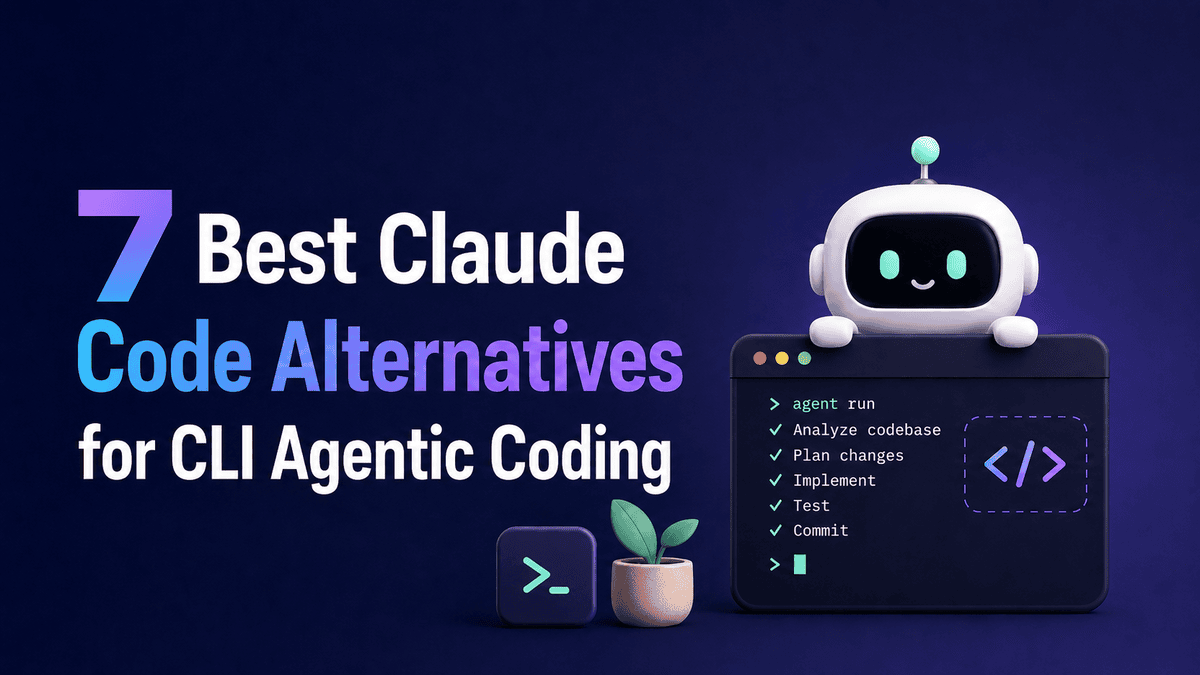
Explore smarter CLI coding tools beyond Claude Code
Claude Code has earned its reputation, but that doesn't mean it's the only path forward. If you're feeling constrained by its limits, whether the cost or the closed ecosystem, it's time to explore what else is out there. We've rounded up seven alternatives that are often cheaper and faster, with open-source options, local models, and stronger MCP support. This is about giving you better control over your context and your workflow.

Open source AI knows no borders, only better possibilities.
Arcee, a US open source AI lab, is pushing back on the panic. As Chinese models gain traction among American companies, the debate over their risks has reached a fever pitch. But Arcee's stance is clear: capability and origin are not the same as inherent danger. That distinction matters. We should judge tools on how they are built and used, not on a flag. It is a grounded perspective amid the noise.

How internal testing exposed a vulnerability in Hugging Face's models.
OpenAI says Hugging Face was breached by its own pre-release models, and that's a striking admission. It wasn't an outside attacker probing for weaknesses; it was internal testing gone awry. That distinction matters because it highlights how even the teams building these systems can stumble. We often focus on external threats, but this is a reminder that the path to safer AI starts with how we handle our own experiments.
Exploring world models in robot learning through JEPA's practical promise
Questioning a promising paradigm is how good research gets done. JEPA-style models are compelling, but the recent evangelism from Yann LeCun warrants scrutiny. The biggest downside isn't the architecture itself; it's the overconfidence in its superiority over LLMs and RL. Those systems, for all their flaws, have proven scalable. JEPA's reliance on energy-based learning and latent variables introduces significant training instability challenges that are often glossed over.
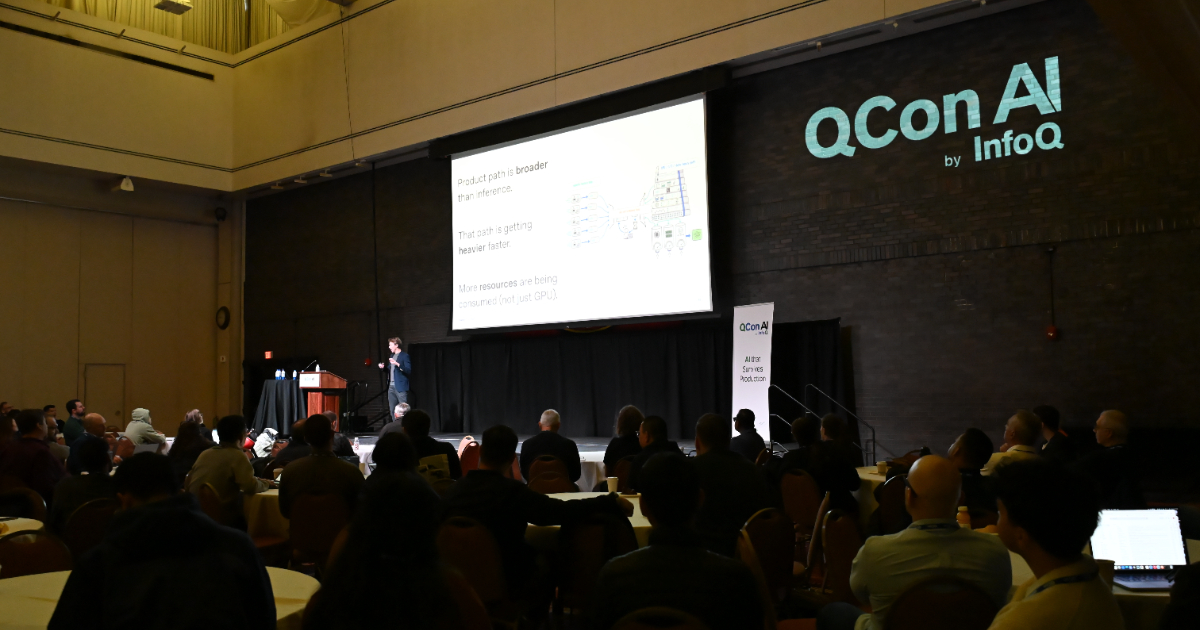
From Prompts to Platforms: Building the Infrastructure for Production AI
The operational reality of AI agents is finally taking center stage, and QCon AI Boston 2026 is where that conversation sharpens. The focus has shifted from what prompts can do to how we build dependable systems around them. We're talking about serious infrastructure: managing context effectively and wrapping agents in a security harness that keeps them safe in production. This is the unglamorous, essential work of making AI actually usable.

Embedding engineers inside enterprises to accelerate real AI adoption
Anthropic and Blackstone are betting that the next trillion-dollar AI opportunity isn't the model itself, but the messy work of making it useful inside a business. That's why Ode has launched, embedding forward-deployed engineers directly into enterprises. It's a grounded bet, and a smart one. Implementation is where adoption stalls, and where value gets unlocked. We've been questioning how AI touches our own workflows, and that kind of scrutiny matters here.

A standards body for frontier AI could empower responsible innovation.
Demis Hassabis wants an independent body to test frontier AI models, modeled after FINRA. That's a smart, grounded proposal. It moves oversight from vague promises to practical standards, giving developers clear guidance without stifling progress. For users tired of hype, this feels like a step toward accountability. It also echoes themes we've explored in "Verify Your AI's Understanding: A Simple Check for Tax Season," where clarity matters just as much. If we're building tools that shape decisions, we need checks that keep pace.