natural language processing
206 stories filed under natural language processing on Beyond Market Intelligence. The newest of them: “Turn Idle CPU Power into Faster AI Token Generation”, “Hugging Face weighs community ties against a $13 billion offer”, and “From isolated context to shared knowledge: the next step for enterprise AI”. Speculative decoding is often framed as a GPU-only play, but DFlash proves otherwise. A $13B price tag would make Hugging Face one of the biggest AI acquisitions yet. Acme AI is the next-generation, AI-powered spreadsheet platform built to replace Excel and redefine how analysts, data scientists, and enterprise teams work… The list below is every natural language processing story on Beyond Market Intelligence, newest first.

Turn Idle CPU Power into Faster AI Token Generation
Speculative decoding is often framed as a GPU-only play, but DFlash proves otherwise. In vLLM tests on Intel Xeon 6, it hit 3.92x the autoregressive throughput with Qwen3.5-9B at concurrency 1. That is not a marginal gain; it is a practical unlock for underused CPU compute. The post breaks down the acceptance metrics and shows exactly when speculation pays off. For a deeper look at keeping model inputs clean, check out our piece on catching AI slop before it skews your data.

Hugging Face weighs community ties against a $13 billion offer
A $13B price tag would make Hugging Face one of the biggest AI acquisitions yet. But the founders' hesitation isn't about the money, it's about the community that helped build the platform. That tension between a massive payout and preserving what makes the company special is worth watching. If you're curious how messy data can get when AI tools shape your workflows, our piece on catching AI slop before it skews your model offers a practical parallel.

From isolated context to shared knowledge: the next step for enterprise AI
Enterprise AI agents are only as reliable as the messiest documents behind them. Most teams treat knowledge as application-specific context, building separate pipelines for each assistant. That works for isolated copilots, but it fractures as agents multiply. Inconsistencies spread, changes propagate unevenly, and teams rebuild the same retrieval infrastructure repeatedly. These are knowledge management problems, not context engineering ones. The fix is architectural: manage knowledge once, as shared infrastructure, and publish reusable representations for every agent.

ChatGPT now handles your Apple Messages through a simple plug-in
The new Apple Messages plug-in hands ChatGPT the keys to your texting, letting it draft replies on demand. It's a practical step toward offloading the small talk and scheduling clutter that eats your day. We're intrigued by the convenience, though it nudges us to ask how much of our voice we're willing to hand over. For more on that tension, our piece on talking to an AI clone offers a fitting counterpoint. Explore it, but keep your thumbs ready.

How AI quietly reshaped a third of the modern web
A third of web pages published since ChatGPT's launch now show signs of AI authorship. That's a striking signal about how quickly synthetic content has woven itself into the web's fabric. It raises a pressing question: how do we keep our data meaningful when machines are editing so much of what we read? This isn't about shaming the tools; it's about staying clear-eyed.
Explore SMIL animation for SVG without JavaScript and inside img tags
Timing Charts offers a clear, practical blueprint for mastering SMIL, the often-overlooked method for animating SVGs directly inside `<video>` tags. It's refreshing to see a guide that proves you can fully animate every element of an SVG without a single line of JavaScript. For anyone tired of complex scripting, this is an accessible path forward. We've touched on simplifying tech workflows elsewhere, like in our piece on vector spaces, so this feels like a natural next step.

Talk across your apps with AI that listens and acts.
Meta AI's new Mac app puts dictation front and center, letting you talk to your apps across the board, much like Wispr Flow and Superwhisper. That's a smart move for anyone tired of clicking through menus. We've covered how AI tools can misfire, like in "Clean Data Starts With Catching AI Slop Before It Skews Your Model," so a hands-free approach that's built for everyday tasks feels like a practical step forward. It's not about hype; it's about making your workflow feel less like work.
Meet Catalyst, the AI agent that fixes IT issues before they happen.
Serval's Catalyst is now generally available and enabled by default, moving beyond simple workflow creation. It acts as an administrative super agent that analyzes ticket history and SOPs to identify repetitive work, then builds the automations to resolve it. More importantly, it deploys background agents that monitor connected systems for emerging issues, proposing fixes before an employee ever files a ticket. This shifts the focus from managing requests to preventing them, turning operational history into a continuous engine for new automation.
EMNLP 2026 decisions arrive today as the community turns toward Budapest.
Today, the EMNLP 2026 notifications land, and the wait finally ends. Whether your paper made it or not, the results will shape your next steps. We're hoping the decisions bring you to Budapest, where the conversation continues in person. For those navigating the emotional side of feedback, it's worth remembering that rejection often sharpens your research, not diminishes it.

Why Every Hallucination Detector Misses a Simple Number
A single number tripped up every major hallucination detector, and the reason is hiding in plain sight: ten is not a hundred. That gap between what a model claims and what a human knows is the story here, and it's a sharp reminder that these tools still see patterns, not meaning. We're impressed by the caution this work demands, and it pairs well with the skepticism in *Talking to My AI Clone Taught Me to Question the Tech*.
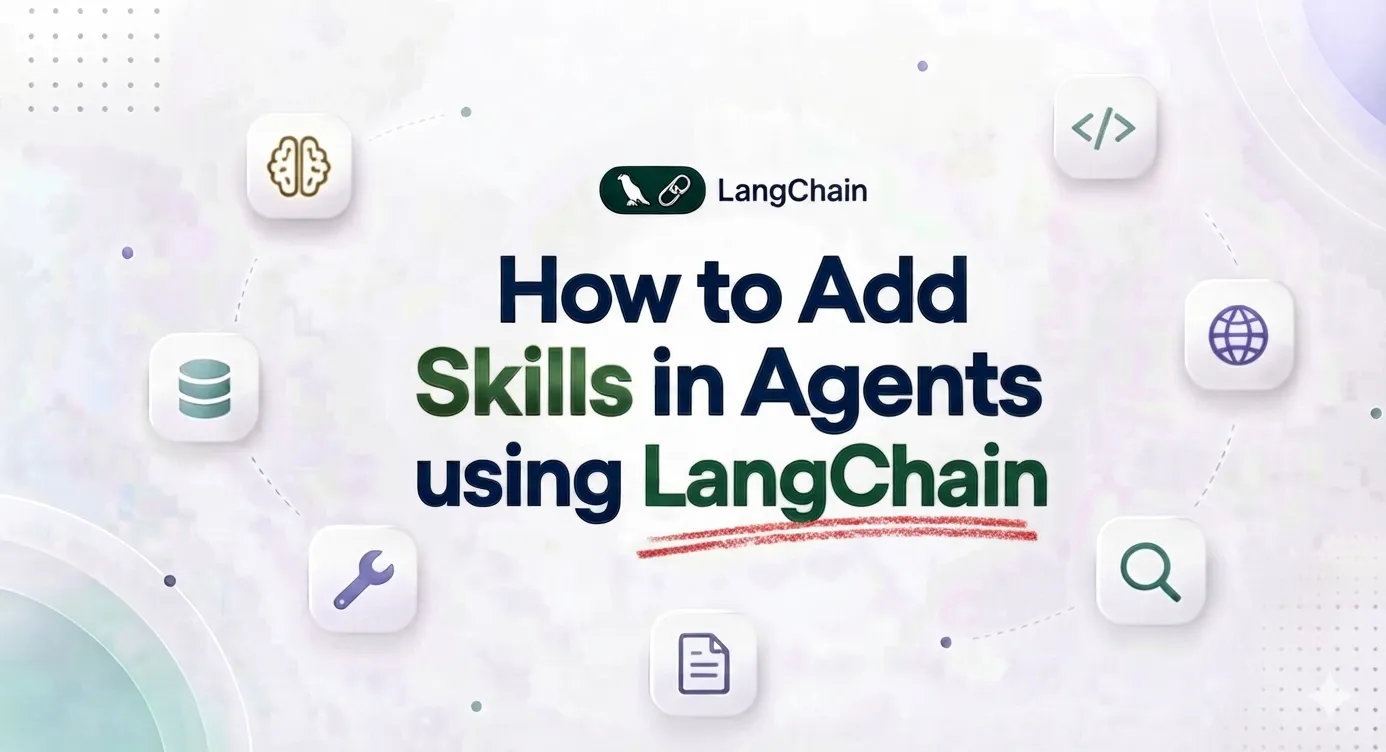
Give your AI agents new skills without retraining the model
Ever wondered how ChatGPT and Gemini pull off PDFs and PowerPoints when an LLM is all they have? The trick isn't a smarter model; it's skills, instructions an agent loads only when needed. That's a clever, accessible idea, and seeing it applied through LangChain makes it feel actionable. We like how this reframes capability as context, not complexity. For a deeper take on how agents learn by editing context rather than weights, check out our piece on Agentic Context Learning. It's a natural next step.

Webwright shows AI agents succeed by writing code, not clicking buttons.
For years, web agents have clicked their way through tasks, often losing the thread on long ones. Microsoft Research's Webwright takes a sharper path: hand the model a terminal and let it write code. On long-horizon work, the same GPT-5.4 model leaps from 33.5% to 60.1% success. That's a compelling argument for building tools over traces. It also pairs well with our look at how LLMs navigate token space, connecting structure to action. The result isn't just a finished job; it's a reusable command-line tool.

When benchmarks meet reality, AI agents still have room to grow.
DeepSeek's V4 Flash tops leaderboards and earns developer praise, but real-world agent work tells a different story. In testing across eight harnesses and 240 runs, only 129 passed, just six of 30 complex workflows succeeded everywhere. That gap matters. Raw capability isn't enough when tool configuration, caching, and retries shape outcomes. Meanwhile, price hikes of up to 1,100% complicate the value equation. The model still undercuts rivals, but the real test is orchestration, not benchmarks. Enterprises should measure cost per completed workflow, not per token.

Writer's new AI model delivers enterprise power without the price tag
Writer is taking a pragmatic step toward cheaper AI deployment with a new model built as a post-training variation on Z.ai's open source GLM-5.2. The upgraded harness to contain token costs matters because it directly addresses what holds many teams back: unpredictable expenses. This feels less like a flashy leap and more like a sensible unlock. For a deeper look at why cost discipline is becoming central to AI work, our piece on catching AI slop before it skews your model offers useful context.

Apple explores multi-million-dollar deals to bring news into Siri.
Apple is reportedly in talks to pay publishers for the right to use their news in Siri, with the WSJ noting a nine-figure budget under consideration. That's a serious commitment to making the assistant a real-time news source, not just a tool for commands. It signals a smart bet on relevance, though the details will matter. For context on how AI agents are courting business users, our piece on Meta bringing its AI helper Muse to small business owners is worth a look.

Route easy queries around the model to cut latency and cost
Every question in an enterprise RAG pipeline doesn't deserve a full model call. The pipeline from Article 9 proves that simple keyword matches can skip the LLM entirely, saving about two seconds per query. That's not a small win; it's a direct cut to latency and cost without sacrificing accuracy. Buying faster hardware isn't the only answer. Routing easy questions around the model is smarter. For more on questioning AI's assumptions, check out "Verify Your AI's Understanding: A Simple Check for Tax Season."

1 billion conversations show how voice is reshaping data interaction
Google's Gemini app just crossed 1 billion users, and the numbers behind that milestone are worth sitting with. Nearly two-thirds of those people are talking to the assistant directly, using voice rather than typing. That's a signal that conversational interaction is becoming the default, not the novelty. Gemini also generates over 150 million images daily, which shows how deeply creation is woven into the experience. It's a clear sign that AI is moving from background tool to active partner.

Install Claude Code and discover a smarter way to work from your terminal
You have probably heard by now: Claude Code burns through usage limits. Most of us live in the web app, though, distant from the terminal where the real buzz lives. That gap might have sparked your curiosity. Maybe you already know exactly what it is and just want it running. Either way, this guide cuts through the setup friction. It is a practical, no-nonsense walkthrough.
Join the Community: Over 150 Commitments and Counting
Submitting a commitment two days before the deadline puts you in a curious spot. You're close enough to the wire to feel the tension, yet far enough that the final tally might already be set. I'd wager most people who committed late did so out of necessity, not procrastination. The real question isn't the total number, but whether the review process rewards those who wait. It usually does, if the work holds up.

Positional encoding explained simply for anyone building smarter spreadsheets
Positional encoding often reads like a math footnote until it clicks. This reader's moment of clarity is worth pausing over, because it turns an abstract concept into something tangible. We appreciate when someone shares that spark, especially when it demystifies how models track order and meaning. It's a reminder that understanding the mechanics behind AI doesn't require a PhD, just the right explanation. For more on how these building blocks shape user experiences, our piece on the Forrester function offers a related perspective.

Claude Code gains autonomy to streamline your programming workflow
Anthropic is flipping the default: Claude Code's auto mode is turning on, and that means less hands-on oversight for developers who use it. It's a confident step toward letting AI handle more of the programming grind, and honestly, it feels overdue. We've seen how much headroom smart tooling can free up, and this nudges that further. If you're curious about the human side of leaning on AI, our piece on talking to an AI clone offers a useful counterpoint.

Bring Structure to Local LLMs with a Practical Implementation Guide
Structured output turns a local LLM from a clever autocomplete into a dependable tool for real workflows. It's not about caging the model; it's about giving it guardrails so answers arrive clean and usable. The implementation is straightforward once you map your schema, and when things break, you debug with validation errors instead of guesswork. That practical edge makes it worth the setup. For another angle on AI's limits, "Verify Your AI's Understanding: A Simple Check for Tax Season" pairs nicely with this.

Exploring the design logic behind the Transformer architecture
Most explainers hand you the finished Transformer and move on. We wanted to know why it looks the way it does. This piece steps back from Q, K, and V to ask the question that actually matters: what problem was the architecture solving in the first place? It is a thoughtful, grounded reconstruction that rewards curiosity. If you are ready to go deeper, our guide to distributed algorithms pairs well with this foundational view.

Real-time agent teamwork cracks AI's long-horizon coding limits.
Four AI agents coordinating in real time nearly doubled the accuracy of a single Claude Code instance on enterprise coding tasks. That's not hype; it's a measured result from Coral AI Labs' AgentRadio. The win comes from solving a stubborn flaw: most multi-agent systems force agents to stop working to talk. AgentRadio lets them listen passively while they work. That distinction matters. Coordination, it turns out, can beat raw model power. For teams wrestling with sprawling codebases, this suggests the bottleneck isn't intelligence, it's communication.