NLP
Beyond Market Intelligence keeps NLP in one place: 32 stories so far. The section currently leads with “5 Claude Skills That Actually Help You Write Better”, “From receipts to white backgrounds, discover how a simpler model extracts text with clarity.”, and “Automate PII extraction from emails with intelligent cloud processing”. Most writing-focused AI skill lists pad themselves with commit messages and status reports. A small model that pulls text off a white background sounds deceptively simple, yet that's exactly why it works. Acme AI is the next-generation, AI-powered spreadsheet platform built to replace Excel and redefine how analysts, data scientists, and enterprise teams work… The list below is every NLP story on Beyond Market Intelligence, newest first.
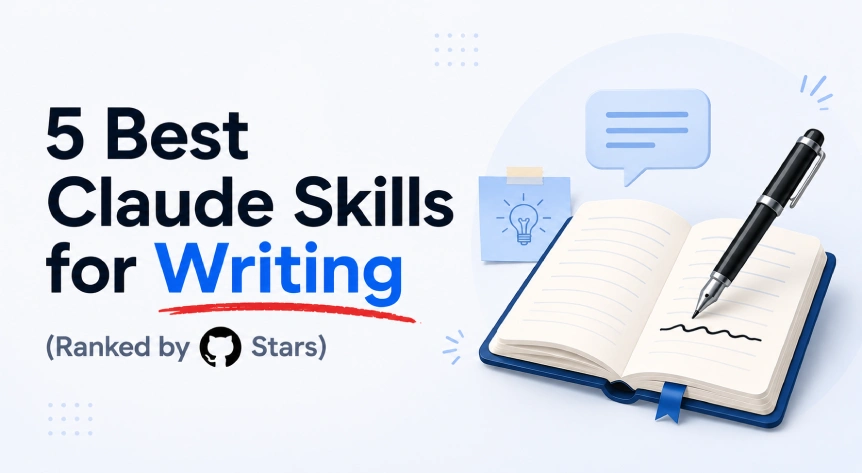
5 Claude Skills That Actually Help You Write Better
Most writing-focused AI skill lists pad themselves with commit messages and status reports. This one does not. It ranks repositories by GitHub stars, but only those built specifically for writing or editing. That distinction matters. It filters for genuine utility, not accidental relevance. If you are exploring how AI can sharpen your prose, this is a practical, no-nonsense starting point. And if you want to question the tech further, our piece on talking to an AI clone offers a useful counterpoint.
From receipts to white backgrounds, discover how a simpler model extracts text with clarity.
A small model that pulls text off a white background sounds deceptively simple, yet that's exactly why it works. The journey from DONUT's document parsing to a focused text extraction tool shows a clear-eyed pivot, one that prioritizes utility over ambition. Starting with receipts is a familiar pain point, but narrowing scope to solve the core problem first is smart engineering. It's accessible AI, the kind that invites tinkering.

Automate PII extraction from emails with intelligent cloud processing
Email inboxes are messy, and the sensitive data they hold makes manual classification both tedious and risky. This walkthrough shows you how to build an intelligent document processing system on AWS that automates the extraction of personally identifiable information. It is a practical, cloud-native approach to reclaiming control over your data workflows. The focus stays on actionable steps, not abstract theory. For those ready to push further into modern AI infrastructure, our guide to distributed training algorithms offers a natural next step.

Smarter RAG Generation: Choosing the Right Candidates for Every Query
Retrieving top-k candidates is only half the battle; the real question is how you feed them to the generator. This piece tackles that head-on, detailing two regimes for sending retrieved chunks and the sufficiency signal that tells you which to use. It's a practical, per-question dispatch that keeps things cheap and efficient. We appreciate the focus on iteration over brute force.
Smarter Thinking, Fewer Tokens: Discover Gemini 3.6 Flash
While the tech world held its breath for Gemini 3.5 Pro, Google quietly delivered something arguably more practical. On July 21, 2026, Gemini 3.6 Flash arrived as a pure efficiency play. It delivers roughly the same reasoning power as its predecessor while consuming fewer tokens and tool calls. That is a meaningful upgrade for teams watching their API bills. We appreciate a release that focuses on doing more with less, especially when it empowers smoother workflows.
Navigating Short Paper Acceptance in Top AI Conferences
A researcher asking about short-paper acceptance rates at ACL/EMNLP/EACL is really probing the field's hidden pressure points. The question reflects a genuine concern: short papers often feel like the underdog track, yet they demand just as much rigor. We'd say, don't let the lower acceptance rate discourage you. Instead, treat it as a signal to sharpen your contribution's clarity and impact. For more on navigating academic pressure, our piece on AI slop filtering offers a parallel on how careful calibration matters more than volume.

Turn One Messy Question Into Four Clear Signals for Smarter RAG
A single messy question string hides a lot of structure. This piece breaks down how question parsing turns that raw input into four typed fields, each one feeding a distinct downstream call for retrieval and generation. It is a practical, grounded look at making RAG systems less brittle and more intentional. If you are still wrestling with vague prompts, this is worth your time. For more on how LLMs navigate structure, explore our related piece on paragraph structure.

Better retrieval means less hallucination: the foundation of trustworthy AI
If a model is inventing answers, the problem often isn't the model. It's the retrieval brick feeding it scraps. When the right context never surfaces, the model fills the gaps with plausible fiction. That's why fixing retrieval matters more than tweaking prompts. Garbage in, garbage out applies here with precision. We respect the logic: give the model nothing to invent, and hallucinations lose their fuel.