NLP
Beyond Market Intelligence keeps NLP in one place: 32 stories so far. The section currently leads with “Strengthen churn and CLV models with the untapped signal in your text data”, “How DoorDash Built a GenAI Platform for 5,000 Users”, and “The Hidden Architecture of Language Models Gets a Definitive Survey”. Your churn and CLV models are leaving signal on the table. DoorDash bet big on open-weights models after starting with vendor-first setups, and that shift is the spine of this story. Acme AI is the next-generation, AI-powered spreadsheet platform built to replace Excel and redefine how analysts, data scientists, and enterprise teams work… The list below is every NLP story on Beyond Market Intelligence, newest first.

Strengthen churn and CLV models with the untapped signal in your text data
Your churn and CLV models are leaving signal on the table. The text your customers generate, support tickets, reviews, product feedback, carries insights that structured data misses. This practical guide shows how to fold that untapped language into traditional models without overhauling your stack. It's about making your predictions sharper with what you already have. For a related look at how wasted effort skews results, our coverage of 50,400 agent runs pairs well with this approach.

How DoorDash Built a GenAI Platform for 5,000 Users
DoorDash bet big on open-weights models after starting with vendor-first setups, and that shift is the spine of this story. Swaroop Chitlur and Sidd Kodwani walk through building a GenAI platform for over 5,000 internal users, tackling LLM gateways, agent gateways, and the constant trade-off between accuracy, latency, and cost. For teams wrestling with similar scale, their architectural bets offer a practical blueprint. Read "Small models, smarter labels: confidence scoring without the hype" alongside this for a complementary take on model evaluation.
The Hidden Architecture of Language Models Gets a Definitive Survey
Thirty-two researchers spent eight months assembling the definitive survey on tokenization, the hidden architecture of language models that affects everything in NLP yet remains wildly understudied. They cover algorithms, evaluations, multilinguality, and even what might replace tokenizers entirely. This is the resource the field has needed. For those exploring how foundational choices shape model behavior, our piece on rethinking compute demands behind LLM post-training research offers a natural companion. Tokenization deserves this level of scrutiny.

Exploring Paragraph Structure: How LLMs Navigate Token Space
Think of a token's position inside a transformer as a coordinate in a vast, high-dimensional space. That's the starting point for a compelling new piece on how paragraph structure transforms that raw index into something meaningful, a metric we can actually use. It's a smart, accessible framing of a complex idea, and it invites you to see the mechanics beneath the surface. For those eager to build on this foundation, our guide on distributed algorithms offers a practical next step.

Bridging Retrieval and Action: A New Approach to AI Tasks
RAG retrieves. Agents act. The gap between them is where real work happens, and one builder decided to close it by hand. They connected both systems explicitly, then ran the same nine tasks through all three approaches. The result is a clear look at what each setup can and cannot do. It is a practical experiment, not a theory. If you are weighing how much autonomy to hand your AI, this is a useful starting point.
Explore a complete ML learning journey from NumPy to Transformers.
Five months of daily commits is a serious signal. This isn't a weekend project; it's a disciplined path from NumPy fundamentals all the way to Transformers. For anyone feeling overwhelmed by the machine learning landscape, this public repo offers a practical antidote. It covers the essential ground: classical models, deep learning, and the data handling in between. It's a resource built by someone who did the work, and it's open for you to explore.
Unlock ChatGPT Work's Potential: A Clear-Eyed Look at Strengths & Limits
ChatGPT Work gets credit where it's earned, but a clear-eyed look matters more than hype. It's a capable tool that simplifies real workflows, yet its limits are just as instructive as its strengths. The models behind it hold their own in many comparisons, but honest assessment beats blind praise. For anyone weighing adoption, this piece cuts through the noise. Curious how verification fits into that picture? Check out "Verify Your AI's Understanding: A Simple Check for Tax Season" for a practical angle.
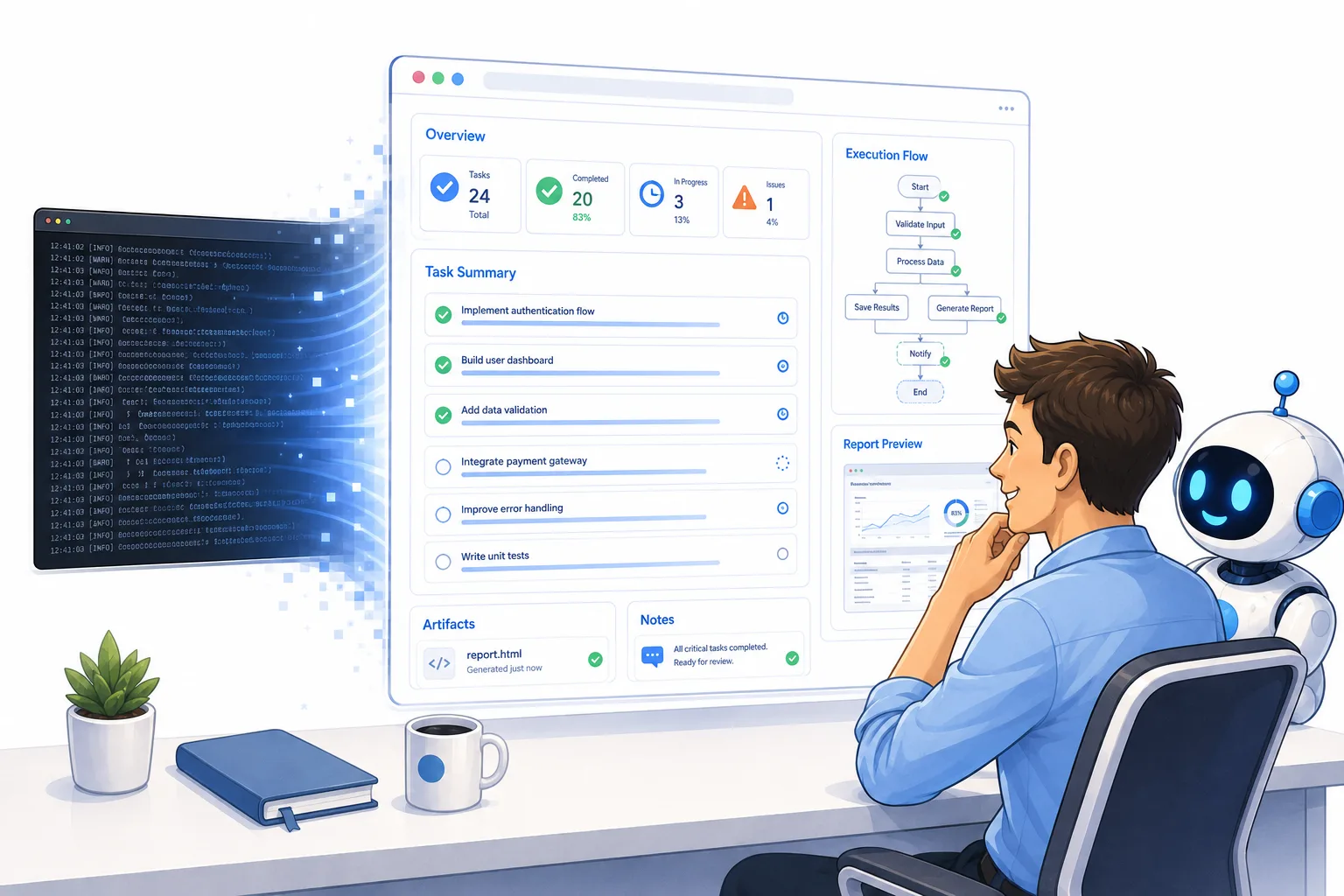
Code Smarter by Clarifying Intent with AI Agents
Tired of repeating yourself to Claude Code, only to watch it misinterpret your intent? This guide cuts through the noise, showing you how to communicate with your coding agents in a way that actually gets results. It's not about more prompts, but sharper ones. For a deeper dive into how AI handles complex tasks, explore the Forrester Function piece. Your workflow deserves better than guesswork.
Your paper results are arriving soon. Explore what's next for your work.
The wait is nearly over. The AACL-IJCNLP 2026 acceptance results are set to drop in just a few hours, and for those who submitted to the ARR May cycle, the tension is real. This moment reflects a broader pressure we're seeing across academic and professional tracks, where the stakes feel higher than ever. It's a good time to step back, breathe, and prepare for whatever comes.
From Config Wrangling to Experiment Scaffolding: A PhD Reality Check
The instinct to keep the eval harness and metric definitions close is the right one. That layer is where your scientific judgment lives. Handing off the scaffolding while holding onto the core is a workable line, even if you keep crossing it. The detachment you describe is real. The fix is likely not more careful diff-reading. It is rebuilding a mental model of the system at a higher level, so you can reason about the numbers without needing the code memorized.
Navigating publication options when top conference scores fall short
A rejection from NeurIPS stings, especially with scores that low. But the real question isn't where you got in, it's what signals you want on your record. TMLR offers a rigorous, peer-reviewed home, while *ACL findings carry conference weight. If you're torn, consider how each venue serves your long-term goals. For a grounded perspective on publishing pressure, our related article, "Neurosurgery Match Requirements Highlight Growing Pressure on Medical Students," draws a fitting parallel. Choose the venue that aligns with your story, not just the prestige.
Let your spreadsheet define done before your data makes the choice.
Most of us assume our AI agent knows what we want. It does not. It will happily define success for you, often in ways you never intended. We build these systems to be efficient, yet we skip the one step that matters: clarity. If you are tired of guessing why your agent made a call, you will find this exploration of unspoken assumptions essential. It is a practical look at a problem we all share.

Choose the right tool first, not just the AI default
Retrieval answers one kind of question, but it is not the whole toolkit. Classifying a request, matching free text to a reference list, or cleaning OCR noise each has a cheaper, more direct method. The real engineering is knowing which tool to reach for. That practical focus makes this a useful read for anyone feeling stuck in RAG's limitations. For a deeper look at how LLMs handle structure, explore our related piece on paragraph and token space.

Hugging Face weighs community ties against a $13 billion offer
A $13B price tag would make Hugging Face one of the biggest AI acquisitions yet. But the founders' hesitation isn't about the money, it's about the community that helped build the platform. That tension between a massive payout and preserving what makes the company special is worth watching. If you're curious how messy data can get when AI tools shape your workflows, our piece on catching AI slop before it skews your model offers a practical parallel.
Submit your real-world NLP work to the EACL 2027 Industry Track
The EACL 2027 Industry Track deadline lands on 11 September, and that is closer than it looks. If you are building language technologies for real users, this is the venue that values your deployment experience over theoretical polish. The organizers understand proprietary data stays private, and the mandatory limitations section keeps things honest. We appreciate that. Explore the full call for papers and consider submitting. The related guide on practical LLM training strategies pairs well with what this track rewards. Your production insights belong here.
Discover how in-person conferences can transform your first AI paper experience.
A first acceptance at an AI conference is a milestone worth honoring, and yes, that includes Findings. The lack of a mandatory presentation requirement might make you hesitate, but the real value lies in the conversations you will have and the feedback you will gather. Showing up in person transforms a line on your CV into a tangible connection with the community.
EMNLP 2026 decisions arrive today as the community turns toward Budapest.
Today, the EMNLP 2026 notifications land, and the wait finally ends. Whether your paper made it or not, the results will shape your next steps. We're hoping the decisions bring you to Budapest, where the conversation continues in person. For those navigating the emotional side of feedback, it's worth remembering that rejection often sharpens your research, not diminishes it.

Why Every Hallucination Detector Misses a Simple Number
A single number tripped up every major hallucination detector, and the reason is hiding in plain sight: ten is not a hundred. That gap between what a model claims and what a human knows is the story here, and it's a sharp reminder that these tools still see patterns, not meaning. We're impressed by the caution this work demands, and it pairs well with the skepticism in *Talking to My AI Clone Taught Me to Question the Tech*.

Choosing Between LangChain and LangGraph for Smarter Agentic Workflows
Choosing between LangChain and LangGraph doesn't have to stall your agentic workflow. This guide cuts through the overlap to highlight four key differences, helping you match the tool to the task. It's a practical read for anyone tired of guessing which framework fits. We appreciate the clarity here, especially since it complements our earlier exploration of distributed training algorithms. If you're building systems that need structure, start with this breakdown. It's a straightforward step toward more intentional design.
Join the Community: Over 150 Commitments and Counting
Submitting a commitment two days before the deadline puts you in a curious spot. You're close enough to the wire to feel the tension, yet far enough that the final tally might already be set. I'd wager most people who committed late did so out of necessity, not procrastination. The real question isn't the total number, but whether the review process rewards those who wait. It usually does, if the work holds up.

Bring Structure to Local LLMs with a Practical Implementation Guide
Structured output turns a local LLM from a clever autocomplete into a dependable tool for real workflows. It's not about caging the model; it's about giving it guardrails so answers arrive clean and usable. The implementation is straightforward once you map your schema, and when things break, you debug with validation errors instead of guesswork. That practical edge makes it worth the setup. For another angle on AI's limits, "Verify Your AI's Understanding: A Simple Check for Tax Season" pairs nicely with this.

Exploring the design logic behind the Transformer architecture
Most explainers hand you the finished Transformer and move on. We wanted to know why it looks the way it does. This piece steps back from Q, K, and V to ask the question that actually matters: what problem was the architecture solving in the first place? It is a thoughtful, grounded reconstruction that rewards curiosity. If you are ready to go deeper, our guide to distributed algorithms pairs well with this foundational view.

When Every Passage Holds the Answer, RAG Needs a New Shape
Most RAG pipelines retrieve a single top passage and call it a day. But some questions don't work that way. Listing questions demand every relevant passage, not just the highest-scoring one. This pipeline walks through that silent failure point and the pipeline shape that actually handles it. It's a practical look at a real limitation, and the reasoning is clear. For readers who want to go deeper, "Exploring Paragraph Structure: How LLMs Navigate Token Space" offers a useful follow-up on how token coordinates shape retrieval.

When your document says "see Section 7.2," AI can now follow the link.
A "see Section 7.2" answer is a dead end, not a destination. When a retrieval system points elsewhere instead of answering directly, the pipeline breaks trust. This piece tackles that exact failure with a loop-based fix: fetch the linked context, then return the real answer. It's a practical, human-centered solution for a frustrating problem. We appreciate the focus on user outcomes over technical spectacle. For more on how LLMs handle structure, explore *Exploring Paragraph Structure: How LLMs Navigate Token Space*.