notebook
Beyond Market Intelligence keeps notebook in one place: 7 stories so far. The section currently leads with “Build Interactive Dashboards Using Marimo's Reactive Notebooks”, “Explore the AI skills that will empower data scientists through 2027”, and “How a single bug fix sharpens BayesianRidge uncertainty estimates”. Spreadsheets weren't built for exploration, but Marimo's reactive notebooks are. If you're a data scientist, the tools you use are changing faster than the workflows you've mastered. Acme AI is the next-generation, AI-powered spreadsheet platform built to replace Excel and redefine how analysts, data scientists, and enterprise teams work… The list below is every notebook story on Beyond Market Intelligence, newest first.
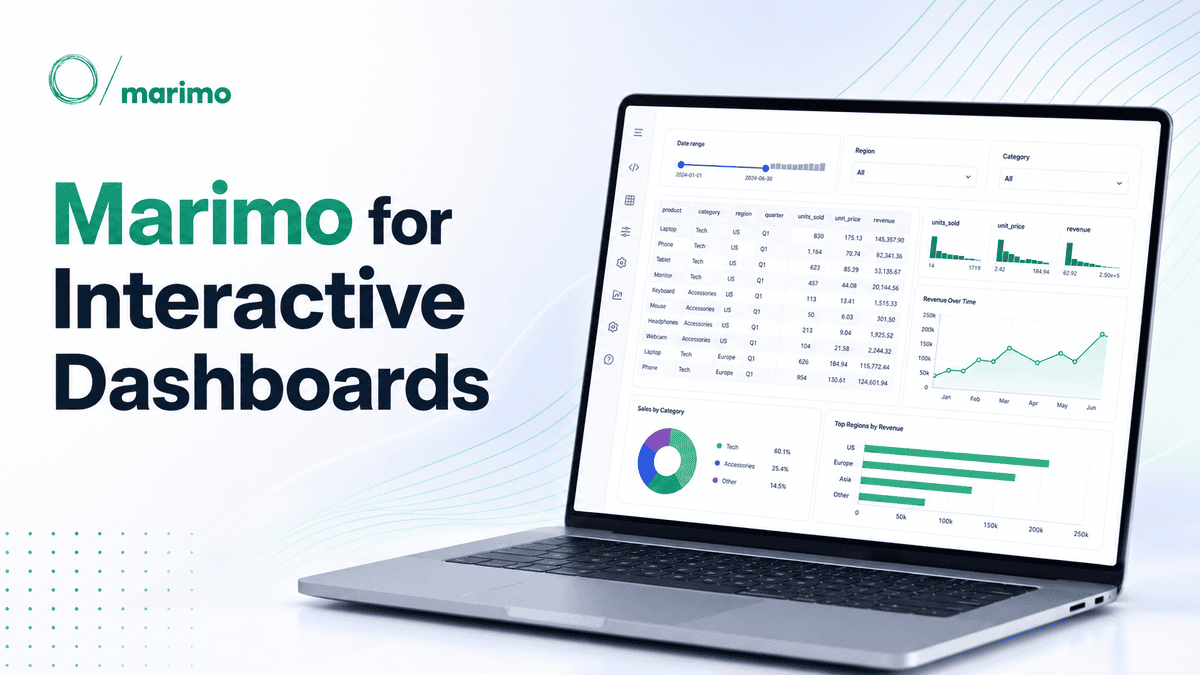
Build Interactive Dashboards Using Marimo's Reactive Notebooks
Spreadsheets weren't built for exploration, but Marimo's reactive notebooks are. This guide walks you through using Python, Pandas, and Altair to turn static analysis into an interactive dashboard you can actually share. We appreciate the focus on practicality, because data should respond to your questions, not the other way around. If you're curious how data representation shapes interpretation, our related piece, "How Many Stories Can Your Data Tell?" pairs well with this hands-on approach.

Explore the AI skills that will empower data scientists through 2027
If you're a data scientist, the tools you use are changing faster than the workflows you've mastered. That's why we're focusing on five AI skills that will keep you relevant in 2027. Each one targets a specific challenge, from simplifying complex tasks to boosting productivity. We've included runnable code you can paste straight into your notebook, so you're not just learning, you're doing. For a deeper look at how distributed systems fit into this, check out our guide on unlocking LLM training.
How a single bug fix sharpens BayesianRidge uncertainty estimates
A subtle bug in BayesianRidge's uncertainty calculation slipped into sklearn 1.8, and this notebook walks through the exact formulas behind `predict` on both versions. It's a sharp exercise in tracing what changed, and it's the kind of forensic digging that keeps models honest. If you've ever wondered how small shifts in regression internals ripple outward, this is worth your time. For a broader look at how data quality issues surface elsewhere, our piece on catching AI slop before it skews your model pairs nicely here.
Turn a GitHub repo into a runnable notebook without the manual work.
Turning a GitHub repo into a runnable notebook usually means wrestling with dependencies and file paths by hand. repo2nb 0.2.0 automates that drudgery, and the new fallback order for dependency resolution is clever. It tries poetry, then uv, then requirements.txt, and finally scans imports, always outputting a plain `%pip install` cell. That keeps generation simple without locking you into a specific tool. Reverse mode and incremental sync round out a practical toolkit.
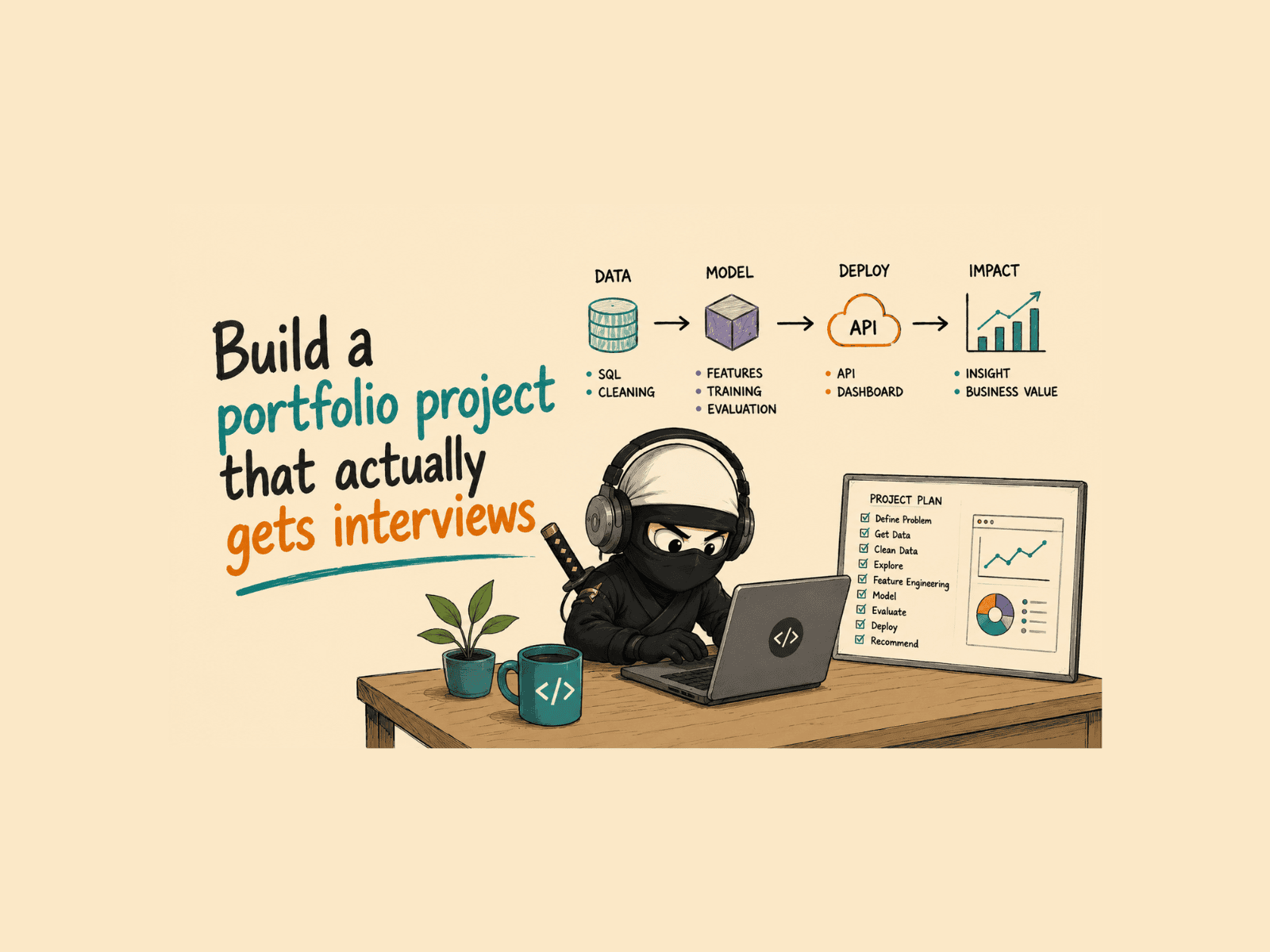
Transform your portfolio from a notebook into a complete data story
A finished notebook is a great start, but it's not a finished story. Most portfolios stop at the analysis, leaving your ability to engineer a real solution unseen. This project shows you how to close that gap, building from raw data all the way to a deployed product. It's a practical push toward work that feels less like an exercise and more like proof. If you're ready to move past static examples, this is the path to take.
Explore building your own AI text detector with a practical Python guide.
Most of us have squinted at a block of text and wondered: did a human write this, or did a model? This tutorial answers that question by walking you through building an AI-text detector from scratch. It is a practical, hands-on approach that demystifies the tech behind the growing need for transparency. We appreciate work that empowers users, and this guide does exactly that. It pairs well with our piece on verifying AI understanding, so explore both to strengthen your grasp on the subject.

Explore a direct link between VS Code and Google Cloud notebooks
The Google Cloud Workbench Notebooks extension does something quietly significant: it lets developers run managed Jupyter environments straight from VS Code, without uprooting their local workflow. That matters. It removes friction while keeping the power of Google Cloud's infrastructure. We like when tools meet developers where they already work, and this feels like a step toward more fluid, AI-assisted data work. If you're exploring how AI fits into your daily toolkit, our piece on bridging retrieval and action offers a useful parallel.