NumPy
Beyond Market Intelligence keeps NumPy in one place: 7 stories so far. The section currently leads with “Peek inside a neural network as it learns, layer by layer”, “Exploring AI Compression: How Simple Networks Visualize Complex Patterns”, and “Accelerate Local LLM Learning: A New Prototype for Faster Fact Correction”. Open the training view and you'll watch a small neural network learn to read digits, layer by layer. A tiny network trained to compress data drew a pentagon. Acme AI is the next-generation, AI-powered spreadsheet platform built to replace Excel and redefine how analysts, data scientists, and enterprise teams work… The list below is every NumPy story on Beyond Market Intelligence, newest first.

Peek inside a neural network as it learns, layer by layer
Open the training view and you'll watch a small neural network learn to read digits, layer by layer. Built with plain NumPy and manual backprop, this tool exposes the messy, instructive details most courses skim over: gradient norms, inactive neurons, and weight shifts from initialization. It reaches about 98.5% on MNIST, but the real value is the lab, where you can ablate neurons or tweak temperature and see accuracy move instantly. For teachers and self-learners, it turns abstract theory into something you can touch.
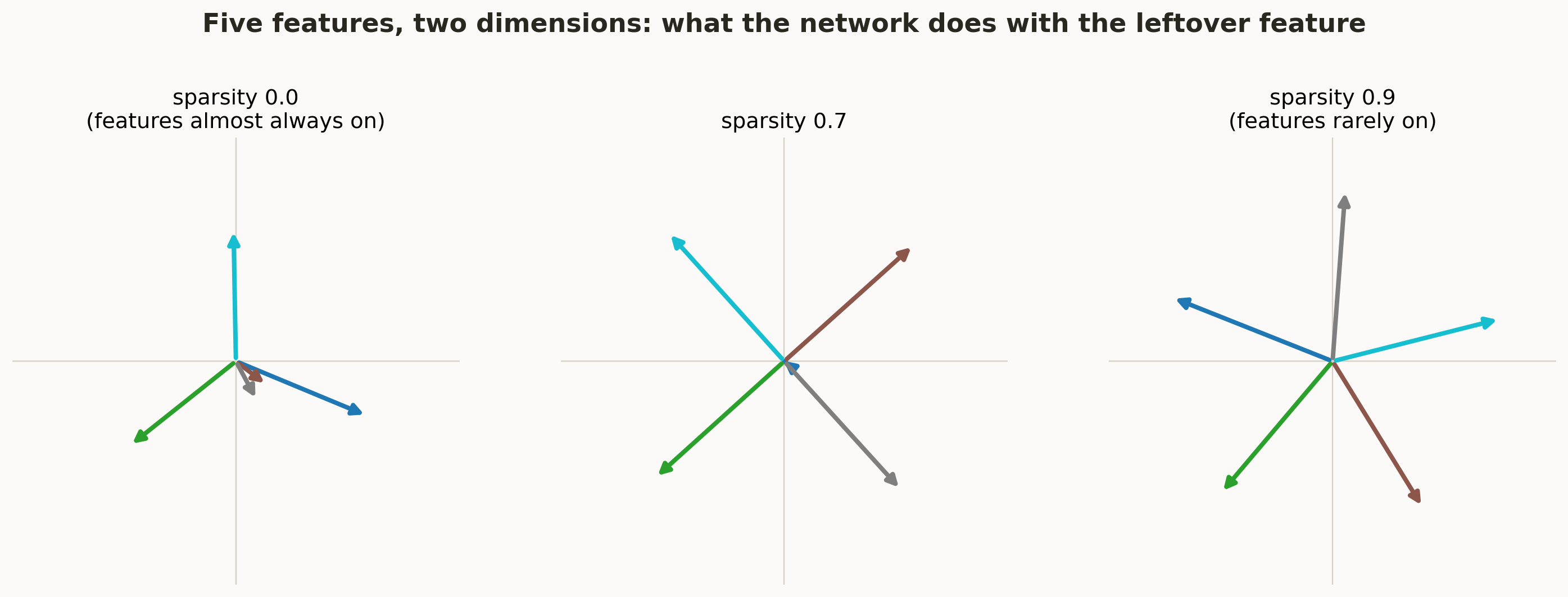
Exploring AI Compression: How Simple Networks Visualize Complex Patterns
A tiny network trained to compress data drew a pentagon. That unexpected shape is the hook in this hands-on exploration of Anthropic's "Toy Models of Superposition," rebuilt from scratch in NumPy with hand-derived gradients and no borrowed numbers. It's a clear, grounded look at how simple networks visualize complex patterns. For more on how structure emerges in AI systems, see our piece on paragraph structure in LLMs.
Accelerate Local LLM Learning: A New Prototype for Faster Fact Correction
Watching a toddler learn taught Kavanutz something about AI. Jayce, his new prototype, skips the heavy lifting of RAG pipelines and fine-tuning entirely. Instead, it shifts raw context vectors across a fixed pool of 4,048 prototype slots, correcting mistakes in real time. The benchmarks are telling: faster updates, better sample efficiency on sequential tests, and a strict memory ceiling. It's a lean, framework-free proof of concept built on NumPy and Java.
Explore a complete ML learning journey from NumPy to Transformers.
Five months of daily commits is a serious signal. This isn't a weekend project; it's a disciplined path from NumPy fundamentals all the way to Transformers. For anyone feeling overwhelmed by the machine learning landscape, this public repo offers a practical antidote. It covers the essential ground: classical models, deep learning, and the data handling in between. It's a resource built by someone who did the work, and it's open for you to explore.
Astra and Fable 5.1: A practical look at AI spreadsheet tradeoffs
Two very capable models can still fail differently. In a side-by-side ML workflow, Astra and Fable 5.1 both improved by 0.02-0.04 F1 after human feedback, proving neither has mastered the process. Astra wins on agentic debugging and reproducibility, while Fable writes cleaner code and more insightful analysis. The real lesson? Pick your tool based on whether you need forensic rigor or readable, adaptable output. For deeper context on model tradeoffs, our related piece, "Explore the Forrester Function," explores similar evaluation themes.

How an open ecosystem made advanced AI more accessible
A single open-source ecosystem quietly became the backbone of modern AI, turning what once felt like a specialist's game into something any curious developer can explore. It's not about hype; it's about access. This post breaks down how that Python foundation made state-of-the-art tools feel approachable, and why that shift matters for how we build. If you're weighing what this means for your own workflow, you might also appreciate "Talking to My AI Clone Taught Me to Question the Tech," which offers a grounded counterpoint.

When AI Models Become the Target, Ransomware Takes a Darker Turn
When the same attacker breaks into the same server twice, the second visit should never bring a weapon built specifically for what you keep there. That's exactly what happened here. In July, Sysdig documented a crew it tracks as JADEPUFFER exploiting a Langflow flaw twice, but the second payload was ENCFORGE, a compiled ransomware locker with no interest in money. It carries no payment portal. It exists to destroy the AI models you cannot restore. That distinction matters.