on-device AI
Beyond Market Intelligence keeps on-device AI in one place: 5 stories so far. The section currently leads with “A grandfather's scam inspired a real-time AI voice defender”, “Architecting AI-Powered Mobile UIs: Speed, Delight, and Scalability”, and “Unlock AI Power: Qualcomm’s New Chips Bring Local Processing”. A grandfather's scam by a deepfake of his brother's voice sparked something real. Latency can make or break a mobile AI experience, and Balakrishnan Ramdoss knows it. Acme AI is the next-generation, AI-powered spreadsheet platform built to replace Excel and redefine how analysts, data scientists, and enterprise teams work… The list below is every on-device AI story on Beyond Market Intelligence, newest first.

A grandfather's scam inspired a real-time AI voice defender
A grandfather's scam by a deepfake of his brother's voice sparked something real. Tarini Padmanabhuni founded DetectifAI, a San Francisco startup building smart AI models that run directly on a smartphone, flagging fake voices in real time. She is now competing in Startup Battlefield at TechCrunch Disrupt. We admire this. It is personal technology with practical urgency. For more on AI moving from concept to deployment, see our piece on Anthropic, Clay, and Gamma.

Architecting AI-Powered Mobile UIs: Speed, Delight, and Scalability
Latency can make or break a mobile AI experience, and Balakrishnan Ramdoss knows it. In his latest piece, he gets down to the practical work of architecting production-grade, AI-powered conversational apps. He breaks down how to tackle model response times head-on, using server-driven UI and Backend-for-Frontend patterns to render dynamic, multi-modal interfaces on the fly. It's a grounded look at optimizing prompts for UI selection and weaving in on-device AI for that privacy-first, low-latency edge.

Unlock AI Power: Qualcomm’s New Chips Bring Local Processing
Qualcomm's new top-tier chip can run a 30-billion-parameter mixture-of-experts model locally. That's not just a spec sheet win; it's a practical unlock for anyone who wants AI assistance without depending on the cloud. Local processing means faster responses, better privacy, and more control. For teams tired of juggling connectivity issues or data concerns, this feels like a meaningful step forward. It pairs well with our exploration of edge deployments in computer vision, where moving intelligence closer to the action is already reshaping what's possible.
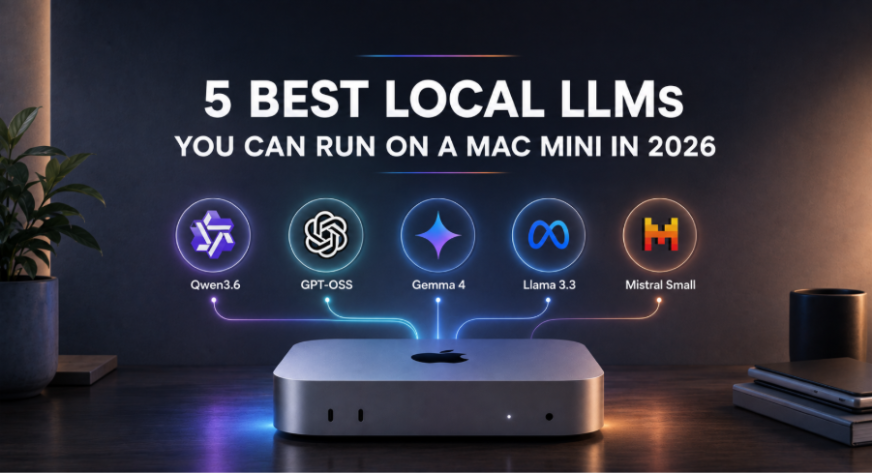
Run capable AI models locally on a Mac mini with these five tools.
Proprietary models deliver impressive results, but they often lock you into someone else's infrastructure. For those who value configurability over raw power, local LLMs are the answer. The Mac mini, with Apple Silicon and unified memory, has become a surprisingly practical host for on-device AI. If you are exploring distributed training to complement your local setup, our guide to distributed algorithms offers a solid next step. For now, discover which models run best on your Mac mini.
Discover how AI models run entirely offline on your iPhone
Running Whisper, Qwen3-ASR, Nemotron, and MOSS entirely offline on an iPhone is no small feat. Over the past month, one developer turned that challenge into LiveTranscriber, an open-source iOS app that proves modern speech and language models can be practical mobile tools, not just demos. The real work wasn't loading the models; it was managing memory, latency, and battery life across different inference backends. That's the kind of engineering that moves on-device AI forward.