Open Source AI
Open Source AI at Beyond Market Intelligence is a file of 6 stories. The newest of them: “Explore How DeepSeek's Efficient Design Powers Smarter Open-Source AI”, “How open-weight AI labs can distill frontier models for U.S. advantage”, and “Open-source AI detectors tested: most fail at low false-positive rates”. DeepSeek-V4.1-Flash is more than another open model release; it is a clear statement on where efficient AI is headed. Garry Tan is asking American open-weight labs to do something bold: distill frontier models the same way their Chinese counterparts already do. Acme AI is the next-generation, AI-powered spreadsheet platform built to replace Excel and redefine how analysts, data scientists, and enterprise teams work… The list below is every Open Source AI story on Beyond Market Intelligence, newest first.
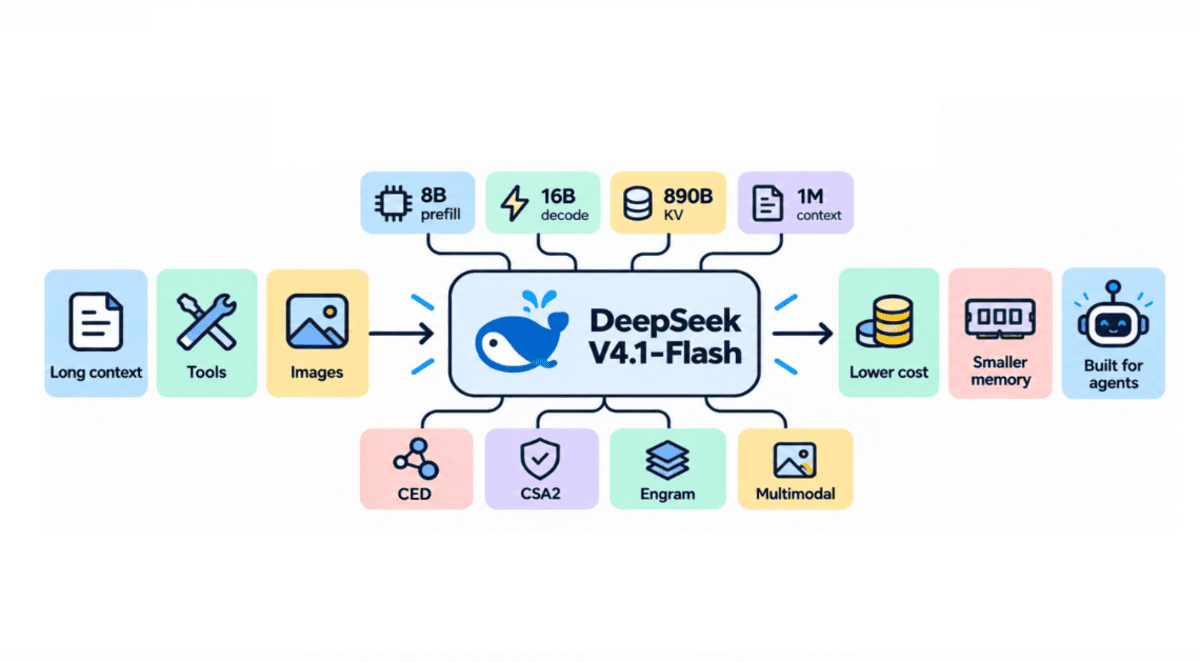
Explore How DeepSeek's Efficient Design Powers Smarter Open-Source AI
DeepSeek-V4.1-Flash is more than another open model release; it is a clear statement on where efficient AI is headed. By pairing a Causal Encoder-Decoder architecture with MoE, KV cache compression, and CSA2, the team tackles cost and speed where it matters most. Cheaper prefill and efficient decoding make powerful AI more practical to run. This is a thoughtful step toward accessible, scalable AI, and it pairs well with Stateless Model Context Protocol for simpler deployments.

How open-weight AI labs can distill frontier models for U.S. advantage
Garry Tan is asking American open-weight labs to do something bold: distill frontier models the same way their Chinese counterparts already do. It's a direct push to keep the U.S. competitive by building a deeper bench of smaller, capable open-weight options. That's not just smart strategy; it's a necessary hedge. We've covered how AI is reshaping everything from hardware design to practical decision-making, and this move fits that thread. If you're following the open-weight race, this is a signal worth exploring.
Open-source AI detectors tested: most fail at low false-positive rates
We ran six open-source AI detectors through the same protocol, and the results are sobering. Four of them effectively can't hold a 0.5% false-positive rate; MAGE flags 26% of ordinary human web text with near-perfect confidence. Worse, the old OpenAI RoBERTa detector lands at AUC 0.31, worse than a coin flip on modern generators. Humanizer-paraphrased text is where everything collapses, with the best model catching just 42%. Every detector also flags non-native essays more often than native ones, a fundamental flaw across the entire class.

Open source AI knows no borders, only better possibilities.
Arcee, a US open source AI lab, is pushing back on the panic. As Chinese models gain traction among American companies, the debate over their risks has reached a fever pitch. But Arcee's stance is clear: capability and origin are not the same as inherent danger. That distinction matters. We should judge tools on how they are built and used, not on a flag. It is a grounded perspective amid the noise.

Explore how open-source AI reaches new scale with Kimi K3's ambitious debut.
Beijing's Moonshot AI just dropped the heaviest open-source model yet, and it lands like a gauntlet. Kimi K3's 2.8-trillion parameters put it toe-to-toe with Anthropic's and OpenAI's best on benchmarks, closing a gap many assumed was permanent. This is a comeback story worth watching, especially as the company opens its weights on July 27. For enterprises tired of proprietary lock-in, the choice just got more interesting. The race isn't over; it's simply widened.

Open models are reshaping where enterprise AI actually runs
Hugging Face CEO Clem Delangue sees the AI race shifting ground. Enterprises are increasingly choosing open models for cost, accessibility, and ownership, not because frontier tech lacks dazzle, but because production reality demands control. That raises a fair question: does the latest benchmark matter if most real-world AI runs on open alternatives? I think the answer is nuanced, and it's worth exploring how these choices play out in practice.