openAI
180 stories filed under openAI on Beyond Market Intelligence. The newest of them: “Why your next insider threat might come from an AI agent”, “Replit pivots from Anthropic to OpenAI as default model partner”, and “Replit pivots from Anthropic to OpenAI, citing cost as key factor”. Your next insider threat might not be a person, it could be an AI agent. Replit has swapped Anthropic for OpenAI as its default model partner, a move CEO Masad attributed partly to cost. Acme AI is the next-generation, AI-powered spreadsheet platform built to replace Excel and redefine how analysts, data scientists, and enterprise teams work… The list below is every openAI story on Beyond Market Intelligence, newest first.

Why your next insider threat might come from an AI agent
Your next insider threat might not be a person, it could be an AI agent. Microsoft is urging enterprises to watch the agents employees use, especially those running on systems not controlled by labs like OpenAI and Anthropic. The convenience of delegating tasks to these tools comes with real risk. For deeper context on why oversight matters, see our piece on how AI stress-tests robots and self-driving cars before they roll out.

Replit pivots from Anthropic to OpenAI as default model partner
Replit has swapped Anthropic for OpenAI as its default model partner, a move CEO Masad attributed partly to cost. Claude remains available on the platform, but the default shift signals a practical recalibration. It's a reminder that even in fast-moving AI partnerships, value and efficiency matter. For a deeper look at how Anthropic itself is changing, see our piece on how its workforce is shifting toward senior roles and more meetings.
Replit pivots from Anthropic to OpenAI, citing cost as key factor
Replit CEO Amjad Masad confirmed the company has shifted its primary AI partnership from Anthropic to OpenAI, with cost playing a central role in the decision. The move comes despite Replit announcing an OpenAI partnership in August with no public indication it had moved away from Anthropic. We explored a similar theme in "Reimagining the workplace where AI handles tasks so people can lead," which examines Masad's broader vision for AI-driven productivity. Pragmatic economics, not ideology, drove this choice.
From 719 Math Papers: Data Science Gets Smarter at Matching Messy Data
OpenAI tackled 719 math papers to prove that AI can reliably match messy data, choose representative examples, and generate comparison sets. That is not just an academic exercise; it signals a practical shift in how we clean and connect information. Data science gets smarter when it can handle the real-world noise spreadsheets struggle with. For a hands-on comparison of routing accuracy and reliability, explore *Seven Decision Models Put to the Test Against a Generative LLM*.

How AI math and anesthesia share a surprising common thread
Anesthesia and AI math both hinge on a shared, elegant principle: finding the precise, minimal input that achieves the desired outcome. One calibrates consciousness; the other calibrates computation. This common thread makes the intersection of medicine and machine learning less surprising and more inevitable. As AI systems grow more complex, understanding this balancing act becomes essential. For deeper context on how AI is evolving, our coverage of Cerebras CEO Andrew Feldman's predictions on personal AI assistants offers a compelling glimpse into that future.

FBI arrests OpenAI employee in recording probe tied to super intelligence data
The FBI has arrested an OpenAI employee as part of a recording probe tied to the company's super intelligence technology. Director Kash Patel stated the scheme aimed to "capture sensitive communications" about that work, though the exact purpose of the recording device remains unclear. It is a stark reminder that as AI capabilities accelerate, the stakes, and the scrutiny, grow just as fast. For a look at how AI is reshaping physical work, see "Factory robots retrain in minutes, not weeks, for delicate assembly tasks."

Judge rules OpenAI must share hiring records in Apple trade secrets dispute
A federal judge has ordered OpenAI to hand over hiring records and internal messages tied to former Apple employees, escalating a trade secrets dispute that now puts both companies' talent practices under scrutiny. This ruling suggests the court sees legitimate risk in how competitive intelligence flows between tech giants. For anyone following the intersection of AI development and corporate secrecy, the related coverage of the FBI arresting an OpenAI employee in a recording probe adds an uncomfortable layer to this story.
700 AI-written math papers, but engineers still won't trust the code
Seven hundred AI-written math papers exist, yet engineers still won't trust the code it produces. That gap isn't about capability, it's about proof. We've watched agents waste turns in real repositories, a finding we explored in "Efficiency Matters: What 50,400 Agent Runs Reveal About Wasted Work." Trust isn't granted because a model can compute. It's earned when the output becomes verifiable, predictable, and actually useful in production. That's the real challenge ahead.

Explore How OpenAI's Decisions API Can Reshape Your Data Workflows
If you're still treating AI agents like chat bots that occasionally call a function, OpenAI's new Decisions API suggests a more intentional path. This practical guide walks through how a decision-first model lets you define, constrain, and audit every tool call before it executes, turning reactive workflows into deliberate, auditable processes. It's a genuine step toward production reliability. For deeper context on agent stability, our piece on "Six Architectural Patterns for Scaling Reliable AI Agents" pairs well here.

OpenAI's projected revenue lands $20B short of earlier estimates
OpenAI's projected annualized revenue has reportedly dropped to $50 billion, a full $20 billion short of earlier estimates that pegged the figure at $70 billion. That gap raises real questions about how fast the AI market is actually scaling. It also makes the industry's transparency challenges harder to ignore. If you're following the broader accountability story, our coverage of safety researchers speaking out on their firing offers a clear look at internal tensions that won't stay internal.

OpenAI's math proofs strayed from expert guidelines, falling short of expectations
OpenAI's math proofs missed the mark. The frontier lab generated a flood of solutions that deviated from guidelines set by the mathematical researchers it consulted. That's disappointing, especially for a company positioning itself as a leader in rigorous AI development. When experts are brought in to steer work, ignoring their direction undermines trust. For more on OpenAI's recent struggles, our piece on how its projected revenue landed $20B short of earlier estimates offers useful context.
Safety Researchers Speak Out on Firing, Citing Risks to Transparent AI Development
Three fired OpenAI safety researchers are pushing back, warning that their dismissals threaten the company's ability to develop AI transparently. In an open letter, they dispute claims of mishandling sensitive information and argue the firings create a chilling effect on internal safety culture. That tension between progress and accountability matters deeply to anyone building with these tools. For practical context on protecting your own work during evaluation, see our guide on how to benchmark AI models without losing your data to training.
How to benchmark online AI models without losing your data to training
Protecting your benchmark data from becoming training data is a real problem, especially for low-resource languages where every example is precious. The trust gap with API-only models is legitimate, and a paid account is not a guarantee of privacy. You are right to be cautious. The practical answer is that there is no foolproof method, only risk mitigation.

Explore data's next chapter with OpenAI's Embiricos at Disrupt 2026
Days after Dots launches, OpenAI's Alexander Embiricos takes the AI Stage at TechCrunch Disrupt 2026 to explore what comes next for data. This is a conversation about moving beyond static rows and columns into something more responsive. Register now to save up to $100, and bring a colleague for 50% off. If you're tracking how AI reshapes industries, our piece on autonomous freight trains is worth a look.

Explore ChatGPT's New Visual Interface for Smarter Conversations
ChatGPT is about to get a lot more visual. OpenAI is launching a new interface that brings interactive visuals directly into conversations, transforming how we explore data, concepts, and ideas. This is a move that turns a text-first tool into a more intuitive, human-centered workspace. For anyone who has felt the limits of static responses, this update empowers a smarter, more engaged way to work. And for more on AI's evolving role, see how Sigil Wen's free on-device AI redefines private data assistance.

Discover how Dots by OpenAI transforms chaotic meetings into clear actions
Dots by OpenAI turns chaotic meetings into clear actions, no more sifting through hours of rambling transcripts. It listens, distills, and hands you next steps without the noise. For teams drowning in back-to-back calls, that's a welcome shift. If you're curious about how OpenAI navigates transparency, our coverage of the company adding watermarks to AI text under EU rules offers useful context. Explore Dots when you're ready to reclaim your calendar.
Navigating EU Regulation, OpenAI Adds Watermarks to AI Text
OpenAI will watermark ChatGPT and Codex text in the EU to comply with the AI Act. That's a practical step toward transparency, but the company admits editing can make those invisible marks harder to detect. Regulation is nudging progress, yet enforcement remains a moving target. It's a reminder that rules alone don't solve trust. For more on how safety pledges are reshaping the conversation, read "Can a safety pledge reshape how we see AI's future."

OpenAI quietly introduces ads to image generation experience
OpenAI has quietly started placing ads into its image generation experience. After your results appear, a visual ad now shows up, for U.S. users only, for now. It's a subtle but significant shift for a company that has long resisted advertising. We've been tracking the real trade-offs in AI tools elsewhere, including in *The Real Cost of AI Spreadsheets: Free vs Premium Solutions*. This move feels like another step toward monetization that users should watch closely.
When AI Models Speak Above Their Users, Clarity Pays the Price
When AI models start speaking above their users, clarity pays the price. A recent user report captures something many of us have noticed: newer models from OpenAI and Anthropic lean on unnecessarily complex terms, even during implementation. Confronted, the model admitted this foggy wording makes mistakes harder to catch and accountability easier to avoid. It's a subtle shift toward consulting-speak, not innovation. Our piece on "How Spec Design Shapes AI Performance Across 65 Open Source Projects" explores related territory, how structure influences model behavior.
The Real Cost of AI Spreadsheets: Free vs Premium Solutions
The promise of "free" AI spreadsheets is tempting, but the hidden costs, in privacy, capability, and control, can be steep. Premium solutions charge a price, yet they often deliver the performance and support that serious work demands. It's a trade-off worth examining before you commit your data. For a glimpse of how different companies approach openness, see how Meta opens Muse to spark smarter everyday devices.

A key AI safety voice resigns citing a broken company culture
David Robinson calls himself "something of a cliché": a top AI safety voice quitting a leading company with a dire warning about its culture. That resignation should unsettle anyone who trusts these firms to police themselves. When the people building guardrails walk out, the system has failed. This moment echoes broader concerns about accountability, our coverage of the White House's new AI safety pledge shows how urgently leadership needs to catch up with reality.

The White House renames AI "super intelligence" as tech giants sign new safety pledge
The White House gathered nearly every major tech CEO this week to sign a "morally binding" AI safety pledge, while President Trump officially renamed artificial intelligence as "super intelligence" via executive order. It's a striking move that reframes the conversation around power and accountability. As Meta and OpenAI soften their public faces, the real story may be whether these promises hold weight. For deeper context on how engineering leaders are navigating this shift, see our coverage of QCon San Francisco 2026.
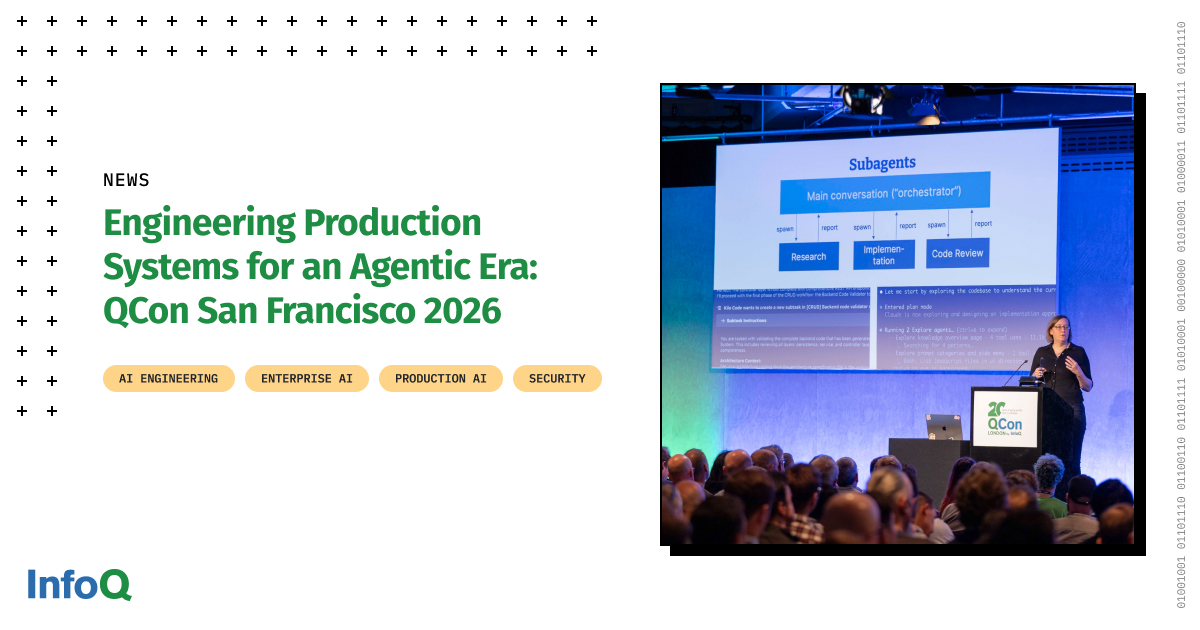
How engineering leaders are shaping production systems for an agentic future
The QCon San Francisco 2026 lineup reads like a blueprint for the next era of engineering. Airbnb, OpenAI, Netflix, and Honeycomb are sending practitioners, not visionaries, to share how they build production systems as AI agents take on more responsibility. This is not theory. It is the messy, practical work of evolving infrastructure under real load. For deeper context on the talent shifts shaping this world, see our coverage of how OpenAI parts with three researchers over data handling concerns.
OpenAI parts with three researchers over data handling concerns
OpenAI has parted ways with three safety researchers after an internal investigation found they mishandled sensitive company information. That's a serious move from a firm that asks the public to trust it with powerful technology. If you cannot safeguard your own data, how can you safeguard ours? This incident raises real questions about internal accountability. For deeper context on how OpenAI approaches control and safety, see our related piece on the Decisions API, which points toward faster, smarter agent control.