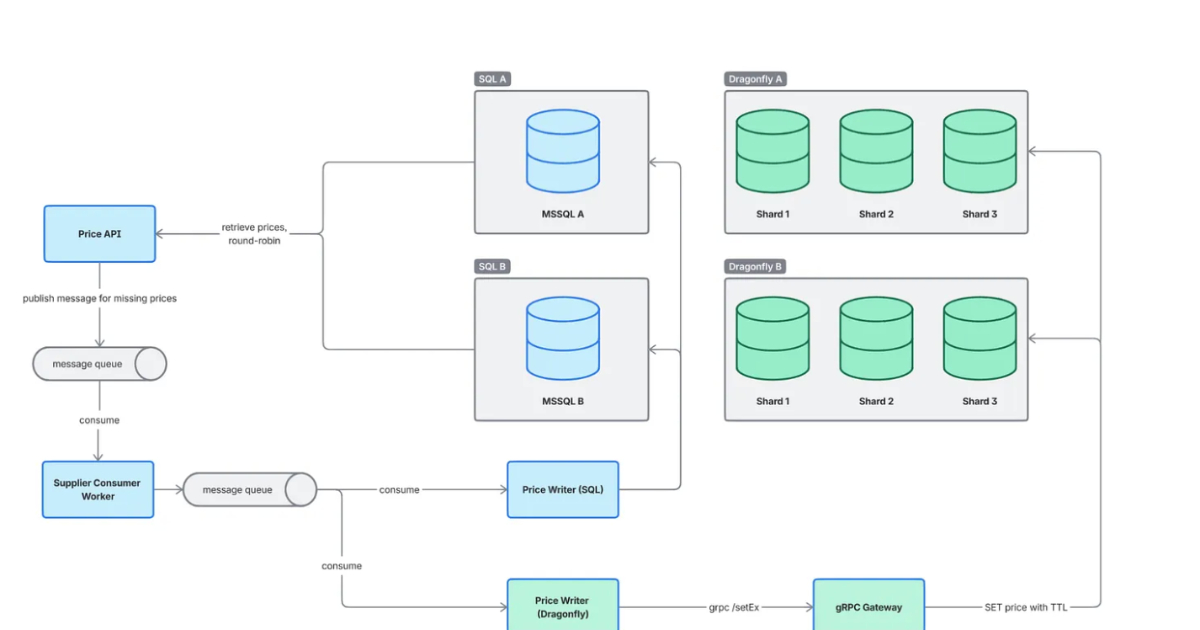
Agoda's migration from a 72-shard SQL Server price cache to DragonflyDB is the kind of engineering story that rewards close reading. The headline numbers are striking: an eightfold reduction in P99 read latency on a 1.5 TB cache, achieved with just two DragonflyDB clusters. But the real insight is in the process. Agoda didn't rip and replace. They staged dual reads, validated parity, shifted traffic gradually, and built decentralized failover detection. That is how you move a system that handles hotel pricing at scale without turning the migration into a fire drill. It is methodical, boring in the best sense, and deeply instructive.
This approach feels especially relevant when you consider how many teams are still wrestling with legacy data infrastructure. The pressure to modernize is real, but the path is rarely a clean cutover. Agoda's playbook offers a template: treat the migration as a series of reversible steps, not a single leap. That is a lesson that extends beyond databases. Look at how Scale Sandboxes Instantly: A New Approach to Concurrent AI Workloads describes rebuilding infrastructure to handle concurrent workloads. The same principle applies: when you change the foundation, you do it in layers, with constant validation. And Microsoft Open-Sources TauGrid to Simplify AI Workload Management on Kubernetes shows a similar commitment to giving engineers better tools for orchestration, not just raw compute. The through-line is that modern infrastructure demands more than raw speed; it demands control, observability, and a migration path that does not compromise reliability.
What we would tell a reader who is considering a similar move is this: the choice of database matters, but the migration strategy matters just as much. Agoda's success was not simply about DragonflyDB being faster. It was about the discipline to verify every step. The dual-read phase, where both systems serve traffic and results are compared, is a low-risk way to surface discrepancies before users feel them. Parity validation ensures the new system behaves like the old one, just faster. And gradual traffic shifting means you can roll back quickly if something looks off. These are not glamorous techniques, but they are the difference between a smooth transition and a late-night incident post. The decentralized failover detection is the detail we would watch closely. It suggests Agoda is thinking about resilience not as a feature of the database, but as a property of the whole system.
The practical takeaway here is straightforward: you do not need a greenfield rewrite to adopt modern infrastructure. You need a plan, patience, and a willingness to measure everything. Agoda's P99 improvement is impressive, but the more valuable takeaway is the methodology. If you are staring down a legacy cache or any data layer that is showing its age, the question is not whether DragonflyDB is the right tool. The question is whether you have the same appetite for staged, verifiable change. Because the technology will evolve, but the discipline of a careful migration is what actually moves the needle. Watch how Agoda handles the next phase, especially under peak seasonal load. That will tell you more than any benchmark ever could.