parsing
parsing at Beyond Market Intelligence is a file of 13 stories. The newest of them: “Describe a task in English and let AI compile it into a local program.”, “Design Your Data: Why a Simple FAQ Can Outperform RAG”, and “Explore how Astro's Sätteri transforms build speed with Rust-powered Markdown.”. Describing a function in English and watching it become a reusable neural program that runs locally, no cloud dependency, is a meaningful step past the usual demo cycle. Most RAG setups fight messy documents. Acme AI is the next-generation, AI-powered spreadsheet platform built to replace Excel and redefine how analysts, data scientists, and enterprise teams work… The list below is every parsing story on Beyond Market Intelligence, newest first.

Describe a task in English and let AI compile it into a local program.
Describing a function in English and watching it become a reusable neural program that runs locally, no cloud dependency, is a meaningful step past the usual demo cycle. ProgramAsWeights, an open-source project from the University of Waterloo, separates compilation from inference: a larger model writes the task-specific weights, while a smaller interpreter executes them repeatedly. It works on a CPU, compiles in seconds, and even outperforms direct prompting of a much larger model on FuzzyBench.

Design Your Data: Why a Simple FAQ Can Outperform RAG
Most RAG setups fight messy documents. This piece flips that struggle into a design choice. A well-structured FAQ inverts the pipeline: parsing becomes trivial, retrieval acts as a cache, and few-shot prompting turns into a retrieval problem. It's a clever reframing that rewards intentionality. If you're tired of wrestling with chaotic corpora, this perspective offers a practical path forward. For a deeper look at how LLMs handle structure, our piece on paragraph navigation in token space pairs well with this.

Explore how Astro's Sätteri transforms build speed with Rust-powered Markdown.
Astro's new Sätteri processor is worth paying attention to if you've felt the drag of slower builds. Built in Rust, it speeds up Markdown and MDX processing by up to 61% for Astro 7.0, which is a meaningful leap for teams juggling content-heavy sites. What stands out is its balance: flexible JavaScript plugins and native Markdown features, all while staying compatible with the unified ecosystem. It's a practical step forward, not hype.

Build the Index Before You Open the Folder
A case file is more than a stack of PDFs, and the index proves it by mapping what the case type demands before a single folder is opened. The two questions worth building for are not retrieval questions at all, which reframes how we think about RAG's purpose. It's a sharp, practical push toward relational tables that serve the work. For deeper context on how LLMs handle structure, our related piece on paragraph structure and token space pairs well here.
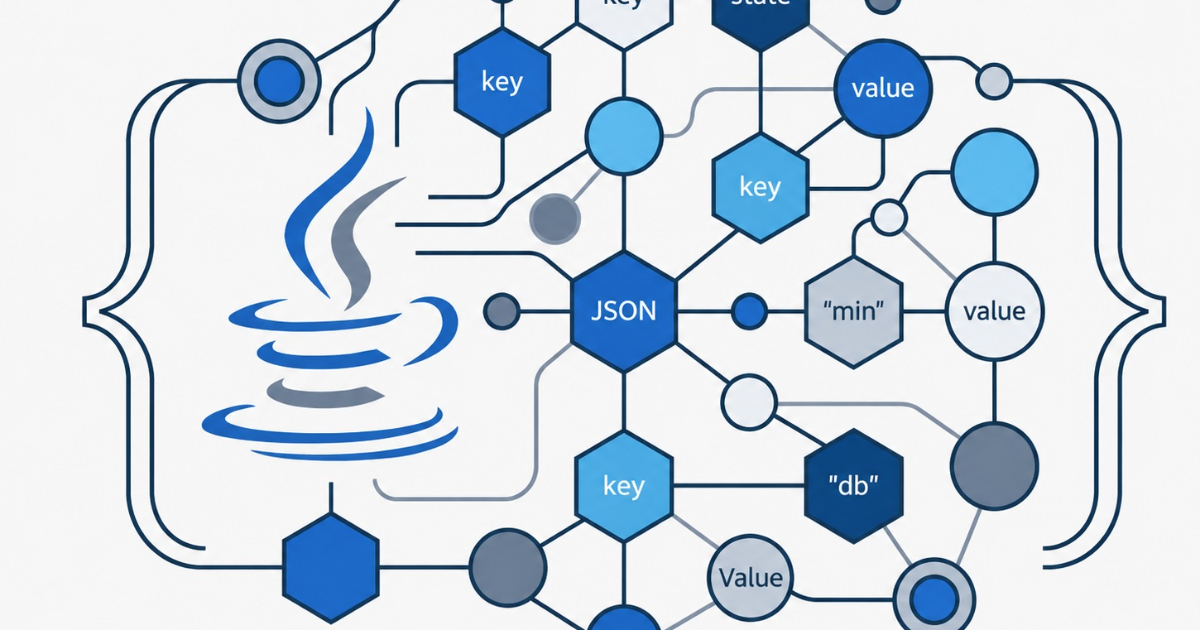
Explore how a native JSON API simplifies data handling in JDK 28.
JEP 540 has moved to Target status for JDK 28, and that's worth paying attention to. It brings a compact JSON API that handles parsing and generating documents without dragging in external dependencies. The immutable value hierarchy keeps things clean, and strict syntax rules mean fewer surprises. What stands out is the focus on core tasks, not endless features. Feedback during incubation will refine it further. For developers tired of bolting on libraries for basic JSON work, this feels like a step toward simpler workflows.
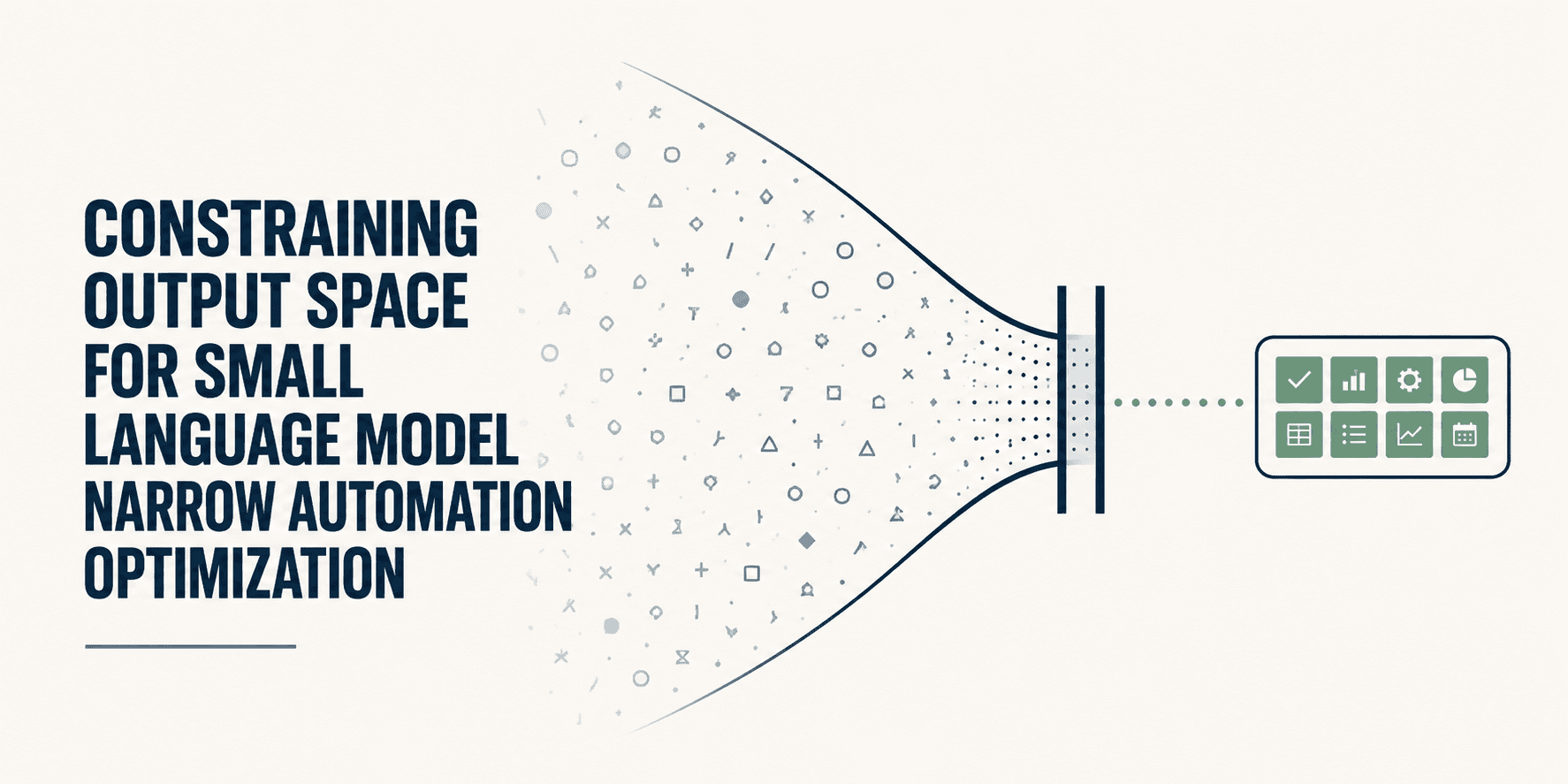
Tame Small Language Models by Constraining Their Output Space
Parsing generated text is a losing game. Every format variation you forget to handle becomes another silent failure. This first entry in our narrow automation optimization series tackles the real solution: constraining the output space from the start. It's a practical technique that saves time and spares you the headache of brittle regex. For a broader take on connecting systems, our piece on bridging retrieval and action offers a useful companion. This approach is simpler than it sounds, and it works.

Discover how bijou64 makes integer encoding safer and faster
Bijou64 takes a meaningful step beyond the familiar trade-offs in integer encoding. By ensuring every number has exactly one byte representation, Ink & Switch closes a canonicality bug class that has long lurked behind attacks on PKCS#1, JWT libraries, and Bitcoin. That is a practical win for safety. The speed gains, decoding two to ten times faster than LEB128, make it worth exploring. Community ports to Elixir, Go, Perl, and Java arrived quickly. For more on simplifying complex systems, our Kubernetes 1.
Explore papers by selecting any passage, formula, or figure for instant AI clarity.
Reading interp papers often means juggling passages between tabs just to make sense of a single formula. This project cuts through that friction. The tool lets you select any passage, figure, or citation and get an explanation grounded in the full paper's context, no context-switching required. It's a practical, honest solution built on a real pain point. Running it on a personal API key is refreshingly humble.

When spreadsheets fail, adaptive parsing hands your data to the right expert
When a flat table or a figure slips past your parsing pipeline, the LLM becomes the last line of defense. That is the premise of this walkthrough, and it is a good one. We follow two real escalations end to end: one flat table routed to Azure, one figure handed to a vision model. The approach is practical, not theoretical. If you are exploring how to build resilient document intelligence, this is worth your time.

Before retrieval begins, a small loop refines your question
The small loop runs before retrieval, and that sequencing is the insight. Read the doc, ask what is missing, re-parse. It is a tight, deliberate cycle that treats question parsing as its own engineering problem, not a footnote to context building. We appreciate the restraint here. This is prompt engineering, then context engineering, then loop engineering, each step earning its place. For readers tracking how LLMs navigate structure, our related piece on paragraph structure in token space pairs well with this disciplined approach.

Smart Parsing That Escalates Only When the Data Demands It
Most PDF parsing bills you for every page, whether you need it or not. This piece from our series on enterprise document intelligence flips that model. It walks through an escalation cascade where cheap, deterministic checks run first, flagging a failed parse before you ever pay for a heavier parser. That pragmatic, cost-aware loop is exactly the kind of engineering discipline we admire. If you enjoy this, our related piece on bridging retrieval and action offers a similarly grounded take on connecting AI tasks.

Turn One Messy Question Into Four Clear Signals for Smarter RAG
A single messy question string hides a lot of structure. This piece breaks down how question parsing turns that raw input into four typed fields, each one feeding a distinct downstream call for retrieval and generation. It is a practical, grounded look at making RAG systems less brittle and more intentional. If you are still wrestling with vague prompts, this is worth your time. For more on how LLMs navigate structure, explore our related piece on paragraph structure.

Stop parsing JSON manually and let AI handle structured data output
If you're tired of wrestling with JSON schemas and manual parsing, this guide is for you. It demonstrates a cleaner path: using Pydantic with OpenAI to get structured outputs directly from LLMs. The approach removes the fragile, time-consuming busywork, letting you trust the model's response instead of second-guessing every field. It's a practical shift toward more reliable data handling. For those ready to move beyond basic prompting, this is a solid next step.