payments
Beyond Market Intelligence keeps payments in one place: 13 stories so far. The section currently leads with “Oracle Updates New Mexico Data Center Timeline, Payment Terms”, “India introduces a small fee on larger UPI payments starting October”, and “InDrive expands beyond rides to capture consumer attention at scale”. Oracle's revised New Mexico data center timeline comes with a practical safeguard: if the facility misses its 2028 target, Oracle can delay payments. India's UPI network has long been a digital payments triumph, but starting October 15, larger transactions will carry a 0.4% merchant fee. Acme AI is the next-generation, AI-powered spreadsheet platform built to replace Excel and redefine how analysts, data scientists, and enterprise teams work… The list below is every payments story on Beyond Market Intelligence, newest first.

Oracle Updates New Mexico Data Center Timeline, Payment Terms
Oracle's revised New Mexico data center timeline comes with a practical safeguard: if the facility misses its 2028 target, Oracle can delay payments. That's a reasonable hedge, not a concession. It keeps the project accountable while giving Oracle room to navigate construction realities. For anyone watching AI infrastructure buildouts, this is the kind of clarity that builds trust. If you're tracking similar momentum, our piece on Nscale's $3.36B raise shows how capital is flowing into this space.

India introduces a small fee on larger UPI payments starting October
India's UPI network has long been a digital payments triumph, but starting October 15, larger transactions will carry a 0.4% merchant fee. It's a measured step toward sustainability, acknowledging that free rides eventually run out of road. The move doesn't undermine UPI's accessibility; it refines its economics. For users, the change is modest, yet it signals maturity in a system built on scale.

InDrive expands beyond rides to capture consumer attention at scale
InDrive's ad business is scaling fast, and that's worth watching. Since its July 2025 pilot, the ride-hailing company has served over 2 billion impressions and now attracts more than 2,000 paying advertisers monthly. It's a clear sign that inDrive is moving beyond transportation to capture more consumer spending. For context on how platforms expand their infrastructure, our piece on Cloudflare's Blog finding performance gains with EmDash offers a useful parallel.

Discover how AI can reshape your data privacy decisions.
Meta wants Muse inside your email, calendar, payments, and health data. That's a lot of trust to ask for. The company's biggest consumer AI bet yet will test whether users are willing to hand over intimate access to a personal agent. For many, the answer will depend on past experience. If you need more detail, our piece "Explore Early Access: Muse's New Features, By Request" breaks down what joining the waitlist actually entails. Muse's ambition is clear.

Authors question who truly benefits from AI settlement payments
The Authors Guild settlement with Anthropic was always going to get messy, but the latest pushback reveals a familiar fault line. Authors argue that publishers and agents are reaching for a larger slice of the payments than their contributions warrant. It is a fair concern when the agreements that enabled the training data are being repackaged as the basis for new claims. The outcome here could set a useful precedent for how future AI licensing disputes are resolved.

X Money now handles creator payouts, reshaping how you get paid
X Money is stepping in to handle U.S. creator payouts, a move that quietly retires Stripe from that role. It's a practical consolidation, folding payments into X's own service rather than leaning on a third party. We see this as a signal of confidence in their infrastructure, though the real test will be how smoothly creators actually get paid. For more on how companies are reworking financial timelines, check out our piece on Oracle's updated data center terms.

Stripe's OpenRouter move is about practical AI infrastructure, not hype
When Stripe says it acquired OpenRouter because of "the singularity," that's a headline, not the whole story. The real motive is far more grounded: owning the payment rails for the exploding ecosystem of AI model routing. It's a smart, forward-looking play that prioritizes infrastructure over ideology. This isn't about chasing a sci-fi future. It's about positioning for the practical, messy reality of how AI is deployed today. For a deeper look at the underlying mechanics, our guide to distributed training algorithms offers useful context.

TikTok expands payments with peer-to-peer transfers in DMs
TikTok is quietly testing peer-to-peer payments through its DMs, leaning on the TikTok Pay infrastructure already live in Southeast Asia. It's a practical move that could make sending money feel as native as commenting or sharing a clip. The feature hasn't rolled out broadly, but the direction is clear: social platforms are becoming more transactional, not less. For users tired of juggling apps, this could simplify things.

Apple explores multi-million-dollar deals to bring news into Siri.
Apple is reportedly in talks to pay publishers for the right to use their news in Siri, with the WSJ noting a nine-figure budget under consideration. That's a serious commitment to making the assistant a real-time news source, not just a tool for commands. It signals a smart bet on relevance, though the details will matter. For context on how AI agents are courting business users, our piece on Meta bringing its AI helper Muse to small business owners is worth a look.
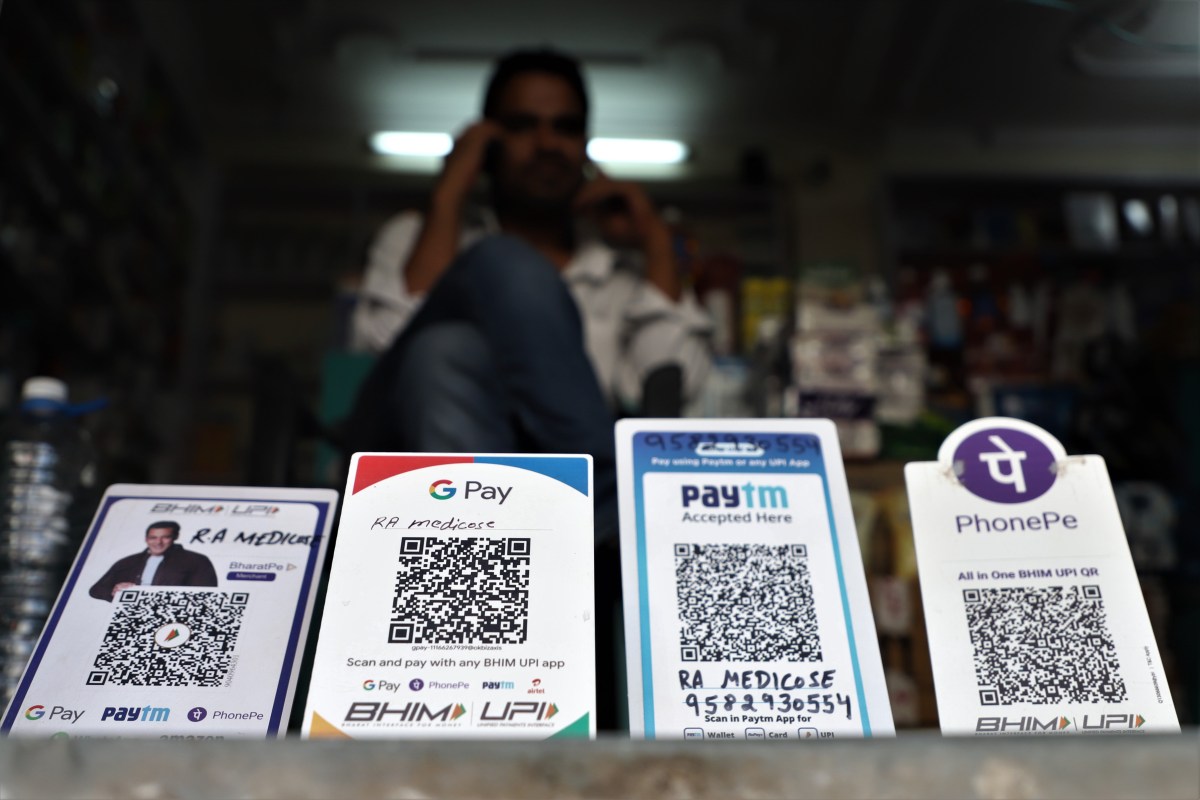
India rethinks UPI's free model with new payment framework
India's instant payments network is heading toward a defining moment. New legislation lays the groundwork for reworking the zero-merchant-discount-rate regime, the policy that has let businesses accept UPI payments without fees since 2020. That's a significant shift, and it's one worth watching closely. A sustainable business model could strengthen the ecosystem, but the transition needs care to protect the accessibility that made UPI so widely adopted.

Explore how AI and fintech are reshaping the future of money at Disrupt 2026
Money has moved far beyond the wallet, and at TechCrunch Disrupt 2026, the Smart Money Stage is where that evolution takes center stage. We're dedicating an entire track to fintech, payments, and AI, exploring how these forces reshape your daily transactions and long-term strategies. It's a focused look at practical transformation, not hype. If you're questioning how deeply AI should influence your financial decisions, our piece on verifying your AI's understanding offers a timely perspective.

Natural raises $30M to build financial infrastructure for AI agents
Natural raises $30M to reimagine payments for AI agents, a bold bet on financial architecture built for autonomous transactions. At one year old, the startup is positioning itself to challenge Stripe by focusing on what happens when machines, not humans, handle the money. That is a compelling direction, though it asks us to trust systems we barely see. If you are questioning how deeply AI should integrate into your own workflows, our piece on talking to an AI clone offers a timely counterpoint.

A new chapter for digital payments as Stripe eyes PayPal acquisition.
Stripe and Advent are reportedly circling PayPal with a $53.4 billion offer, a move that would merge two of digital payments' most recognizable names. If it goes through, this isn't just a big check; it's a bet on reshaping how money moves online. We're watching closely because consolidation at this scale tends to ripple far beyond the boardroom. For those tracking the broader infrastructure play, our piece on Anthropic's Akamai cloud commitment offers useful context on where the sector's priorities are heading.