PCA
PCA at Beyond Market Intelligence is a file of 5 stories. The newest of them: “When a benchmark was stacked against PCA, the classic technique still outperformed”, “Peek inside a neural network as it learns, layer by layer”, and “Whitetree: smarter nearest-neighbor search for streaming sensor data”. It's refreshing to see a benchmark humble the hype. Open the training view and you'll watch a small neural network learn to read digits, layer by layer. Acme AI is the next-generation, AI-powered spreadsheet platform built to replace Excel and redefine how analysts, data scientists, and enterprise teams work… The list below is every PCA story on Beyond Market Intelligence, newest first.
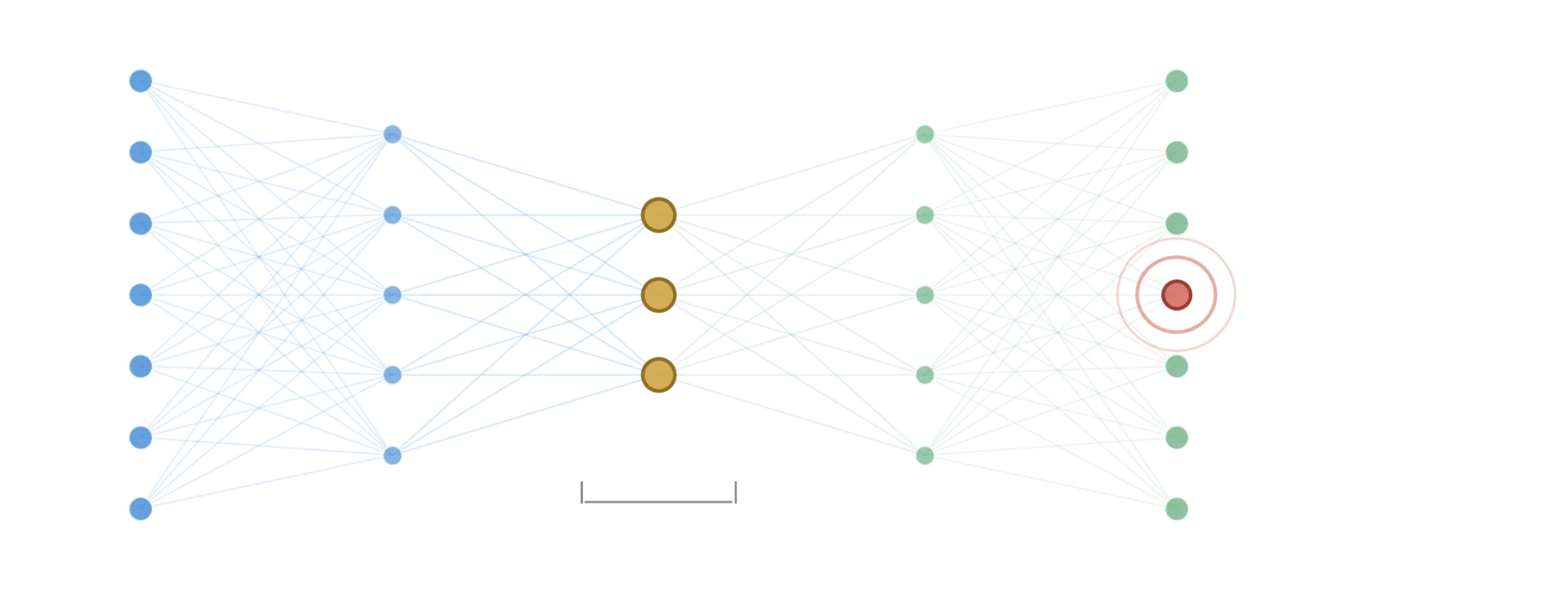
When a benchmark was stacked against PCA, the classic technique still outperformed
It's refreshing to see a benchmark humble the hype. When a test pit autoencoders against PCA, the classic technique won, not on theory, but on real-world performance. That's a result worth pausing over. The author rigged the test to favor the newer approach, and PCA still held its ground. Sometimes the simplest tool is the right one. If you're rethinking your data workflow, our piece on "File Compaction's Real Impact on Query Speed" explores another quiet efficiency worth your attention.

Peek inside a neural network as it learns, layer by layer
Open the training view and you'll watch a small neural network learn to read digits, layer by layer. Built with plain NumPy and manual backprop, this tool exposes the messy, instructive details most courses skim over: gradient norms, inactive neurons, and weight shifts from initialization. It reaches about 98.5% on MNIST, but the real value is the lab, where you can ablate neurons or tweak temperature and see accuracy move instantly. For teachers and self-learners, it turns abstract theory into something you can touch.

Whitetree: smarter nearest-neighbor search for streaming sensor data
A dynamic exact index for streaming nearest-neighbor search is rare, and whitetree makes a strong case for it. The key insight: scipy's cKDTree has a fixed per-query cost, so maintaining several small trees beats rebuilding one large one. The numbers are compelling, especially the 1,100 steps per second on a 200k-point sliding window. It's a practical, well-measured contribution, and the open question about missed benchmarks is worth exploring.
Automated feature engineering evolves with genetic algorithms and open-source simplicity.
Feature engineering remains the quiet battleground where tabular ML models are won or lost. py-evoFE (v0.3.0) takes a different path: genetic algorithms that evolve compact, high-impact feature recipes instead of brute-forcing thousands of noisy combinations. Its hierarchical chaining, Polars-powered vectorization, and multi-fidelity screening are thoughtful engineering. For anyone tired of manual transformations or explosive feature spaces, this library invites exploration. It is practical, open-source, and built for the workflows teams actually use. That is worth a closer look.
Discover how information theory reveals hidden data structure beyond linear limits.
Standard principal component analysis doesn't just lose accuracy on tangled, non-linear data, it fabricates thousands of phantom dimensions. This work confronts that collapse directly, offering a non-parametric diagnostic that reads pure probability mass instead of spatial distance. The stress test is telling: where PCA inflated 20 true roots into 5,700 false ones, the Entropic Scree lands exactly on 20. That is not a tweak; it is a reframing of how we map intrinsic structure.