personalized learning
Beyond Market Intelligence keeps personalized learning in one place: 3 stories so far. The section currently leads with “Turn AI into a Thinking Partner That Accelerates How You Learn”, “Discover how adaptive AI makes question recommendations feel personal and productive.”, and “When an animation does the thinking, students stop learning.”. Learning any new topic faster starts with how you structure the conversation with AI. Building an adaptive question bank means shifting from static quizzes to a system that learns with the student. Acme AI is the next-generation, AI-powered spreadsheet platform built to replace Excel and redefine how analysts, data scientists, and enterprise teams work… The list below is every personalized learning story on Beyond Market Intelligence, newest first.
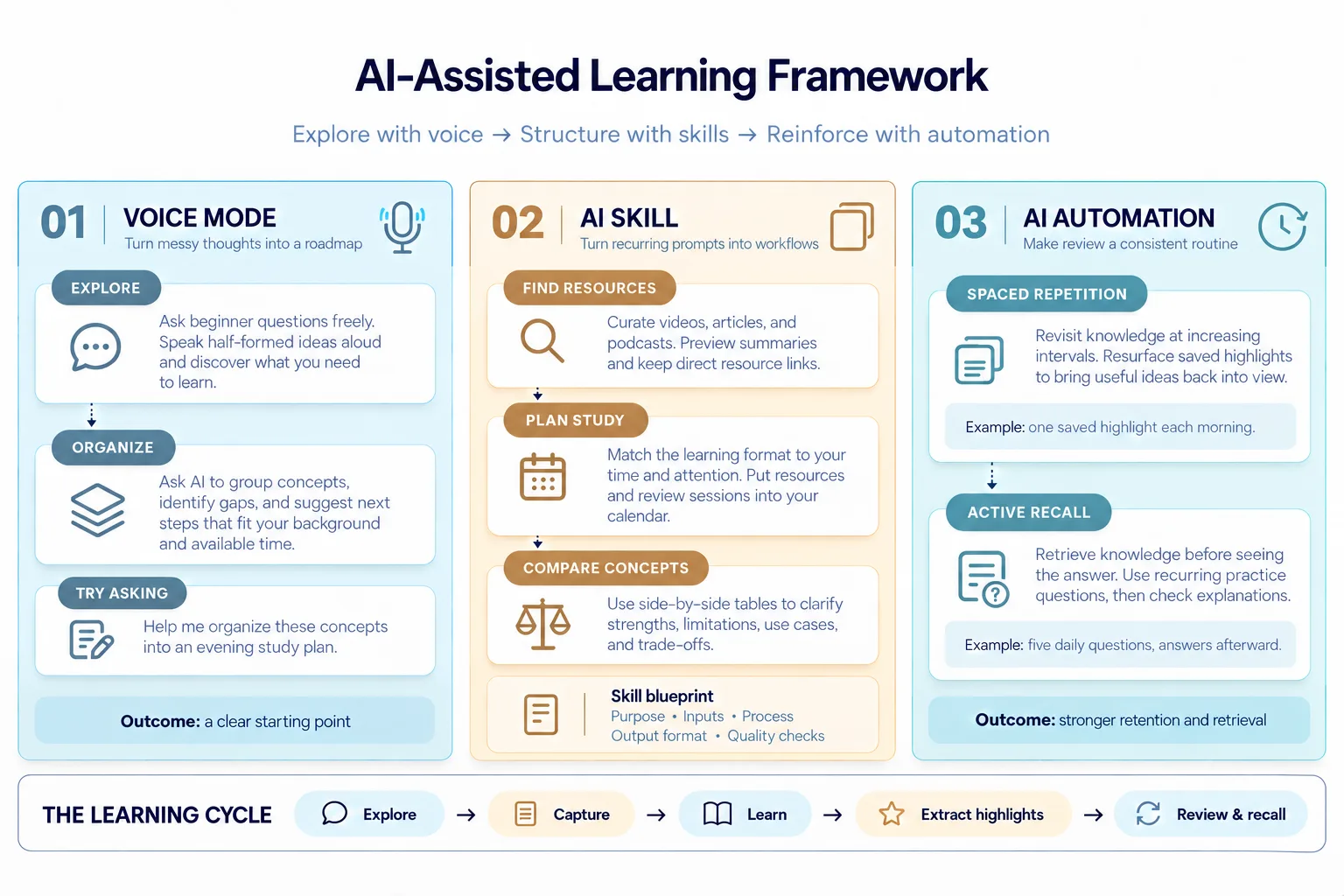
Turn AI into a Thinking Partner That Accelerates How You Learn
Learning any new topic faster starts with how you structure the conversation with AI. This practical framework turns AI into a thinking partner that accelerates understanding rather than just delivering answers. It challenges passive consumption and invites a more active, iterative dialogue. For those testing different approaches, our controlled test of Gemini, DeepSeek, ChatGPT, and Claude on forecasting traps offers a complementary look at how these tools handle real analytical challenges.
Discover how adaptive AI makes question recommendations feel personal and productive.
Building an adaptive question bank means shifting from static quizzes to a system that learns with the student. The core challenge isn't just tracking wrong answers; it's balancing targeted weakness practice with confidence-building wins. Weaving in older topics to test retention adds a crucial layer, ensuring knowledge sticks. For a deeper dive into the practical hurdles of such systems, our piece "Evolve Your Recommendations" breaks down where the real complexity lives. This is about building a tutor that feels human, not just a clever algorithm.
When an animation does the thinking, students stop learning.
ByteDance is pushing Gauth deeper into AI education, using generated animations to walk students through problem-solving step by step. On paper, personalized visual explanations sound like a genuine step toward democratizing tutoring. But the real question is whether these tools build understanding or just a polished illusion of it. Watching a slick animation isn't the same as grasping the underlying concept. For those of us tracking multimodal learning, the concern is familiar: are we improving comprehension, or engineering better homework shortcuts?