principles
Beyond Market Intelligence keeps principles in one place: 6 stories so far. The section currently leads with “Uncover Hidden System Flaws Before They Exist with Formal Reasoning”, “Twenty Years of Platform Lessons: Building for Resilience Without the Complexity”, and “A practical guide to diffusion models that balances deep math with clear insight”. Formal reasoning doesn't require a PhD in math to catch system flaws before they appear. Twelve principles. Acme AI is the next-generation, AI-powered spreadsheet platform built to replace Excel and redefine how analysts, data scientists, and enterprise teams work… The list below is every principles story on Beyond Market Intelligence, newest first.

Uncover Hidden System Flaws Before They Exist with Formal Reasoning
Formal reasoning doesn't require a PhD in math to catch system flaws before they appear. Hillel Wayne shows how property strength, state-space verification, and environment assumptions help engineers uncover architectural bugs early. His mental model of "adversarial non-determinism" makes concurrency and distributed failures approachable without complex tools. If you're wrestling with edge cases that traditional testing misses, this practical framework transforms how you think about system reliability.

Twenty Years of Platform Lessons: Building for Resilience Without the Complexity
Twelve principles. That's what Matthew Liste distills twenty years of platform engineering into, a practical framework for building scalable, reliable infrastructure without drowning in complexity. His focus on avoiding technical debt, managing deprecation, and nurturing engineering culture speaks directly to the tension senior architects feel daily. This isn't about abstract theory; it's about streamlining developer workflows and delivering lasting value. For those wrestling with legacy systems, his approach feels like a clear path forward.
A practical guide to diffusion models that balances deep math with clear insight
The balance between mathematical rigor and intuitive insight in *The Principles of Diffusion Models* is genuinely exceptional. It's a practical guide aimed at researchers and practitioners who already have basic deep learning knowledge, no prior specialization in diffusion models required. The dedicated appendices invite deeper dives into the math without overwhelming the main text. For readers exploring how AI models evolve, our piece on how small AI models closed the gap on a test built for humans offers a complementary perspective.

5 Principles for Enterprise Agent Systems Built to Earn Trust
A $100M+ company runs on its spreadsheets, and when I built an agent system to handle those workflows, I learned trust isn't a feature, it's the foundation. This post breaks down five principles that decide whether such systems survive production, from verifiability to continuous improvement. It's a grounded look at what actually works. If you're questioning how much to rely on AI outputs, our piece "Verify Your AI's Understanding" pairs well with this. Explore how to build agents people will actually use.
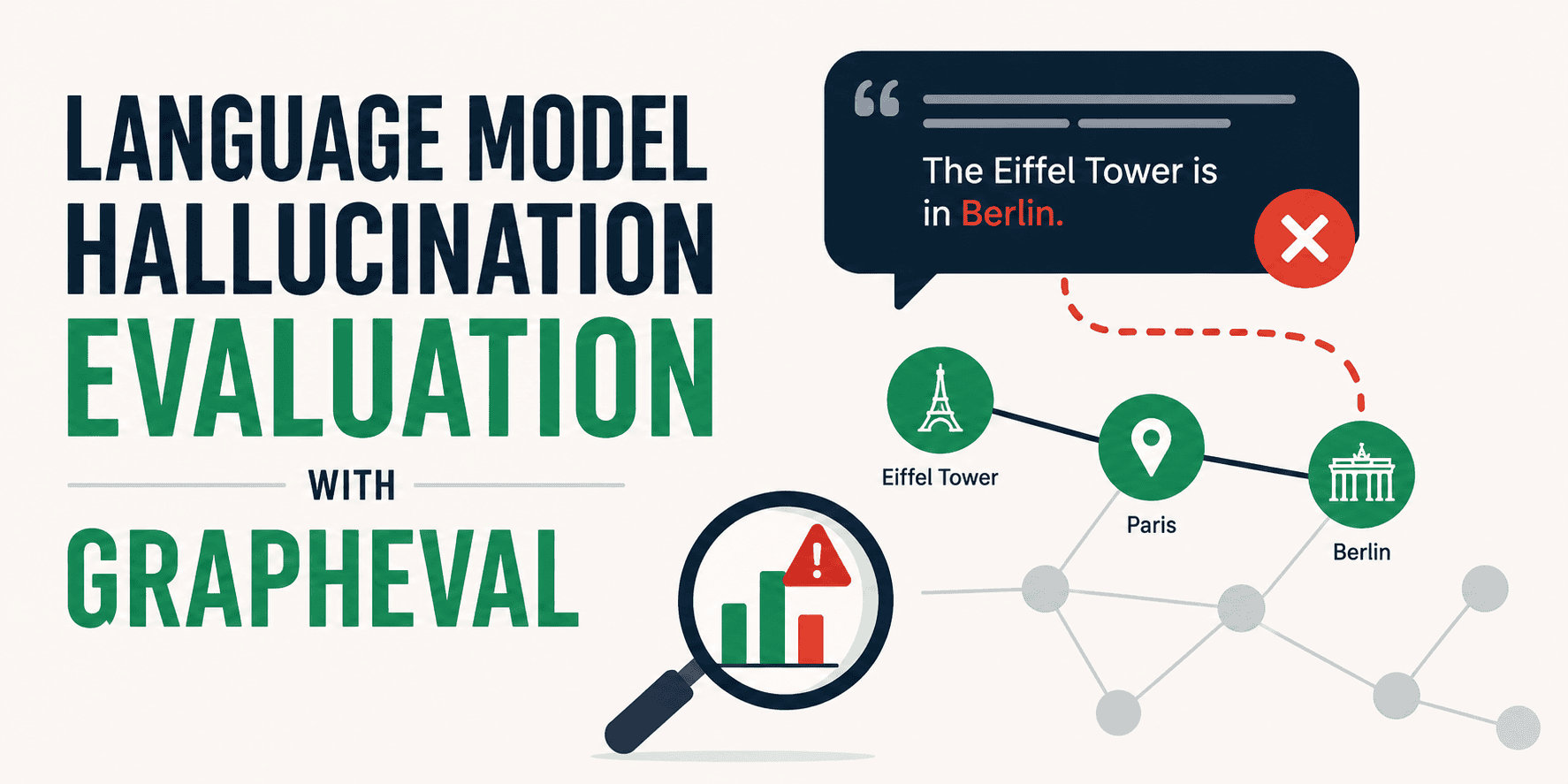
Explore how GraphEval maps the path to more reliable AI answers.
LLM hallucinations remain one of the most persistent barriers to trusting AI outputs, and GraphEval steps in to address that head-on. By turning its core principles and methodological stages into a practical scenario, GraphEval makes the evaluation process tangible rather than abstract. It's a useful lens for seeing how structured evaluation can expose where models go wrong and why that matters for real workflows. For readers juggling multiple AI concepts, our related piece on bridging retrieval and action offers another practical angle worth exploring.

How AI leaders are redefining product requirements through evaluations.
Expedia's Xavi Amatriain argues that evals have replaced the PRD as the starting point for product design. He's right to push this forward. Encoding what an agent should do, before writing code, forces teams to confront risk early. His three-layer governance model and risk-calibrated toll gates offer a practical alternative to brittle guardrails. It's a clear-eyed take from someone who's seen the stakes up close.