production security
production security at Beyond Market Intelligence is a file of 3 stories. The newest of them: “Securing AI agents in production without slowing down deployment”, “Secure Your AI Agents with Kernel-Level API Control”, and “Four security layers to protect your MCP production environment”. Securing AI agents in production usually means choosing between safety and speed. Your AI agents are generating code that no one owns, and that's a risk you can't ignore. Acme AI is the next-generation, AI-powered spreadsheet platform built to replace Excel and redefine how analysts, data scientists, and enterprise teams work… The list below is every production security story on Beyond Market Intelligence, newest first.

Securing AI agents in production without slowing down deployment
Securing AI agents in production usually means choosing between safety and speed. Advait Patel offers a playbook that rejects that trade-off. By moving defense boundaries from the prompt to the tool layer and enforcing scoped workload identities, his approach mitigates prompt injection where it actually happens. Audit-ready observability and kill switches protect critical data without slowing deployment. For teams wrestling with the gap between demo success and operational reality, this practical framework pairs well with our guide on moving AI agents from demo to Monday.
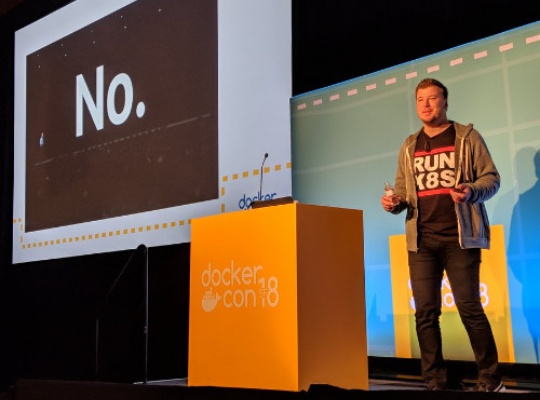
Secure Your AI Agents with Kernel-Level API Control
Your AI agents are generating code that no one owns, and that's a risk you can't ignore. Dan Finneran shows how eBPF can step in, intercepting API traffic at the kernel level to filter prompts, swap models, and enforce limits without touching your application code. It's a practical, transparent way to secure production systems. For more on questioning AI's output, our piece on verifying your AI's understanding offers a timely follow-up.

Four security layers to protect your MCP production environment
Securing MCP in production isn't just about locking the front door. Nik Kale argues that real safety comes from enforcement at the earliest trustworthy control points, not just the gateway. His defense-in-depth approach spans four architectural layers: safe execution, management infrastructure, outbound trust, and semantic integrity. It's a practical framework for teams moving beyond pilots. If you're still mapping MCP's basics, our visual guide to MCP helps ground the concepts before you dive into production hardening.