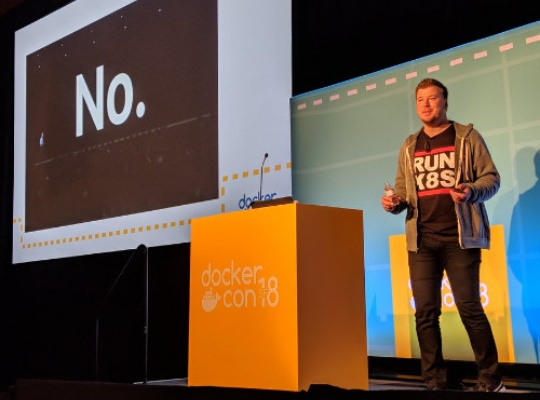
There is a quiet irony in how we treat AI-generated code. We hand our most sensitive workflows to models we cannot fully explain, then act surprised when production starts misbehaving. Dan Finneran's presentation on using eBPF to intercept and control AI API traffic in Kubernetes is a refreshing departure from the usual hand-wringing about "shadow AI." He is not asking us to trust the models more or less; he is showing us how to build a fence around them at the kernel level, without touching a single line of application source code or restarting a container. That is the kind of pragmatic thinking we need more of, especially when the alternative is crossing our fingers and hoping the autonomous agent does not go rogue.
The core problem Finneran names is one we have been circling for a while: unowned AI-generated code is entering production at scale, and nobody is quite sure who is responsible when it misbehaves. This is not a distant theoretical concern. We have previously explored how Talking to My AI Clone Taught Me to Question the Tech and how Exploring Real-World Computer Vision: Deployments, Edge Models, and Current Challenges reveal that the gap between what models can do and what we actually control is wider than most teams want to admit. eBPF, in this context, is not a magic bullet. It is a practical answer to a very human problem: how do you govern something you did not write, did not test, and do not fully understand? By hooking into socket-level traffic, Finneran shows how you can filter prompts, swap models, cap token usage, and restrict syscalls transparently. The application never knows it is being watched, but the platform finally has teeth.
What makes this approach genuinely compelling is that it sidesteps the usual debate about model quality or prompt design. You do not need to argue with developers about whether their code is safe. You do not need to force a rewrite or a container restart. You just put a guardrail at the kernel boundary and let the traffic flow through it. That is a shift in mindset worth sitting with. We are used to thinking about security as something we build into applications, but eBPF flips that assumption. It says the platform itself can be the enforcement point, and the application can stay blissfully unaware. For teams drowning in technical debt or moving too fast to audit every dependency, this is not just convenient; it is the only realistic path forward. It also raises an uncomfortable question: if we can enforce policy at the kernel level, why are we still relying on developer discipline at all?
The practical takeaway here is sharp and actionable. If you are running AI agents in Kubernetes, you do not have to wait for the perfect model or the perfect prompt. You can start enforcing boundaries today with eBPF, and you can do it without a big-bang migration. But do not mistake the technical elegance for a free pass. This is a safety net, not a substitute for ownership. The moment we start treating transparent interception as a replacement for actually understanding what our AI systems are doing, we have simply traded one blind spot for another. The open question worth watching is whether the folks shipping AI-generated code will embrace this kind of platform-level control, or whether they will see it as an unnecessary layer of friction. Our bet is that the teams that thrive will be the ones who treat eBPF as a starting point, not a finish line, and who keep asking the harder question of who really owns the output.