project
project at Beyond Market Intelligence is a file of 16 stories. The newest of them: “Explore How AI Agents Unlock Hidden Insights in Compiled Binaries”, “Zig’s Creator Explains AI Ban and Shift to Codeberg for Quality and Community”, and “Meta's Muse AI Assistant Draws Inspiration from OpenClaw”. Reverse Engineer Anything has amassed over 200,000 GitHub stars for a reason: it connects coding agents like Claude Code directly to reverse-engineering tools such as Ghidra and IDA. Andrew Kelley's decision to ban AI contributions from Zig's codebase isn't a Luddite reflex; it's a calculated stand for quality. Acme AI is the next-generation, AI-powered spreadsheet platform built to replace Excel and redefine how analysts, data scientists, and enterprise teams work… The list below is every project story on Beyond Market Intelligence, newest first.

Explore How AI Agents Unlock Hidden Insights in Compiled Binaries
Reverse Engineer Anything has amassed over 200,000 GitHub stars for a reason: it connects coding agents like Claude Code directly to reverse-engineering tools such as Ghidra and IDA. This lets developers inspect compiled binaries, trace function calls, and uncover exactly how applications implement specific features. AI agents unlock hidden insights buried in code we can no longer read. For a deeper look at where rule-based checks fail, see our related piece on verification gaps.

Zig’s Creator Explains AI Ban and Shift to Codeberg for Quality and Community
Andrew Kelley's decision to ban AI contributions from Zig's codebase isn't a Luddite reflex; it's a calculated stand for quality. He argues automated submissions dilute the code and, just as critically, erode the human trust that holds open-source communities together. The move to Codeberg, driven by GitHub's failures and incentive mismatches, reinforces that same principle. It's a firm, thoughtful reminder that sustainable software needs more than working code.

Meta's Muse AI Assistant Draws Inspiration from OpenClaw
Meta says Muse was built from scratch, yet the AI assistant carries OpenClaw's fingerprints, right down to workspace filenames and content. That honesty is refreshing. It suggests inspiration isn't a weakness; it's a starting point for something more accessible. We're watching how this unfolds, especially for users tired of rigid tools. If you're exploring how AI reshapes practical workflows, our piece on real-world computer vision deployments offers a grounded look at what's actually working.
Exploring Autograd: A High Schooler's C++ Machine Learning Project
Building a tensor library and autograd engine from scratch in C++ is no small feat, especially for a high schooler. That kind of hands-on exploration is how you truly internalize the mechanics behind machine learning, moving beyond black-box frameworks. This project shows genuine curiosity and a solid grasp of fundamentals. We appreciate the willingness to share it for feedback. For those interested in seeing how such foundational work connects to real-world applications, our piece on real-world computer vision deployments offers a useful perspective.

Unlocking iOS 27 Virtualization for Security Research and Testing
The vphone-cli project brings full iOS 27 virtualization to Apple Silicon, built on Apple's own Virtualization.framework rather than emulation. That distinction matters. It means security researchers and developers testing automated workflows can run a complete iOS system with native performance, opening doors for deeper reverse engineering and more reliable testing. We're watching this closely because it removes a major barrier to practical, hands-on experimentation. For those feeling the pressure of evolving iOS development, this feels like a step toward simpler, more accessible tooling.

Why Your Best Fraud Model Might Not Belong in Production
Six models trained for fraud detection, yet the one with the best metrics never made it to production. That's the honest hurdle this final-year project exposes: evaluation scores don't always translate into real-world deployment. It's a grounded lesson in how operational constraints, not just accuracy, shape what actually ships. For anyone moving from academic benchmarks to practical systems, this is a useful reality check.

Navigating the Future of Data Access with Transparency
X has sent cease-and-desist letters to Nitter, the open source project behind privacy-friendly front ends, demanding its instances and code repository be taken down over alleged scraping. It's a heavy-handed move against a tool that simply offers a different way to access public data. Projects like Nitter often exist because users want control. For a platform pushing innovation, this feels like a step backward. If you're following how open source alternatives are faring, our piece on Cloudflare's blog migration to EmDash offers a useful counterpoint.

Kubeflow Advances AI Toolkit Ahead of Cloud Native Foundation Milestone
Kubeflow's latest updates land with a clear purpose: making distributed AI on Kubernetes feel less like a heavy lift and more like a natural step forward. Kale 2.0's native Spark support and the expanded Trainer capabilities signal a project that's maturing with intent, not just adding features. As it nears Cloud Native Computing Foundation graduation, the momentum feels earned. If you're weighing how these shifts affect your own AI/ML workflows, our piece on *Navigating AI/ML Job Requirements* offers a practical counterpoint on the skills side.
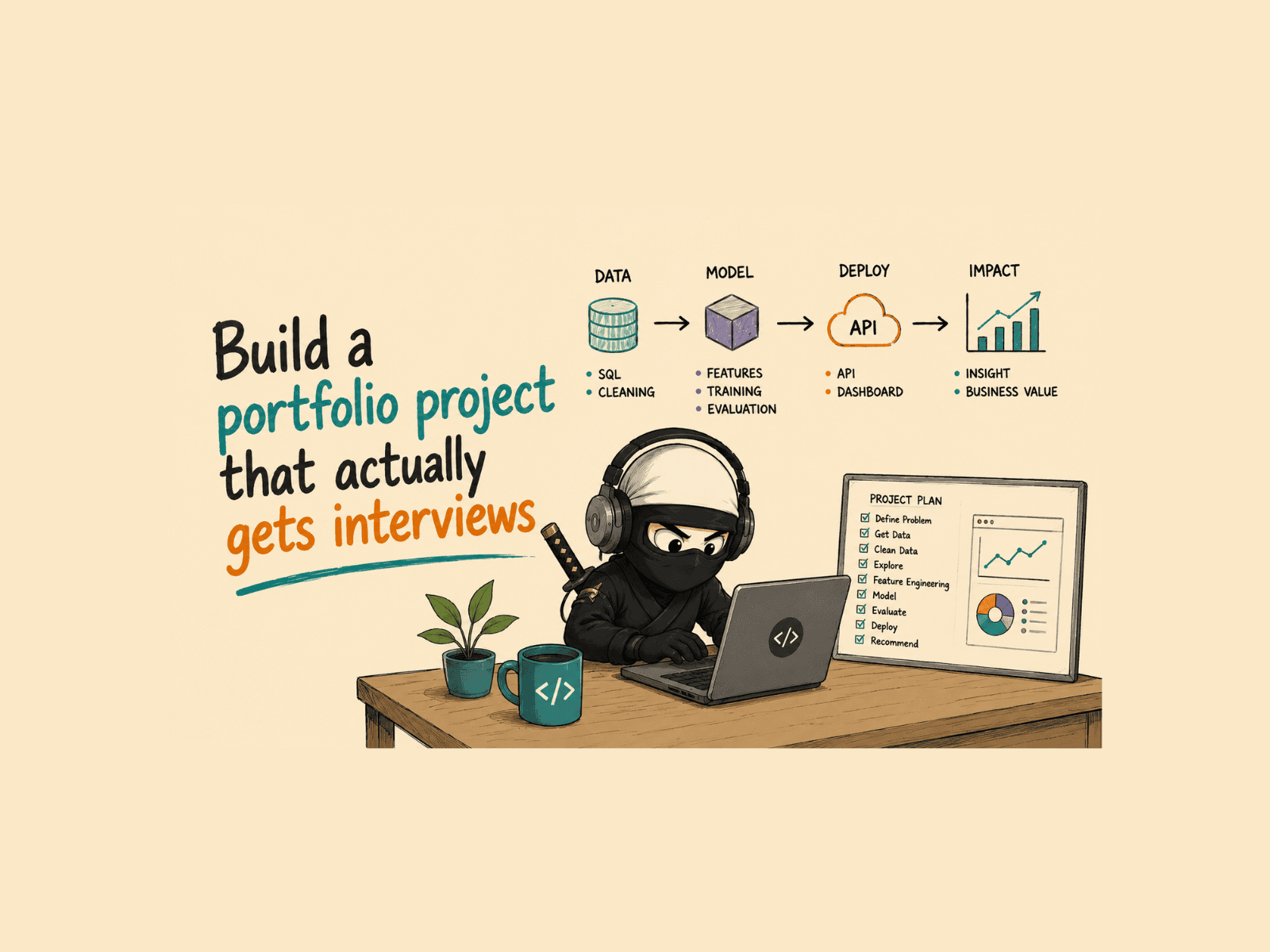
Transform your portfolio from a notebook into a complete data story
A finished notebook is a great start, but it's not a finished story. Most portfolios stop at the analysis, leaving your ability to engineer a real solution unseen. This project shows you how to close that gap, building from raw data all the way to a deployed product. It's a practical push toward work that feels less like an exercise and more like proof. If you're ready to move past static examples, this is the path to take.

Tesla and SpaceX commit $16.8 billion to build Texas chip factory.
After months of speculation, Tesla and SpaceX have formally committed $16.8 billion to build the "Terafab" chip factory just north of Houston. This is a decisive move that signals a serious bet on domestic silicon production. It's a big, tangible step toward future-focused infrastructure, and we're eager to see how it reshapes the region's tech landscape. For more on how major players are scaling their AI ambitions, explore our related coverage on Nscale's $3.36B infrastructure push.

Lucid's affordable EV now arrives in 2027 as robotaxi plans take priority
Lucid Motors just pushed its affordable EV, the Cosmos, to the second half of 2027, and CEO Silivo Napoli is betting the extra time matters more than the delay. He's focused on getting the car right, not just out the door, while also juggling the nearer-term robotaxi push with Uber and Nuro. That's a sensible trade. Rushing a mass-market model would undercut the trust Lucid has built.

Beyond the Model: The Human Work That Powers Supply Chain AI
The engine stalled mid-route, and the spreadsheet that should have flagged the issue sat silent. That moment reveals the real work of a Forward-Deployed Engineer: not building the model, but untangling the messy, human systems around it. In one supply chain project, the AI was the easy part; the hard part was embedding it where decisions actually happen.
Explore how deeper math in operations research can reshape your data career
You're weighing a real fork in the road: stay deep in data science or branch into operations research. That's not just a title decision; it's about how you want to solve problems. OR is math-heavy, but not beyond what you've already got. Calcs 1-3, linear algebra, and stats are the foundation. You'll add optimization and probability, which are more applied than theoretical. Earning potential is comparable, so let the work itself guide you.
From receipts to white backgrounds, discover how a simpler model extracts text with clarity.
A small model that pulls text off a white background sounds deceptively simple, yet that's exactly why it works. The journey from DONUT's document parsing to a focused text extraction tool shows a clear-eyed pivot, one that prioritizes utility over ambition. Starting with receipts is a familiar pain point, but narrowing scope to solve the core problem first is smart engineering. It's accessible AI, the kind that invites tinkering.

When Shared Links Expose More Than You Intended
A shared Claude chat link may have exposed your conversations and Artifacts to Google. The issue traces back to the "share chat" feature, which lets anyone with the URL view a project. That's a real problem, and it's worth taking seriously. If you've used that feature, check what's public now. For a deeper look at how AI interactions can surprise us, our piece "Talking to My AI Clone Taught Me to Question the Tech" offers a thoughtful parallel.
Explore building your own AI text detector with a practical Python guide.
Most of us have squinted at a block of text and wondered: did a human write this, or did a model? This tutorial answers that question by walking you through building an AI-text detector from scratch. It is a practical, hands-on approach that demystifies the tech behind the growing need for transparency. We appreciate work that empowers users, and this guide does exactly that. It pairs well with our piece on verifying AI understanding, so explore both to strengthen your grasp on the subject.