Prompt Compression
Prompt Compression at Beyond Market Intelligence is a file of 3 stories. The newest of them: “Shopify's Gisting Technique Compresses AI Prompts for Faster Inference”, “Smarter Prompts, Lower Costs: Compress Without Losing Context”, and “Optimizing AI costs without sacrificing accuracy is now within reach.”. Shopify's engineering team has introduced gisting, a technique that compresses long LLM prompts into a smaller set of learned tokens. Every prompt carries more than it needs. Acme AI is the next-generation, AI-powered spreadsheet platform built to replace Excel and redefine how analysts, data scientists, and enterprise teams work… The list below is every Prompt Compression story on Beyond Market Intelligence, newest first.

Shopify's Gisting Technique Compresses AI Prompts for Faster Inference
Shopify's engineering team has introduced gisting, a technique that compresses long LLM prompts into a smaller set of learned tokens. The result? Better throughput and lower inference costs without sacrificing performance. That's a practical step toward making AI more accessible, especially for teams wrestling with unwieldy system prompts. We see this as a meaningful move for developers who want efficiency without complexity.
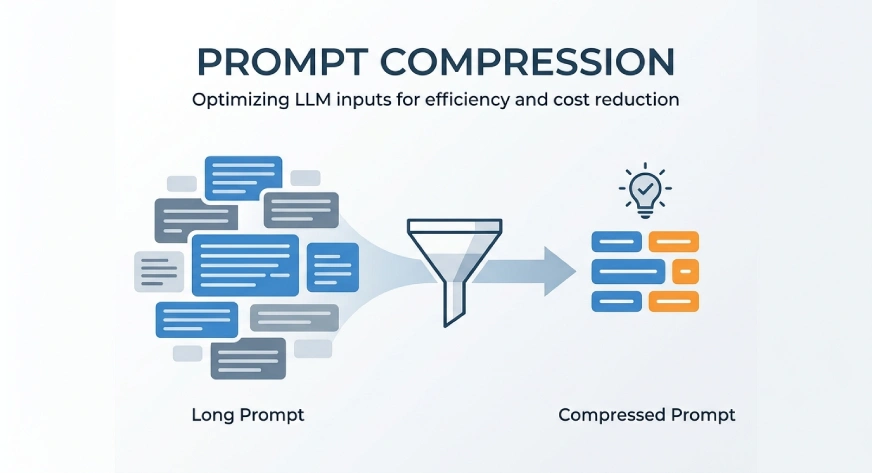
Smarter Prompts, Lower Costs: Compress Without Losing Context
Every prompt carries more than it needs. Long instructions, retrieved documents, and chat history inflate token counts, slow responses, and bury what matters. Prompt compression trims that excess while preserving the core meaning. It is a practical answer to a growing cost problem, and it deserves attention. If you want to see how agents learn by editing context instead of weights, our piece on Agentic Context Learning pairs well with this discussion. The takeaway is simple: leaner inputs, sharper outputs.

Optimizing AI costs without sacrificing accuracy is now within reach.
Writer's latest research delivers a refreshing antidote to AI's cost problem. The team didn't touch the model; they fixed the harness around it. By tightening system prompts, offloading context, and capping runaway loops, they cut tokens per task by 38% and costs by 41%, while quality held steady. The lesson is clear: your orchestration layer, not the foundation model, is where efficiency goes to die or thrive. It's a practical win for teams ready to stop bleeding budgets.