proprietary models
proprietary models at Beyond Market Intelligence is a file of 6 stories. The newest of them: “Unlock AI Coding: Five Free Ways to Access Powerful Models”, “Run capable AI models locally on a Mac mini with these five tools.”, and “Explore how Kimi K3 makes powerful AI more accessible and affordable.”. The cost of AI coding agents and proprietary models can feel like a barrier, but it doesn't have to be. Proprietary models deliver impressive results, but they often lock you into someone else's infrastructure. Acme AI is the next-generation, AI-powered spreadsheet platform built to replace Excel and redefine how analysts, data scientists, and enterprise teams work… The list below is every proprietary models story on Beyond Market Intelligence, newest first.
Unlock AI Coding: Five Free Ways to Access Powerful Models
The cost of AI coding agents and proprietary models can feel like a barrier, but it doesn't have to be. We've identified five free ways to access powerful coding models, from open-weight options to trial-based agents that don't require a GPU setup. This is about practical access, not hype. If you're also curious how AI handles real-world tasks, our piece on real-world computer vision deployments offers a grounded look at what these systems actually do. Explore the options and start building without the subscription.
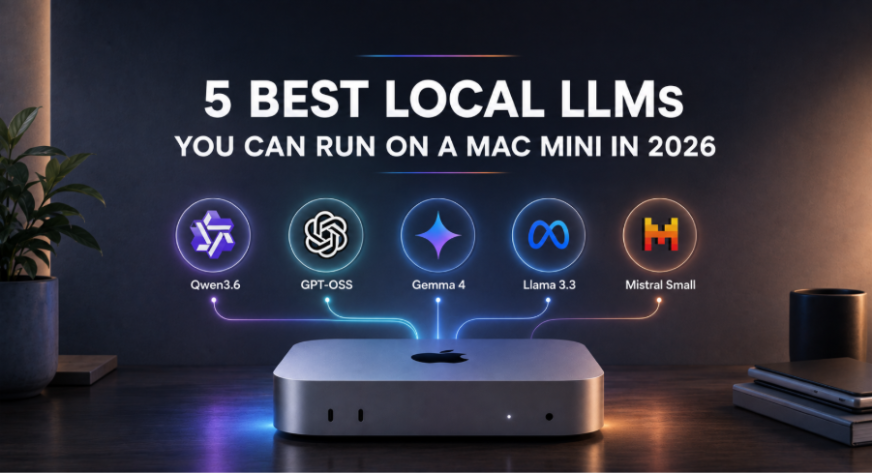
Run capable AI models locally on a Mac mini with these five tools.
Proprietary models deliver impressive results, but they often lock you into someone else's infrastructure. For those who value configurability over raw power, local LLMs are the answer. The Mac mini, with Apple Silicon and unified memory, has become a surprisingly practical host for on-device AI. If you are exploring distributed training to complement your local setup, our guide to distributed algorithms offers a solid next step. For now, discover which models run best on your Mac mini.
Explore how Kimi K3 makes powerful AI more accessible and affordable.
A 2.8-trillion-parameter model that only activates a fraction of its weights per token sounds like a paradox, but that's exactly what makes Kimi K3 interesting. Moonshot AI built it with a Mixture-of-Experts architecture to keep inference costs down while pushing coding and agentic performance. It's a practical alternative to proprietary systems, especially when you weigh open weights against near-frontier capability. We think that trade-off is worth exploring.

Explore how Grok 4.6 brings capable AI agents at a more accessible price.
Grok 4.6 is here, and it's a meaningful step forward for teams building with AI agents. The model now ranks third globally on the Artificial Analysis Intelligence Index, surpassing Kimi K3 and matching GPT-5.6 Sol Max. More importantly, it delivers significant gains in coding, knowledge work, and long-running agent tasks, while keeping API costs at $2 per million input tokens. That combination of capability and economics is worth exploring, especially for enterprises weighing performance against the real cost of completing complex workflows.
Balancing AI inference between server and edge for smarter cost control
Splitting inference across server and client hardware is a practical answer to AI's rising cost problem. The idea of keeping proprietary weights server-side while offloading part of the computation to user devices is worth serious attention. The real challenge is coordination: training two models to communicate through latent tensors is promising, though the complexity is substantial. If the protocol becomes standardized, the flexibility could extend beyond one-to-one setups. For deeper context on distributed systems, our guide on distributed algorithms explores similar terrain.

Smarter AI agents at lower cost with Google's most token-efficient models yet
Google's new Flash models aren't just cheaper, they're smarter about how they spend. Gemini 3.6 Flash cuts token usage by up to 65% on long-horizon engineering tasks, which means agents do more thinking per dollar. That's the kind of efficiency that quietly reshapes what's practical to automate. The pricing is aggressive, sure. But the real signal is architectural: fewer reasoning steps, fewer tool calls, same result. That's not a tweak. It's a direction.