randomness
randomness at Beyond Market Intelligence is a file of 3 stories. The newest of them: “Design systems meet their match: CSS `random()` brings organic imperfection to the web”, “Simplify complex gradients by shifting randomness outside the computation graph”, and “The Equation That Reveals Bagging's Limits and Why Randomness Matters”. Design systems thrive on consistency, yet Brecht De Ruyte's playful demos prove that a little imperfection makes them feel alive. Noisy gradients are the price of sampling inside the computation graph. Acme AI is the next-generation, AI-powered spreadsheet platform built to replace Excel and redefine how analysts, data scientists, and enterprise teams work… The list below is every randomness story on Beyond Market Intelligence, newest first.

Design systems meet their match: CSS `random()` brings organic imperfection to the web
Design systems thrive on consistency, yet Brecht De Ruyte's playful demos prove that a little imperfection makes them feel alive. The new CSS `random()` function brings organic typography, bouncing letters, and splayed cards to the web without JavaScript or static preprocessor loops. It's an accessible, human-centered twist on rigid design. For those exploring how unpredictability can empower workflows, our piece on EpochGo's local-first AutoML offers a complementary look at controlled randomness in data.
Simplify complex gradients by shifting randomness outside the computation graph
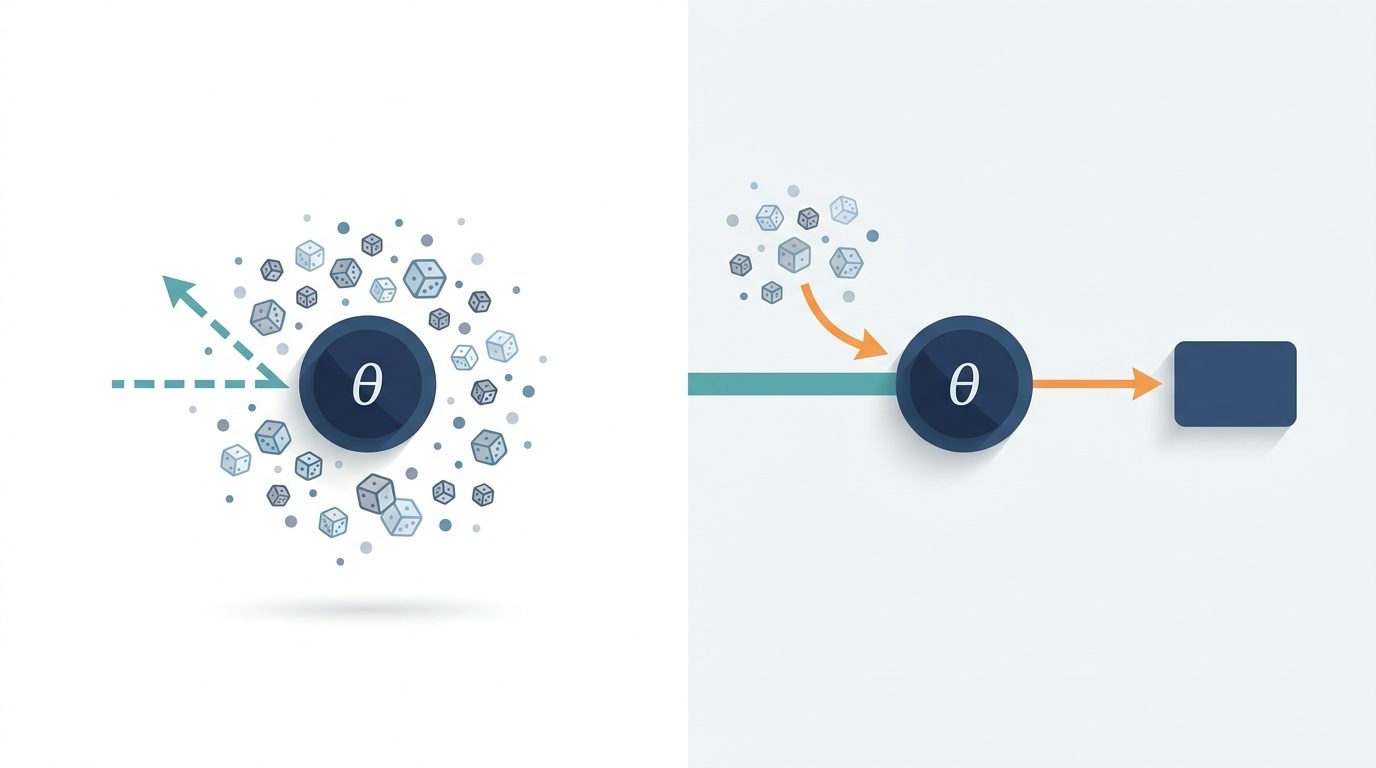
Noisy gradients are the price of sampling inside the computation graph. Moving randomness outside the computation graph changes everything. By reparameterizing, you keep the model differentiable while trimming variance that slows training. It is a practical, accessible breakdown of a technique that feels abstract until you see it applied. If you are exploring how to make your own models more stable, this is worth your time. For another angle on practical ML, our piece on real-world computer vision deployments pairs well here.

The Equation That Reveals Bagging's Limits and Why Randomness Matters
Bagging has a ceiling, and no amount of trees will break it. The equation explains why random forests need that extra layer of chaos to keep improving. It's a sharp reminder that more isn't always better when the mechanism stalls. The experiment makes the point concrete, turning theory into something you can see. If distributed systems intrigue you, *Unlock LLM Training* pairs well with this mindset, though it stands firmly on its own.