recommendation
recommendation at Beyond Market Intelligence is a file of 7 stories. The newest of them: “Build Smarter AI Agents by Adding Human Oversight Where It Matters Most”, “Evolve Your Recommendations: Real-World Insights on Adaptive Systems”, and “NeurIPS Acceptance Raises Questions About AI Review Justifications”. Autonomous AI agents can read, retrieve, reason, and trigger actions in seconds, useful speed, but real risk when the next step touches money, customer records, or live systems. Adaptive recommendation systems are rarely defeated by model architecture alone. Acme AI is the next-generation, AI-powered spreadsheet platform built to replace Excel and redefine how analysts, data scientists, and enterprise teams work… The list below is every recommendation story on Beyond Market Intelligence, newest first.
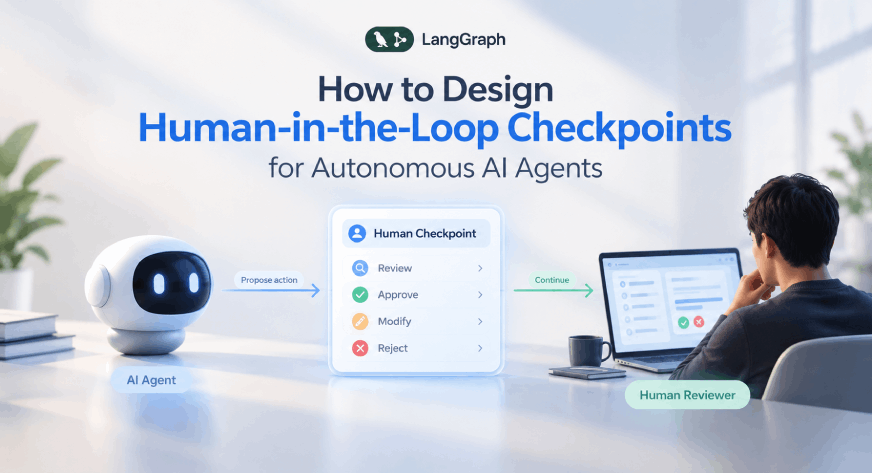
Build Smarter AI Agents by Adding Human Oversight Where It Matters Most
Autonomous AI agents can read, retrieve, reason, and trigger actions in seconds, useful speed, but real risk when the next step touches money, customer records, or live systems. Human-in-the-loop checkpoints add control exactly where a recommendation is about to become action. That's the smart design. For deeper context, our piece on Anthropic restricting internal AI tests from live internet shows how even the most advanced labs are rethinking control.

Evolve Your Recommendations: Real-World Insights on Adaptive Systems
Adaptive recommendation systems are rarely defeated by model architecture alone. Mallika Rao shows that real complexity emerges in production, where real-time feedback loops, retrieval freshness, and multi-stage orchestration must all bend to latency and cost constraints. This is practical insight, grounded in operational reality. For deeper context on how such systems are built, explore our piece on *Agent Harnesses* to see similar engineering discipline applied elsewhere. Rao's work is a reminder that evolution happens under pressure, not in isolation.
NeurIPS Acceptance Raises Questions About AI Review Justifications
An acceptance at NeurIPS should feel like a victory, but this one reads more like a puzzle. The initial scores of 5/5/4 earned a positive meta-review, only for the final justification to flip negative, suggesting an AI-driven review process that doesn't add up. Even the flagged reference turned out to be a BibTeX copy-paste error. That's not rigor; it's noise. If the justification doesn't match the decision, we're not getting transparency, we're getting confusion.
Demystifying BMVC's IJCV recommendation process for authors
The question of how BMVC's IJCV special issue recommendation actually works is one many authors quietly wonder about, and it's smart to ask before the dust settles. Based on past cycles, the decision typically hinges on a blend of review scores and the program chairs' judgment, often aligning with oral or highlight selections rather than a purely mechanical cutoff. You likely won't hear anything until a separate email arrives, so patience is key.
Interpreting the optimism behind a metareview that doesn't yet decide.
A metareview that reads optimistic but stops short of a decision is a peculiar kind of suspense. For this author, the gap between a 3.0 average score and a closing note about a "convincing response" suggests the AC is leaving a door open, not slamming it shut. Silence from reviewers is frustrating, but it isn't a verdict. Hope isn't misplaced; it's just uncomfortable.

Turn online discoveries into real-world experiences with guided prompts
Outernet turns saved posts into actual outings, and that's a shift worth noticing. Born from the team behind San Francisco's citywide scavenger hunt Pursuit, the app lets you bookmark places and events from across the web, then gently pushes you to step out and experience them. It's a simple nudge toward real-world action, and it works. For more on how adaptive systems shape such recommendations, check out Mallika Rao's piece on evolving your approach.

How AI is reshaping streaming into one unified experience
For a decade, streaming platforms carved out their own corners: music here, video there. That era is closing. As AI simplifies how we create, organize, and recommend content, those walls are dissolving. Spotify, Netflix, YouTube, and TikTok are no longer just specialists; they are racing to become universal entertainment hubs. It is a bold move toward convenience, and one that could genuinely redefine how we consume media.