Red Teaming
Beyond Market Intelligence keeps Red Teaming in one place: 6 stories so far. The section currently leads with “See how AI stress-tests robots and self-driving cars before they roll out”, “Researchers used one AI to expose weaknesses in another”, and “Empowering defenders with unguarded AI to strengthen cybersecurity”. Before a robot arm picks a warehouse order or a self-driving car navigates a busy street, it should fail safely in simulation. Security researchers used Anthropic's Claude to hack into OpenAI's systems, seizing employee accounts and reaching an internal code repository before flagging the flaws. Acme AI is the next-generation, AI-powered spreadsheet platform built to replace Excel and redefine how analysts, data scientists, and enterprise teams work… The list below is every Red Teaming story on Beyond Market Intelligence, newest first.

See how AI stress-tests robots and self-driving cars before they roll out
Before a robot arm picks a warehouse order or a self-driving car navigates a busy street, it should fail safely in simulation. That is the premise behind Laplace Intelligence, a University of Michigan spinout using AI agents and interactive simulation to stress-test autonomous systems before real-world deployment. The profitable startup will compete in Startup Battlefield at TechCrunch Disrupt this October. For more on how AI agents are reshaping industries, see our coverage of Nvidia opening its models for enterprise use.

Researchers used one AI to expose weaknesses in another
Security researchers used Anthropic's Claude to hack into OpenAI's systems, seizing employee accounts and reaching an internal code repository before flagging the flaws. That's a striking twist: one frontier lab probing another's defenses. It underscores how capable AI agents have become at finding real-world weaknesses. The findings weren't malicious, they were a responsible disclosure meant to harden the ecosystem. As AI tools grow more autonomous, this is the kind of stress test we need.

Empowering defenders with unguarded AI to strengthen cybersecurity
Abliteration.ai is carving out a business by making powerful AI models without guardrails easier to access. It's a contentious stance, but the logic is sharp: if defenders can't experiment with the same tools as bad actors, they're always a step behind. That asymmetry is a real problem. We're not cheering for recklessness here. We're saying that restricting access doesn't make anyone safer, it just makes the knowledge exclusive.

Multi-turn attacks expose the blind spot in AI red-teaming programs
Cisco's multi-turn attack study should end the illusion that single-shot red teaming tells you anything about your AI agents. When 15 flagship models were hit with 6,986 adaptive, conversational attacks, attackers broke through 88.3% of the time. That's not an edge case. It's the default. Single-turn testing didn't just miss the risk; it ranked models in a completely different order than multi-turn testing did. If you're still testing agents like they're static code, you're not testing at all.
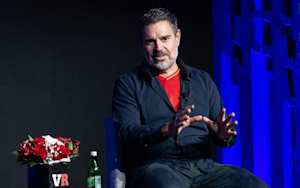
How AI leaders are redefining product requirements through evaluations.
Expedia's Xavi Amatriain argues that evals have replaced the PRD as the starting point for product design. He's right to push this forward. Encoding what an agent should do, before writing code, forces teams to confront risk early. His three-layer governance model and risk-calibrated toll gates offer a practical alternative to brittle guardrails. It's a clear-eyed take from someone who's seen the stakes up close.
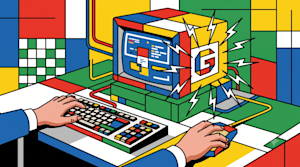
Smarter AI agents at lower cost with Google's most token-efficient models yet
Google's new Flash models aren't just cheaper, they're smarter about how they spend. Gemini 3.6 Flash cuts token usage by up to 65% on long-horizon engineering tasks, which means agents do more thinking per dollar. That's the kind of efficiency that quietly reshapes what's practical to automate. The pricing is aggressive, sure. But the real signal is architectural: fewer reasoning steps, fewer tool calls, same result. That's not a tweak. It's a direction.