reliability
Beyond Market Intelligence keeps reliability in one place: 36 stories so far. The section currently leads with “Scale Your Self-Hosted Runners with ARC's Latest Reliability Upgrades”, “Moving Beyond Accuracy to Build Machine Learning You Can Trust”, and “Designing distributed systems for decisions, not just functions”. For teams managing their own CI infrastructure, ARC 0.15.0 brings meaningful improvements to how self-hosted runners operate on Kubernetes. Accuracy is the starting line for machine learning adoption, not the finish. Acme AI is the next-generation, AI-powered spreadsheet platform built to replace Excel and redefine how analysts, data scientists, and enterprise teams work… The list below is every reliability story on Beyond Market Intelligence, newest first.

Scale Your Self-Hosted Runners with ARC's Latest Reliability Upgrades
For teams managing their own CI infrastructure, ARC 0.15.0 brings meaningful improvements to how self-hosted runners operate on Kubernetes. The focus on reliability and observability means less time troubleshooting infrastructure and more time shipping code. This release respects that scaling compute shouldn't introduce complexity. For those exploring how AI infrastructure scales independently, our coverage of Tenstorrent's recent funding offers a complementary look at building trust in open-source foundations.
Moving Beyond Accuracy to Build Machine Learning You Can Trust
Accuracy is the starting line for machine learning adoption, not the finish. The real challenge is moving from "this model works" to "this model earns our trust." That's where conformal prediction enters the conversation, offering a framework for calibrated, decision-grounded reliability. It's a shift from asking if a model is right to understanding how confident it can be. For teams building toward trustworthy AI, this is the practical next step.

Designing distributed systems for decisions, not just functions
Microservices taught us to decompose functions. Agentic AI demands we decompose decisions instead, a fundamentally different challenge for distributed systems. Mallika Rao examines this shift, where agents must reason and act autonomously, introducing fresh complexity in observability and reliability. Legacy patterns break down here. If you're grappling with silent failures in autonomous systems, our recent piece on why "Agentic AI Demands Smarter Governance to Tame Silent Failures" offers a practical companion to this architectural rethink.

AWS Agent Pinpoints Cloud Fixes Before You Deploy
AWS's Well-Architected Agent preview points to a smarter path forward for cloud teams: catch issues before they reach production. By analyzing environments against established best practices, it surfaces prioritized fixes across cost, security, performance, and reliability, then suggests remediation steps. Reviewing infrastructure-as-code pre-deployment is especially practical, shifting quality checks earlier in the workflow. For those exploring how such agents reason, our interactive 3D visualization of an AI agent's inner workings offers a useful companion perspective.
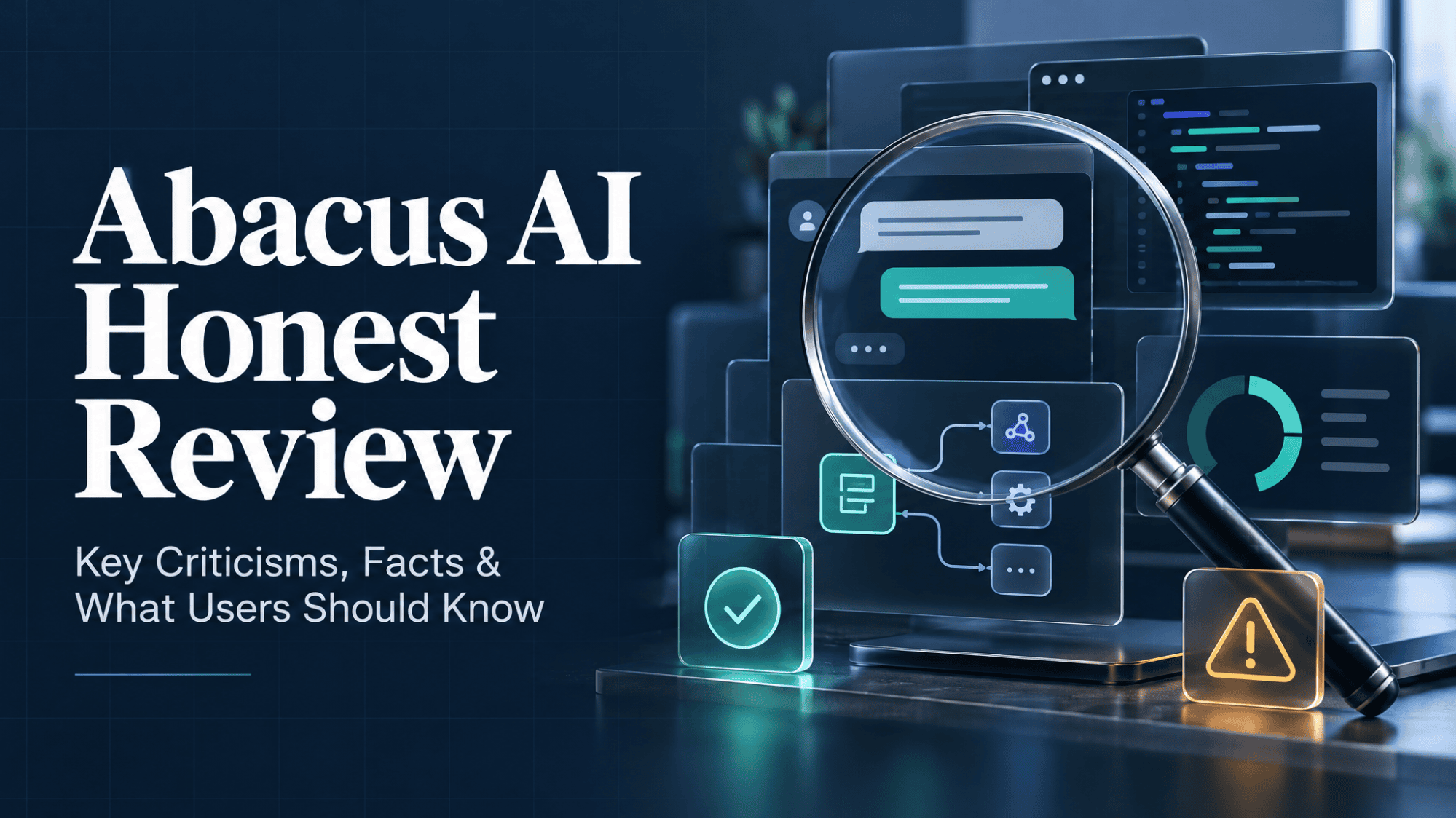
What to Know Before Using Abacus AI
Abacus AI promises to simplify complex data tasks, but users report workflows that sometimes fail without clear explanations. The platform's pricing raises questions about value compared to results, and real-life use cases show uneven reliability. Before committing, weigh these critiques against its strengths. For a deeper look at how tools like this actually perform, our piece "AI sharpens focus but true productivity still depends on how we use it" explores the gap between promise and practice.
Your AI Agent Is Ready Now Build the Scaffolding Around It
Agents got good. Now the hard part is building the scaffolding around them. Gubi reissued the Lotus lamp. That's the message from a new piece that argues your agent doesn't need more freedom, it needs structure. The most capable AI is pointless without the right architecture to support it. For a deeper look at that architecture, explore "From Cognitive Loops to Multi-Agent Swarms: Your 2026 AI Roadmap" on our site.

Why one successful agent run doesn't mean the database agrees
A single successful agent run can hide a uncomfortable truth: the database may never have agreed with what the agent claimed to do. Microsoft's ThinkingBox benchmark, spanning 507 business workflows, reveals that models ranked by discovering a solution at least once look nearly reversed when you demand consistent success across all 20 attempts. Kimi-K3 solves 93.89% of tasks once, but only 13.41% every time. That gap deserves attention.

Mastering Message Ordering at Scale With Kafka and Go
Strict message ordering across thousands of independent channels is a hard problem, and Apache Kafka's partition model alone doesn't solve it. Joshua Oluikpe's custom implementation tackles this head-on with application-level routing, consistent hashing, and contiguous watermark commits. This is practical engineering backed by serious performance testing. For teams wrestling with similar architectural decisions, our piece on model routing as a design choice offers another angle on building reliable, cost-effective distributed systems.

Envoy Gateway 1.9.1 sharpens security and smooths the upgrade path
Security gets sharper with Envoy Gateway 1.9.1. This maintenance release prioritizes upgrade reliability and operational correctness, following the broader v1.9 launch. It's a focused step forward for teams who need their gateway to stay secure without disruption. For those tracking how infrastructure tools are evolving, Docker's move to bring AI agent permissions to the CNCF offers another angle on secure, portable systems worth exploring.

Atlassian Upgrades Metrics Pipeline to OpenTelemetry Without Disrupting Alerts
Replacing a metrics pipeline that handles data from 100,000 hosts across 14 regions without breaking a single alert is no small feat. Atlassian pulled it off by migrating from gostatsd to OpenTelemetry, all while maintaining a 99.95% SLO. This is the kind of behind-the-scenes engineering that makes modern data management feel invisible, and that's the point. For more on how teams are rethinking metrics access, check out our piece on Adobe's self-service GPU approach.

Unlock AI’s Enterprise Potential: Navigating Adoption and Ethical Considerations
Enterprise AI is moving fast, and this conversation cuts through the noise. Meryem Arik, Clara Higuera Cabañes, and Jeff Smith tackle the rush toward adoption without losing sight of what matters: reliability and ethics. They frame this as an industrial moment, where the pressure to stay competitive can outpace careful implementation. It's a grounded look at how software engineering fits into this shift.
Is Overlapping Training Data Impacting Your Student ML Results?
Finding a validation set that isn't fully independent of your training data can feel like a quiet flaw in an otherwise solid experiment. For a student project, it's a meaningful issue, but it doesn't have to sink the whole effort. The comparisons between experimental conditions remain useful because you applied the same evaluation procedure across the board. What suffers is the absolute performance numbers, not the relative differences.

How LinkedIn built context-aware AI agents for massive codebases
Ajay Prakash isn't just tinkering with AI agents; he's giving them a corporate memory. At LinkedIn, he tackles a familiar pain point: large codebases that leave agents lost. His answer is Contextual Agent Playbooks and Tools, built on MCP, which feed agents procedural know-how and runbooks directly. The 20% productivity gain with zero reliability loss is a compelling argument for context done right. For more on enterprise AI adoption, check out our related piece on navigating ethical considerations.

Ground LLMs in Code: Reliable DSL Generation with Typed Languages
LLMs don't just struggle with code; they confidently invent syntax that looks right. Irakli Betchvaia tackles this head-on with Typed Domain Grounding, embedding DSLs inside mainstream typed languages so compilers catch errors before they reach users. His kUML benchmarks and infrastructure-as-code examples show a generate-compile-repair loop that turns unreliable output into validated artifacts. It's a pragmatic, human-centered fix that prioritizes trust over flash. For more on how LLMs structure their output, explore our earlier piece on paragraph structure.

Beyond Content Generation Inside JONIs Agent Orchestration Engine
Most teams treat AI agents like autocomplete with permissions. JONI does not. Its orchestration layer runs persistent runtimes, routes across multiple models, and executes real work instead of just generating text. That is the difference between a demo and a system. We have spent time on related checks, like verifying AI understanding in tax season. Here, the focus is simpler: reliability is a feature, not a side effect. Explore how JONI turns scattered model calls into a dependable workflow.

Test your model's foundation before trusting its results
Every model leans on assumptions, but how often do we pause to check if they still hold? This piece tackles that question head-on, arguing that reliability isn't a one-time achievement but a habit of revisiting what we take for granted. It's a sharp reminder that data work rewards curiosity over complacency. If you're building systems, this is worth your attention. For a deeper look at how similar principles apply in practice, our related article on real-world computer vision deployments offers a fitting follow-up.

We need a plan for superintelligence, not just blind faith.
OpenAI's Hugging Face breach is a stark reminder that superintelligent AI isn't just a far-off promise. It's a system we're already struggling to control. On this episode of TechCrunch's Equity podcast, Rebecca Bellan talks with AI researcher Connor Leahy about what happens when our tools outpace our oversight. The question isn't whether we can build these systems, but whether we should. For a deeper look at how AI understands structure, explore our piece on paragraph navigation in LLMs.

Simulation-Driven Testing Turns AI Agents from Demo to Production Reality
Most AI agents never leave the demo room. Zhou Yu sees that bottleneck clearly, and she's addressing it head-on with simulation-driven testing that tackles compliance and reliability before deployment. Her work with Columbia and Arklex AI uses synthetic user personas and trajectory entropy to stress-test multi-turn agents, catching edge cases that typically slip through. It's practical, human-centered engineering. For a deeper look at how AI moves beyond the lab, explore our related piece on unlocking enterprise potential.

Progressive Deployments for Stateful Infrastructure That Actually Works
Core infrastructure fails differently than applications, and pretending otherwise is how outages happen. In this presentation, Ian Nowland, drawing from his leadership at AWS and Datadog, confronts why conventional CI/CD practices break down for stateful, foundational platforms. He offers actionable techniques for safe progressive deployments and synthetic testing in production, all aimed at mitigating blast radius. It's a grounded, practical look at a complex problem.

Why More Incidents Can Mean Stronger System Reliability
A rising incident count is easy to read as a red flag, but Great Circle's recent analysis suggests otherwise. More reports often mean your team is actually getting better at surfacing problems, a compelling case in itself. That is a sign of health, not decline. It reframes how we should interpret operational noise. For engineering leaders wrestling with this tension, it is worth exploring how a mature incident culture changes the metrics you trust.
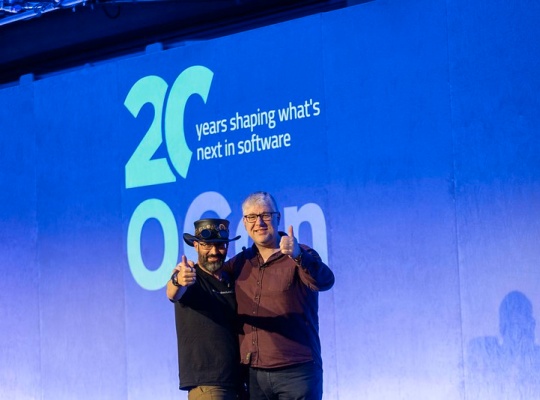
Smarter Prompts, Not Bigger Ones: Engineering Context That Works
Big context windows feel like the easy answer, but Baruch Sadogursky and Patrick Debois argue otherwise in their session, "The Right 300 Tokens Beat 100k Noisy Ones." They show why stuffed prompts drag coding agents down, then offer practical fixes like lazy-loaded skills and externalized memory banks. It is a grounded, useful take for engineering leaders wrestling with agentic workflows.

Enterprises invest in AI speed but lack visibility into infrastructure costs.
Enterprises are running AI in production, 66% have live workloads, and 29% operate at scale, yet fewer than half can rigorously track what that compute costs. Performance and GPU availability now outrank total cost of ownership, and reliability outranks price. That trade makes sense under pressure, but it leaves the weakest satisfaction score on value for money, a judgment made without full instrumentation. The next dollar targets specialized clouds and new silicon, even as current GPU utilization stalls near half.

From platform to practice: build tools people actually use
Building a platform is only step one. The real test is whether people can actually use it. Ben Linders argues that a capability isn't finished until it's reliably adopted, pushing teams to ask two sharp questions: "Is this being used?" and "Does it reduce friction?" That focus shifts development from simply shipping features to creating genuine value. It's a practical, human-centered take worth exploring.

Build AI workflows that survive production without slowing your experiments
Every AI workflow faces a quiet tension. Production durability demands persisting every step, so a crash or deploy doesn't erase progress. But that same safety net weighs down the fast, throwaway loop you need to judge an LLM's output. Mateus Moury's pattern tackles this head-on, separating the two concerns instead of forcing a compromise. It's a practical framework for teams tired of choosing between resilience and speed. For more on AI's practical edges, our guide to distributed training offers a useful parallel.