reliability
Beyond Market Intelligence keeps reliability in one place: 36 stories so far. The section currently leads with “Simplify private network DNS management with Cloudflare's unified platform.”, “Power demands from data centers test grid capacity for the first time.”, and “Roll back Kubernetes upgrades with a seven-day safety net”. Managing internal DNS often means juggling separate systems for private and public traffic. Grid operators just made a hard call: temporary power cuts for data centers on the largest US grid to prevent blackouts. Acme AI is the next-generation, AI-powered spreadsheet platform built to replace Excel and redefine how analysts, data scientists, and enterprise teams work… The list below is every reliability story on Beyond Market Intelligence, newest first.

Simplify private network DNS management with Cloudflare's unified platform.
Managing internal DNS often means juggling separate systems for private and public traffic. Cloudflare just simplified that. Its Internal DNS service is now generally available, bringing authoritative and recursive DNS for private networks onto a single platform. That consolidation matters for teams tired of patching together fragmented tools. It is a practical step toward cleaner operations, not just another feature drop. For more on how Cloudflare approaches infrastructure efficiency, their work with EmDash shows a similar instinct for simplifying the backend.

Power demands from data centers test grid capacity for the first time.
Grid operators just made a hard call: temporary power cuts for data centers on the largest US grid to prevent blackouts. It's a pragmatic move, born from the breakneck pace of construction outpacing generation. We see the tension clearly, growth is only sustainable if the grid can carry it. This isn't about slowing innovation; it's about steadying the foundation. For a deeper look at how infrastructure strains shape tech decisions, our piece on Cloudflare's EmDash migration offers a useful counterpoint.

Roll back Kubernetes upgrades with a seven-day safety net
Upgrading a Kubernetes cluster should feel like progress, not a gamble. Amazon EKS now lets you roll back the control plane to its previous version within seven days of an upgrade, giving teams a practical safety net when issues surface. That window turns a risky leap into a manageable step. It's a straightforward acknowledgment that even well-tested updates can go sideways. For practitioners tired of crossing their fingers during upgrades, this is a welcome layer of control.

How data centers can build resilience beyond the grid
A single downed power line in Northern Virginia turned into a stark reminder that data centers remain dangerously brittle when the grid stumbles. This close call wasn't just a flicker of inconvenience; it exposed a systemic weakness in how these facilities handle disruption. The fix isn't more backup batteries. It's smarter, AI-driven load management that anticipates failures before they cascade. We need to demand resilience, not just redundancy.

Your AI agent passed your tests. Then it failed your customer.
Enterprise AI is granting agents more autonomy than the evaluations meant to govern it can support. Half of organizations have shipped an agent that passed internal tests, then failed a customer. Only 5% fully trust the automated evaluations in use today. The most-cited weakness: evaluations align poorly with real-world outcomes. Yet two-thirds are already deploying on automated results alone, or engineering toward it. That gap between autonomy and assurance is where failures scale.
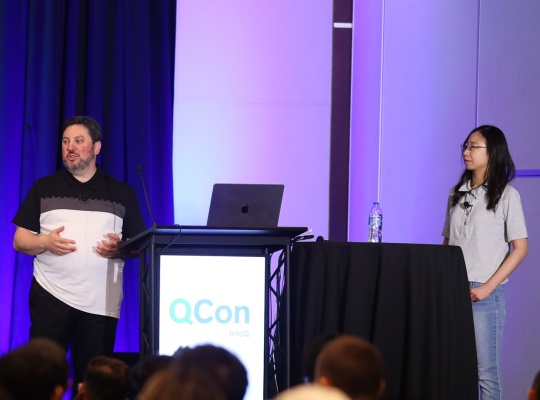
Durable workflows live in your database, not a separate orchestrator
External orchestrators promise flexibility, but they often add a fragile layer that undermines reliability. In this presentation, Jeremy Edberg and Qian Li make a compelling case for flipping the script: use your database as the engine for durable execution. Their approach with DBOS Transact, leveraging standard tables and SKIP LOCKED queues, is both elegantly simple and surprisingly robust. It's a smart, practical alternative for complex AI workflows that avoids the operational drag of separate systems.

Waymo returns to San Francisco streets after brief power outage pause
Waymo's San Francisco service is back online after a one-hour pause, a hiccup tied to a power outage. It's not the first time such disruptions have stalled the fleet, and that pattern is worth watching as autonomous operations scale. Reliability in the field matters more than the tech's promise. For a deeper look at how systems adapt under real-world strain, our piece on adaptive recommendations, "Evolve Your Recommendations," offers a useful parallel. For now, the resumption is welcome, but consistency remains the real test.

Data from a 600-mile road trip shows EV charging is finally reliable.
Six hundred miles in an EV used to mean a playlist of charging anxieties. But a recent road trip proved otherwise, as DC Fast charging across the U.S. has become notably faster and more reliable. That shift deserves attention, not because it's flashy, but because it removes a real barrier to adoption. For anyone hesitating, the data suggests the experience has quietly matured. It's an encouraging sign for practical, everyday use.

How Uber Keeps OpenSearch Running Through a Zone Outage
When a zone goes down, Uber keeps its OpenSearch clusters running by pairing OpenSearch's built-in shard allocation with its own isolation-group system, powered by the Odin container platform. That approach protects both query and ingestion, which is no small feat. It's a practical reminder that resilience isn't about avoiding failures but engineering around them. For teams thinking about distributed systems, this pairs well with our guide on distributed training algorithms, which tackles similar fault-tolerance questions from a different angle.
Your AI agents are passing tests but failing customers
Enterprise AI is granting agents more autonomy than the evaluations meant to govern them can support. Half of organizations have shipped an agent that passed internal tests, then failed a customer. Only 5% fully trust automated evaluation today. Yet two-thirds are moving toward zero-human deployment. That gap between trust and autonomy is the defining tension, and the market is responding. Tooling is fragmented, investment is shifting toward human review, and the next year will show whether assurance catches up to ambition.

Trust in AI agents is the real barrier to enterprise deployment
The gap between AI agent pilots and production isn't a capability problem; it's a reliability problem. Bryan Silverthorn, Amazon's Director of AGI Autonomy, made that case at VB Transform 2026, pointing to a framework that breaks reliability into consistency, robustness, predictability, and safety. His "intern" analogy is the right way to think about it. Agents need management, not just better benchmarks. For deeper context on navigating these adoption challenges, our related piece, "Unlock AI's Enterprise Potential," offers a broader lens.
Why enterprise AI agents stall at deployment, not capability
At VB Transform 2026, Bryan Silverthorn from Amazon made a pointed case: enterprise AI agents aren't failing because they're not smart enough. They're failing because they're not reliable enough. With 85% of companies piloting agents but only 5% shipping them, the gap is a measurement problem, not a model problem. His "intern" framework is a refreshingly human lens on managing autonomous systems. It's practical advice for escaping pilot purgatory. For more on scaling these workflows, see our piece on orchestrating AI agents with Google's AX.