reporting
13 stories filed under reporting on Beyond Market Intelligence. The newest of them: “Excel users share frustrations over data quirks and constant update fatigue”, “Transform Your Monthly Task Planning with Smarter Hour Calculations”, and “Shared baselines across papers keep your research honest and efficient.”. Excel users are voicing familiar frustrations: leading zeros that vanish, design choices that feel like puzzles, and the relentless pace of updates in 365. If you're juggling start dates and required-by dates across a month, the math can get messy fast. Acme AI is the next-generation, AI-powered spreadsheet platform built to replace Excel and redefine how analysts, data scientists, and enterprise teams work… The list below is every reporting story on Beyond Market Intelligence, newest first.
Excel users share frustrations over data quirks and constant update fatigue
Excel users are voicing familiar frustrations: leading zeros that vanish, design choices that feel like puzzles, and the relentless pace of updates in 365. The top discussion this week captures a shared exhaustion, not with data itself, but with the workarounds required to manage it. When the most celebrated macro is simply "Filter by active cell," it signals a deeper need for tools that adapt to how people actually work.
Transform Your Monthly Task Planning with Smarter Hour Calculations
If you're juggling start dates and required-by dates across a month, the math can get messy fast. You need a clear way to break down task hours by week or month, not just a total. Start by mapping each task's duration across your calendar, then allocate hours proportionally to the days they touch. A simple formula using date ranges and daily hour rates will get you there. It's about making the complex feel manageable, not adding more layers.
Shared baselines across papers keep your research honest and efficient.
Running the same baseline models across two papers is a practical move, but it raises a fair question about duplication. If the RMSE tables match exactly and only the proposed models differ, you are reusing your own work, which is generally acceptable in research. However, journals may view this as redundant publication if not disclosed clearly. Transparency matters here. Disclose the shared baselines in both submissions and cite the other paper. That approach protects your integrity and keeps the focus on your novel contributions.

Azure Repos code reviews now billed per review with five-concurrency limit
Microsoft has opened GitHub Copilot code review for Azure Repos to all Azure DevOps customers, acknowledging that many teams aren't ready to leave for GitHub. That's a practical move, one that meets users where they are. Reviews bill per use through your linked Azure subscription, with costs showing up in Cost Management two days later. Budgets alert you but won't halt reviews, and concurrency caps at five per organization. It's a straightforward, usage-based approach.

OpenAI's product chief on agents, UX, and what's next for AI tools
OpenAI's head of product, Thibault Sottiaux, sees a world finally ready for agents, and that's worth paying attention to. In this interview, he gets practical about UX and what it means to report directly to Greg Brockman, grounding the agent hype in real workflow decisions. It's a grounded take from someone shaping the tools we'll actually use. For a more personal angle on AI's limits, you might try "Talking to My AI Clone Taught Me to Question the Tech."

Waymo's collision probe documents remain hidden behind confidentiality claims.
Waymo has handed over documents in NHTSA's child collision probe, but the responses so far arrive heavily redacted, with the company citing "confidential business information." That is a curious stance for a firm asking the public to trust its judgment on the road. Transparency matters most when scrutiny intensifies, and blacking out entire answers invites more questions than it settles. For deeper context on how data exposure and trust intersect, our piece "Protecting Data in the Age of AI-Powered Apps" offers a useful lens.

OpenAI restricts cyber program access, challenging trusted researcher partnerships
OpenAI has revoked researchers' access to its Trusted Access for Cyber program, a move that raises questions about how the lab balances security research with practical safeguards. The program's premise is sound: give capable defenders better models so they can report vulnerabilities faster, closing gaps before they're exploited. But cutting off access, even selectively, risks chilling the very collaboration that accelerates fixes. If the goal is safer AI, transparency about these decisions matters as much as the tools themselves.

Why More Incidents Can Mean Stronger System Reliability
A rising incident count is easy to read as a red flag, but Great Circle's recent analysis suggests otherwise. More reports often mean your team is actually getting better at surfacing problems, a compelling case in itself. That is a sign of health, not decline. It reframes how we should interpret operational noise. For engineering leaders wrestling with this tension, it is worth exploring how a mature incident culture changes the metrics you trust.
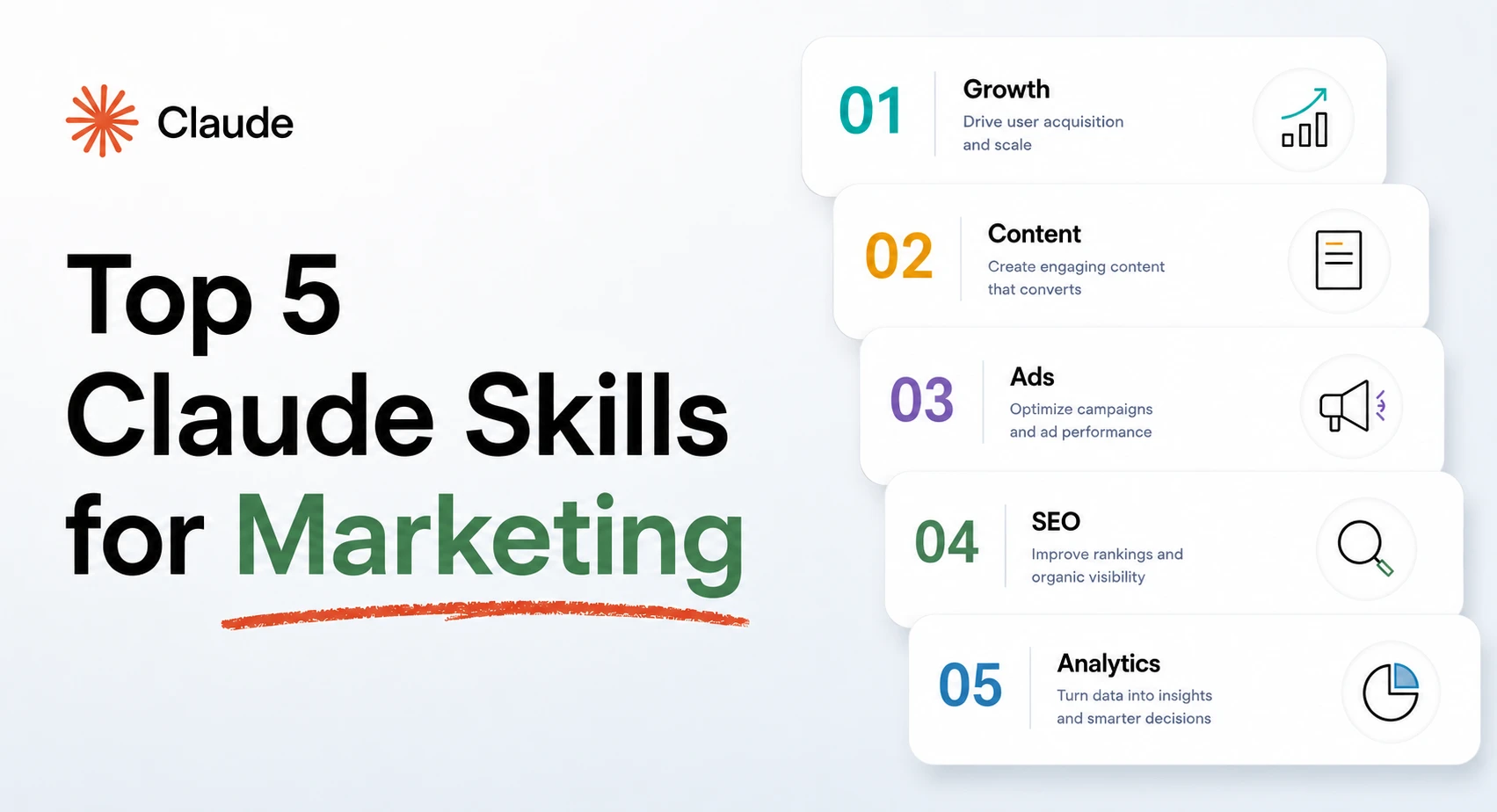
From Prompt to Process: Building a Cohesive AI Marketing Workflow
Most marketing teams use Claude to draft an ad or email from a prompt. That works, but it's hardly a system. The real work still involves research, positioning, channel planning, and reporting. This guide cuts through the noise to highlight five Claude skills that address those missing pieces. It's a practical, honest look at moving from one-off tasks to a repeatable workflow. For a deeper dive into AI's limits, check out "Talking to My AI Clone Taught Me to Question the Tech."

Explore how AI simplifies waterfall charts for clearer data storytelling
A waterfall chart only earns its keep when it tells a clear story about how values move. The key is sequencing: each bar must connect logically to the next, showing additions and subtractions without clutter. Start with a solid baseline and label every step, because ambiguity defeats the purpose. Red and green should mean something consistent, not just decorate the axis. If you want to sharpen your visual instincts further, our piece on TanStack Charts offers a fresh take on grammar-of-graphics thinking.

LinkedIn empowers users to flag low-quality AI content with a simple tool
LinkedIn now lets you flag a post as "seems like AI slop," a blunt but practical addition to its reporting tools. It's also swapping its AI writing assistant for a proofreader, which feels like a step toward quality over gimmick. We're glad to see platforms addressing the flood of low-effort content, though the real test is enforcement. For a deeper look at how AI shapes our digital instincts, try "Talking to My AI Clone Taught Me to Question the Tech."

eBay pays $56 million to settle intimidation campaign against newsletter critics
The Steiners spent years under siege for the simple act of publishing a newsletter eBay executives disliked. Now, a $56M settlement closes that chapter, though the message it sends about corporate intimidation lingers. It's a sobering reminder that power unchecked can turn petty. For those tracking how digital platforms police their critics, our coverage of AI agent swarms exploring online data offers a fitting parallel. The settlement is a win, but the damage to trust takes longer to repair.

Transform uncategorized data into clarity with automated category assignment.
Uncategorized rows quietly undermine a report, and in facility management, that means lost grouping and aggregation. A practical fix exists, and this story walks through how to assign categories automatically using Power Query and DAX. This is a straightforward approach to a recurring problem, and the solution feels immediately applicable. For readers hungry for more analytical problem-solving, the related piece on bridging retrieval and action offers a complementary perspective worth exploring.