resource management
Beyond Market Intelligence keeps resource management in one place: 14 stories so far. The section currently leads with “Scale Sandboxes Instantly: A New Approach to Concurrent AI Workloads”, “Orchestrate AI Agents: Google Open-Sources AX for Enhanced Efficiency”, and “Build Scalable Products with Less: Engineering Lessons from Startups”. Modal's staff engineers Colin Weld and Connor Adams didn't just tweak their sandbox setup; they rebuilt it from the ground up. Google has open-sourced AX, an orchestrator designed to keep autonomous AI agents from idling away resources. Acme AI is the next-generation, AI-powered spreadsheet platform built to replace Excel and redefine how analysts, data scientists, and enterprise teams work… The list below is every resource management story on Beyond Market Intelligence, newest first.

Scale Sandboxes Instantly: A New Approach to Concurrent AI Workloads
Modal's staff engineers Colin Weld and Connor Adams didn't just tweak their sandbox setup; they rebuilt it from the ground up. The result is infrastructure that handles millions of concurrent sandboxes and tens of thousands of creations per second. That's the kind of scale that makes concurrent AI workloads feel almost routine. It's a smart, grounded look at what it takes to move past legacy limits. For more on practical AI adoption, our guide to unlocking ChatGPT for work is worth a look.

Orchestrate AI Agents: Google Open-Sources AX for Enhanced Efficiency
Google has open-sourced AX, an orchestrator designed to keep autonomous AI agents from idling away resources. By treating agents as stateful actors on its Agent Substrate runtime, AX suspends tasks during downtime and resumes them on demand, trimming latency without sacrificing performance. The control plane's Kubernetes-style primitives make managing agent workloads feel familiar, not foreign. It's a practical step toward efficient, scalable AI operations.

Build Scalable Products with Less: Engineering Lessons from Startups
Scaling a product doesn't have to mean scaling complexity. In his latest talk, David Gudeman draws on over a decade of startup experience to show how pairing GCP, Firebase, and Cloud Run can accelerate product-market fit without overwhelming your team. He gets practical fast: cut redundant frontend state, design event-driven backends, and keep DevOps lean while building for the long haul. It's a grounded playbook for teams who want to move smarter, not harder.

Navigating AWS Complexity with Smarter Terraform Infrastructure Management
The Terraform AWS Provider's v6.62.0 release lands as infrastructure grows more intricate, adding support for new capabilities while sharpening how Terraform reads existing resources. That dual focus, forward momentum and deeper comprehension, matters for teams juggling complexity. It is not about chasing novelty; it is about making the provider a more reliable partner in daily work. For a broader look at simplifying cloud workflows, our guide "Unlock ChatGPT for Work" pairs well with this momentum.

Resource Orchestration Made Practical with Stable Python Techniques
Orchestration often feels harder than it should, especially when you are juggling stable, everyday Python. Five techniques that actually work today, built for 3.11 and later, with one 3.14-specific tool clearly flagged for those ready to push ahead. It is a grounded, practical read. If you want to extend your coding mindset further, our guide on unlocking Python's advanced techniques pairs nicely with this approach.
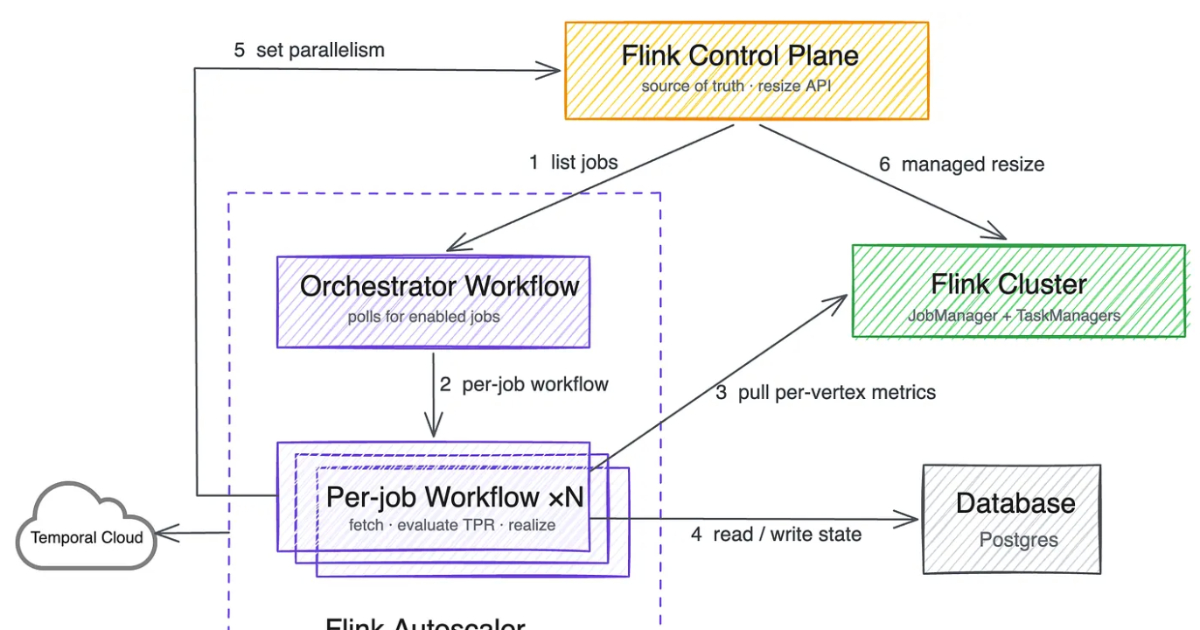
Netflix's Open Source Flink Autoscaler Cuts Streaming Costs by 58 Percent
Netflix is moving toward the open-source Apache Flink Autoscaler for more than 30,000 streaming jobs across multiple AWS regions, and the numbers make a compelling case. The operator-level approach tackles the limitations of its cluster-level autoscaler for complex, stateful pipelines. One team saw a 58% reduction in annualized Flink compute costs, saving roughly $1.1 million. That's not just incremental progress; it's a meaningful shift in how large-scale data operations can run more efficiently.

Google Publishes a New Security Model for Autonomous AI Agents
Google's new research paper, Beyond Zero, reframes security for a world where AI agents act autonomously. Instead of locking down applications, this model pushes access decisions down to individual resources and actions, blending static rules with dynamic, AI-driven judgment. It's a pragmatic evolution of Zero Trust, built for machine-speed enforcement. For anyone wrestling with how to govern AI responsibly, this feels like a necessary step forward.

Discover how KYAML brings clarity and confidence to Kubernetes configurations.
YAML's flexibility has long been a quiet source of frustration in Kubernetes, and KYAML offers a way forward that feels long overdue. By enforcing a stricter dialect, it trades guesswork for predictability, helping teams catch common errors before they become production headaches. That focus on clarity aligns with what we've explored in our broader coverage of AI-driven workflows, like unlocking practical tools for everyday work. For developers tired of chasing subtle indentation bugs, KYAML is a practical step toward more reliable configurations.

Explore how DelveRL opens new paths for training game-playing agents.
Most roguelikes punish agents with messy integration, but DelveRL flips that script. SnyderConsulting built an open-source, turn-based game with a structured API, deterministic simulation, and procedural floors, designed specifically for training game-playing agents. It runs locally, includes a recurrent PPO baseline that hits floor 18 on average, and everything is open source. That's a practical gift to the research community. The strategic depth looks promising, and the transparent benchmarks make it easy to test new ideas.

How urine could help address data center water consumption
Jason Kelce's joke about cooling data centers with urine is funny because it isn't that far-fetched. The idea challenges our reliance on potable water for industrial heat management, and that's a conversation worth having. It's not about literally rerouting restrooms, but about questioning the assumptions baked into our infrastructure. If we're serious about sustainable computing, we need to explore every viable alternative.

Texas pauses data center growth to rethink energy demands
Texas has long been the default answer for data center developers chasing cheap power and light regulation. But the governor's call for audits signals that even the most business-friendly state has limits. Growth without scrutiny eventually hits a wall, and Texas just found its own. It's a reminder that infrastructure booms don't fail quietly; they strain until someone blinks. For context on how quickly energy demand is reshaping tech decisions, our piece on Crusoe pausing its Boom turbine deployment shows even startups are recalibrating.

Four strategies to scale multi-agent AI without rising token costs
Scaling a multi-agent architecture doesn't have to mean watching your token bill climb. This guide lays out four practical strategies to keep costs in check while you grow, and it's a refreshingly grounded take on a problem many teams quietly wrestle with. The focus here is on smart implementation, not hype. For more on the broader infrastructure behind such systems, our piece on distributed training algorithms offers a useful foundation. If you're ready to streamline without the sting, this is a worthwhile read.

Virtual Threads on JDK 25 Shift the Bottleneck to Your Code
JDK 24 didn't just tweak virtual threads; it moved the bottleneck. The monitor-related pinning that stalled Netflix on Java 21 is gone, but what replaces it demands more from you. Downstream-resource saturation now shifts the burden onto explicit bounding in your code. Sandeep Bharadwaj maps these failure modes with a practical sequence backed by a public benchmark. It's a grounded look at what production Java truly requires now. For a related angle on handling workload pressure, our piece on scaling sandboxes instantly pairs well here.

When Scaling AI Agents, Small CPU Tasks Become Big Bottlenecks
We scaled to hundreds of LLM agents and watched our system crawl. The culprit wasn't the models. It was the hidden cost of asynchronous design, where tiny CPU tasks quietly piled up until they became the bottleneck. This story is a practical look at that tradeoff, and it pairs well with our guide on distributed algorithms if you want the deeper mechanics. The takeaway is simple: more agents mean more overhead, and ignoring it slows everything down.