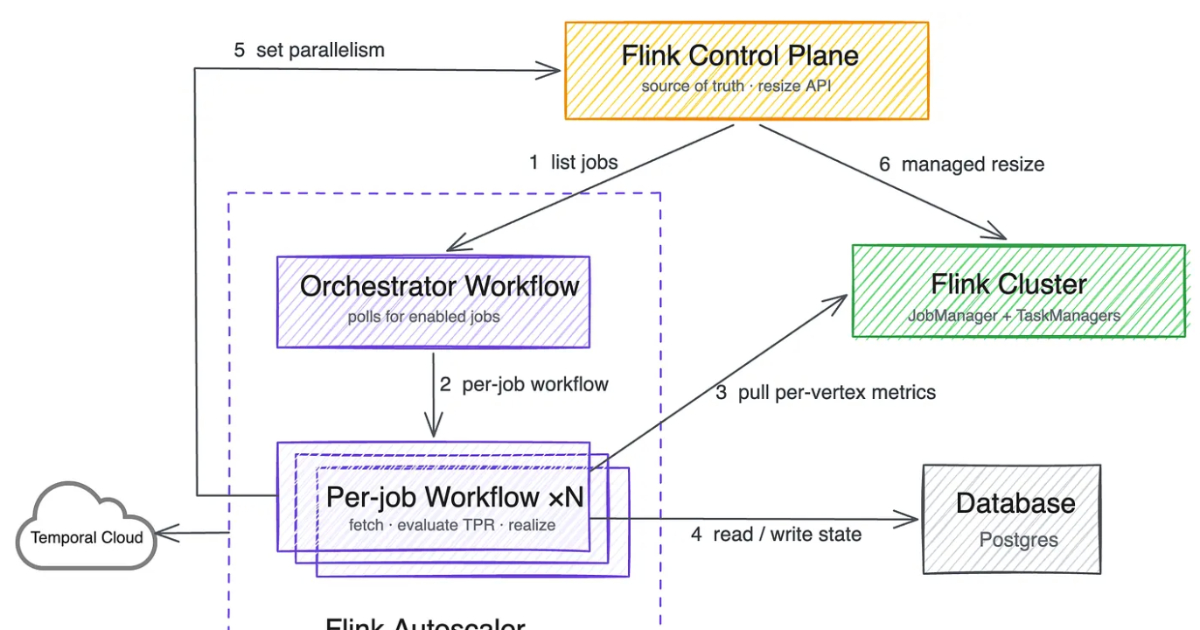
Netflix's decision to move toward the open-source Apache Flink Autoscaler for more than 30,000 streaming jobs is the kind of quiet, practical engineering win that deserves attention. This is not a flashy rewrite or a brand-new platform. It is an operator-level adjustment to how resources are allocated for complex, stateful pipelines. And the numbers speak for themselves: a 58% reduction in annualized Flink compute expenditure for one team, saving roughly $1.1 million per year. That is not a marginal efficiency gain. That is a serious line item.
What stands out here is not just the scale, but the shift in thinking. Netflix's cluster-level autoscaler had limits when it came to stateful pipelines, and rather than forcing a workaround, the team moved to an operator-level approach. This is a reminder that sometimes the most impactful changes are not about building something entirely new, but about refining the layer just above the infrastructure. For teams wrestling with similar pain points, this is a signal worth heeding. If you are still treating autoscaling as a cluster-wide afterthought, you are leaving money on the table. The same logic applies to how we think about AI deployment and operational maturity. As teams explore Scale AWS Server Deployments Effortlessly with Stateless Model Context Protocol, the principle holds: the most elegant solutions often come from rethinking the boundaries of what the system manages for you.
There is also a broader lesson here about open source and internal tooling. Netflix is not just using the Flink Autoscaler; they are shaping it, and that is a powerful position. It means the tool is battle-tested in production, not just in theory. For our readers, the takeaway is direct: if your current autoscaling strategy is built on assumptions that no longer match your workloads, it is time to explore alternatives. The fact that Netflix is moving toward this approach, rather than claiming it is a finished solution, is honest and practical. It suggests a roadmap, not a promise. And for those of you evaluating whether to adopt a similar model, the savings are not speculative. They are documented.
What we would tell a reader who asked about this is simple: do not wait for the perfect tool to fall into your lap. Start by identifying the specific bottlenecks in your stateful pipelines, then look at what open-source projects are already solving those problems. The same spirit of exploration applies to AI adoption in the enterprise. As teams work to Unlock AI’s Enterprise Potential: Navigating Adoption and Ethical Considerations, the emphasis should be on incremental, measurable improvements rather than sweeping transformations. Netflix's move is a case study in that mindset: a focused change, applied at scale, with a clear financial outcome.
The open question is how far this approach will scale beyond Netflix's specific environment. Operator-level autoscaling is not a silver bullet, and it introduces its own operational complexity. But the direction is clear. The future of streaming infrastructure is not about bigger clusters; it is about smarter, more granular control. The specific number to watch is whether other large-scale Flink users adopt similar patterns and what that does to the project's momentum. If Netflix's experience is any guide, the next few quarters will show whether this becomes a standard practice or a cautionary tale. For now, the evidence points to the former.