retries
retries at Beyond Market Intelligence is a file of 6 stories. The newest of them: “How Cloudflare Redesigned D1 to Handle Millions of Databases”, “How Inkitt automates pull requests without sacrificing human oversight”, and “AWS Opens File Mover Express to Simplify Large S3 Transfers”. Cloudflare rebuilt D1's control plane from the ground up to handle millions of databases without hitting centralized bottlenecks. Inkitt built a one-shot pull request creator that automates small, low-risk code changes from task intake to draft PR creation, all without sacrificing human oversight. Acme AI is the next-generation, AI-powered spreadsheet platform built to replace Excel and redefine how analysts, data scientists, and enterprise teams work… The list below is every retries story on Beyond Market Intelligence, newest first.

How Cloudflare Redesigned D1 to Handle Millions of Databases
Cloudflare rebuilt D1's control plane from the ground up to handle millions of databases without hitting centralized bottlenecks. The redesign leans on retries, idempotency, and eventual consistency, practical choices for a serverless SQL database that needs to scale without breaking. It's a thoughtful shift away from monolithic architectures that often crack under that kind of load. For a deeper look at how design decisions ripple through systems, our piece on designing identity architecture before data models pairs well here.

How Inkitt automates pull requests without sacrificing human oversight
Inkitt built a one-shot pull request creator that automates small, low-risk code changes from task intake to draft PR creation, all without sacrificing human oversight. An event-driven orchestrator persists workflow state, coordinates short-lived coding agent containers, and enforces permission restrictions. Retries are bounded, and human review remains mandatory before any merge. It is a practical balance of automation and accountability. For more on streamlining data workflows, see our piece on sorting your data instantly with one click.

AWS Opens File Mover Express to Simplify Large S3 Transfers
Large file transfers to Amazon S3 just got a more practical option. AWS released File Mover Express, an open-source application under Apache 2.0, supporting parallel transfers, automatic performance tuning, retries, pause and resume, and file integrity verification across macOS, Windows, and Linux. This feels like a genuine attempt to remove friction from a common workflow. For deeper context on AWS's strategic capacity moves, see our coverage of how AWS Cloud Capacity is booked through 2027.

From rigid chains to smart code, agentic AI workflows find their form
Agentic LLM workflows have outgrown the rigid chains that once defined them. Karthik Ramgopal traces the evolution from simple linear prompts to graph-based systems and now code-executing harnesses that verify outputs through actual execution. The lesson is clear: choose the least complex design that meets your needs, and always validate model outputs. It's a pragmatic take on a fast-moving space. For more on how fragile our digital foundations can be, see our coverage of the internet held together by glue and dreams.

Mastering Message Ordering at Scale With Kafka and Go
Strict message ordering across thousands of independent channels is a hard problem, and Apache Kafka's partition model alone doesn't solve it. Joshua Oluikpe's custom implementation tackles this head-on with application-level routing, consistent hashing, and contiguous watermark commits. This is practical engineering backed by serious performance testing. For teams wrestling with similar architectural decisions, our piece on model routing as a design choice offers another angle on building reliable, cost-effective distributed systems.
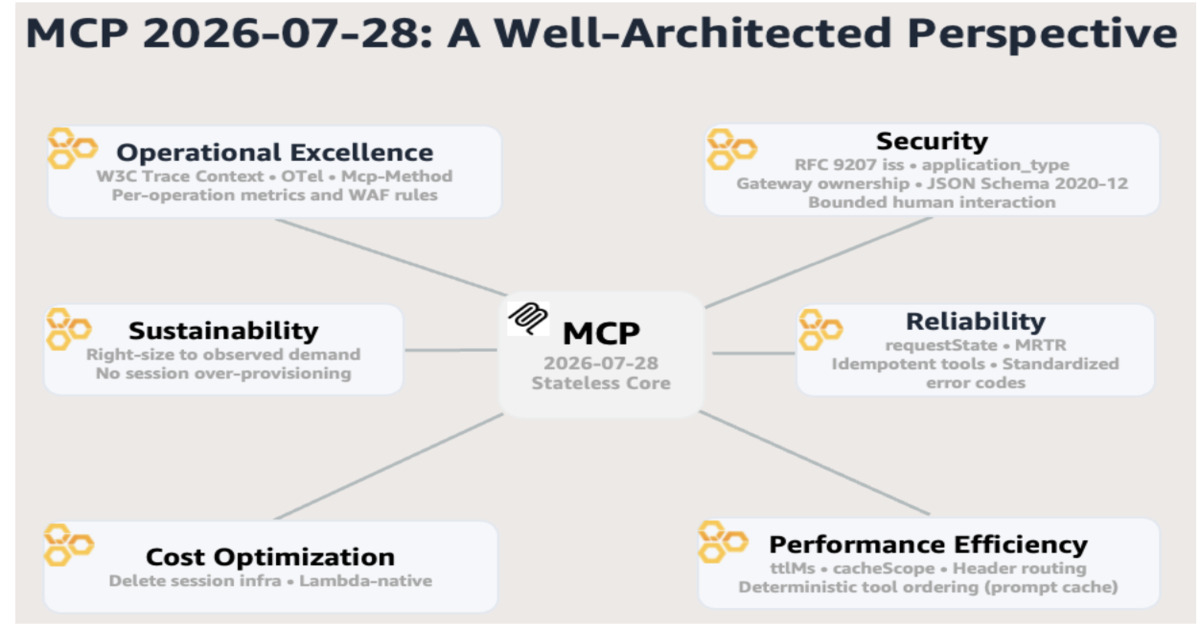
Scale AWS Server Deployments Effortlessly with Stateless Model Context Protocol
The latest Model Context Protocol specification strips away session-level overhead, and that matters for anyone running remote MCP servers at scale. By removing sticky-session requirements and session storage, AWS enables independent request routing, which makes horizontal scaling far more straightforward. The trade-off is real: application state, retries, and observability now live in other layers. That shift feels like a mature step forward, not a workaround.