Retrieval Architectures
Retrieval Architectures at Beyond Market Intelligence is a file of 2 stories. The newest of them: “Four AI Retrieval Methods Benchmarked for Real-World Trade-offs” and “Think longer, not bigger: AI models often know more than they show.”. Four retrieval architectures, one laptop, and a single set of documents. When a model hallucinates, the usual assumption is that the knowledge is missing. Acme AI is the next-generation, AI-powered spreadsheet platform built to replace Excel and redefine how analysts, data scientists, and enterprise teams work… The list below is every Retrieval Architectures story on Beyond Market Intelligence, newest first.
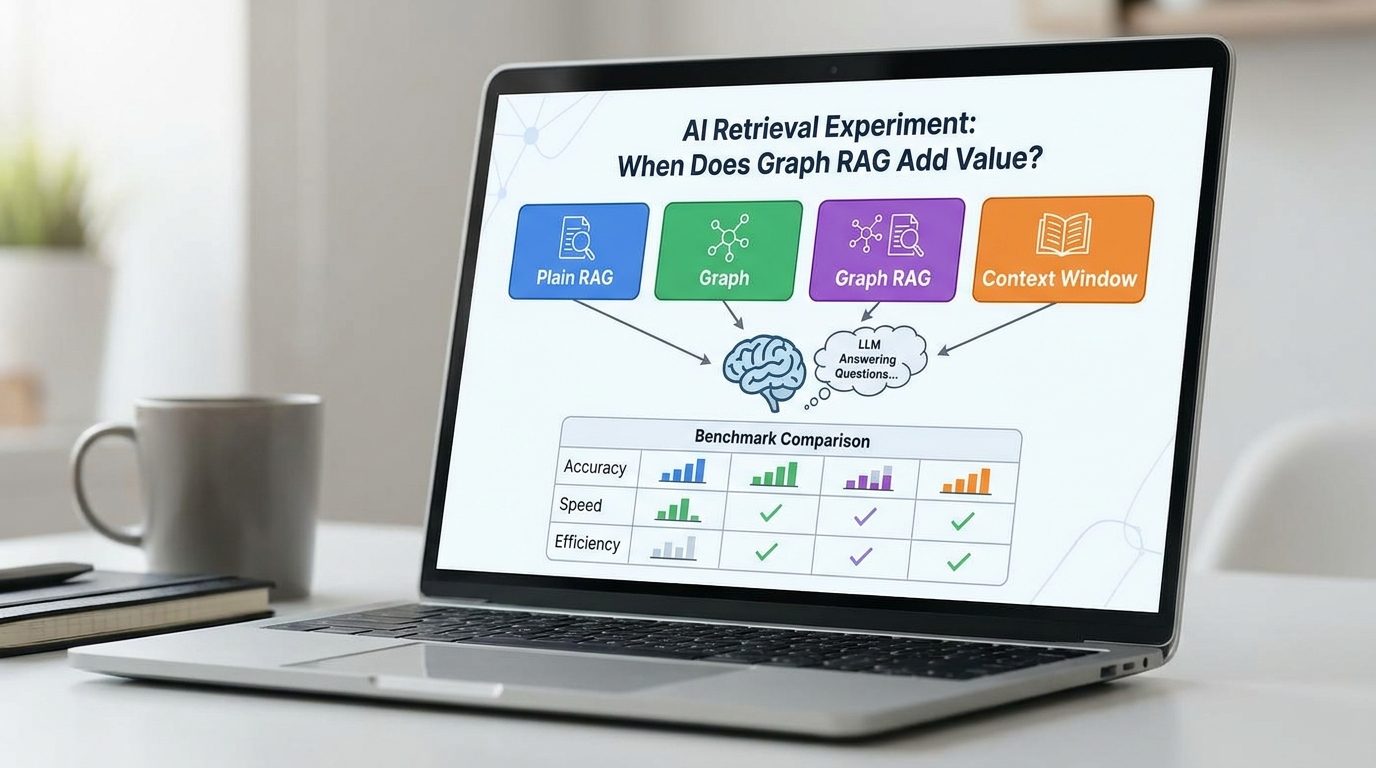
Four AI Retrieval Methods Benchmarked for Real-World Trade-offs
Four retrieval architectures, one laptop, and a single set of documents. That's the setup for this hands-on experiment, which benchmarks plain RAG, graph RAG, and a frontier model's context window against the same questions. The results offer a practical look at when graph RAG earns its complexity. For those exploring how AI structures understanding, our related piece on verifying AI comprehension in tax season is a natural next step. The trade-offs here are worth your attention.

Think longer, not bigger: AI models often know more than they show.
When a model hallucinates, the usual assumption is that the knowledge is missing. But new research from Google and Technion suggests otherwise: frontier models like GPT-5 encode 95-98% of tested facts yet fail to directly recall up to 34% of them. Thinking longer recovers 40-65% of those lost facts. That's a tip-of-the-tongue problem, not an empty vault. The fix isn't always larger models or heavier retrieval. It's often just giving the model the right nudge, or the time to think.