review
Beyond Market Intelligence keeps review in one place: 29 stories so far. The section currently leads with “Independent boards assess potential SpaceX and Tesla merger path”, “A call to raise the bar on conference paper submissions”, and “New App Store Rules Target Tools That Disguise Harmful AI Content”. Elon Musk likes the idea of a SpaceX and Tesla merger, but he says he isn't on either independent committee assessing the path. Three papers for ICLR, five for AAMAS, and a reviewer who wouldn't accept any of them at a workshop. Acme AI is the next-generation, AI-powered spreadsheet platform built to replace Excel and redefine how analysts, data scientists, and enterprise teams work… The list below is every review story on Beyond Market Intelligence, newest first.

Independent boards assess potential SpaceX and Tesla merger path
Elon Musk likes the idea of a SpaceX and Tesla merger, but he says he isn't on either independent committee assessing the path. That distance is interesting. It suggests the potential combination is being driven by board-level strategy, not founder impulse. For a different take on bold corporate thinking, see our piece on one founder's pledge to share equity and what it means for access to innovation.
A call to raise the bar on conference paper submissions
Three papers for ICLR, five for AAMAS, and a reviewer who wouldn't accept any of them at a workshop. That's a blunt verdict, and it carries a fair challenge. Submitting unfinished work wastes the limited time of volunteers who read for a living. If you are new to this, find a mentor before you hit submit. Explore what readiness looks like before you ask others to explore your draft. Your reputation, and their patience, depend on it.
New App Store Rules Target Tools That Disguise Harmful AI Content
App stores are finally drawing a clear line: tools that disguise harmful AI content as innocent user-generated material won't be tolerated. New guidelines demand developers build in real preventative measures, not just afterthought filters. It's a welcome shift toward accountability. This move echoes a broader tension we're seeing across the industry, AI accelerates research ideas, as our piece on that very bottleneck explores, but our ability to test and moderate what it produces often can't keep pace.

Explore how simpler submissions often outperform the flashy ones
A quiet submission can be more powerful than a flashy one. That's the insight here, sometimes the best work is the line you choose to remove, not the one you add. It makes you wonder how many stronger submissions exist simply because someone had the discipline to step back. For a deeper look at refining your process, consider how our piece on "How adding AI to your review process can sharpen your peer feedback" explores trimming with intention.
How adding AI to your review process can sharpen your peer feedback
Uploading a review to ask an AI for second thoughts is an extra step that feels like more work, but one user finds it produces higher quality feedback with fewer typos. The approach is careful, never uploading the paper itself, leaving that choice to authors. That kind of mindful integration is worth exploring. For a deeper look at how AI reshapes workflows, "Explore how world models are shaping the next evolution of AI" offers a related perspective.

What to Know Before Using Abacus AI
Abacus AI promises to simplify complex data tasks, but users report workflows that sometimes fail without clear explanations. The platform's pricing raises questions about value compared to results, and real-life use cases show uneven reliability. Before committing, weigh these critiques against its strengths. For a deeper look at how tools like this actually perform, our piece "AI sharpens focus but true productivity still depends on how we use it" explores the gap between promise and practice.

As Code Velocity Surges, Spotify Reinforces Quality Controls for AI Development
When AI-assisted development more than doubled Spotify's monthly merged changes, the company didn't just celebrate the velocity, it reinforced quality controls. That's the right move. Faster code means little without reliability. Spotify is now adapting its testing, observability, and rollback capacity to match this new pace. It's a practical, human-centered response to a surge that could easily overwhelm engineering teams. For more on how AI is reshaping development workflows, see our coverage of GitLab 19.4.

Prompt to Visuals: A Four-Task Test of Nano Banana 2.1
Turning a text prompt into a clay illustration or a project chart sounds like the kind of flexibility spreadsheets have been missing. Nano Banana 2.1 lets you explore these visual formats without jumping between tools, which is a practical step forward. We put it through four real-world tasks to see how it holds up. For deeper context on how AI handles decision-making, our piece on Jev Projects offers a useful companion read. Nano Banana 2.1 makes visual experimentation feel accessible, not overwhelming.
A practical guide to diffusion models that balances deep math with clear insight
The balance between mathematical rigor and intuitive insight in *The Principles of Diffusion Models* is genuinely exceptional. It's a practical guide aimed at researchers and practitioners who already have basic deep learning knowledge, no prior specialization in diffusion models required. The dedicated appendices invite deeper dives into the math without overwhelming the main text. For readers exploring how AI models evolve, our piece on how small AI models closed the gap on a test built for humans offers a complementary perspective.
NeurIPS workshop decisions delayed as authors await acceptance notices
Waiting on a NeurIPS workshop decision past the stated deadline tests anyone's patience. You submitted your work, received one review, and now face silence. That lack of closure is frustrating, especially when you're eager to move forward. We understand the anxiety of waiting. For deeper context on how these delays impact researchers, our related article "NeurIPS workshop notifications delayed leaving submitters waiting for updates" explores similar experiences. The process should feel transparent, not like a guessing game.

Claude Sonnet 5.5 Delivers Faster Coding Smarter Agentic Workflows and Practical Cost Controls
Claude Sonnet 5.5 is the middle child of the Claude family, and that is precisely why it matters. This is the model most people will actually use, quick, capable, and cheap to run. Our practical guide covers what changed, the benchmarks that matter, and the cost controls developers should not miss. We also built one hands-on demo worth your time. For deeper context on Anthropic's broader trajectory, see our related piece on the company's own prospectus warning of existential risk and massive losses.

Meet the VCs shaping the Startup Battlefield 200 at Disrupt 2026
Thousands of applications. Multiple rounds of review. Hundreds of hours evaluating startups from around the world. Now comes the part everyone has been waiting for: meet the VCs shaping the Startup Battlefield 200 at Disrupt 2026. If you're curious how AI moves from demo to real deployment, our coverage of Anthropic, Clay, and Gamma at the AI Stage offers a practical look. Register for TechCrunch Disrupt 2026 today.
Navigating ICLR's open review timeline: when your work goes public
The shift to ICLR's open review model can feel like stepping into a different arena if you're used to ICML or NeurIPS. Your paper becomes publicly visible in October, when reviews start, not in November. Yes, that includes supplementary materials, so make peace with your code being out there early. Reviews appear immediately, visible to both you and the community as they post. It is a transparent process, but one that demands comfort with early exposure.

Exploring the Sound: Sennheiser Momentum 5 Balances Power and Endurance
After weeks of real-world testing, the Sennheiser Momentum 5 proves that power and endurance can coexist without compromise. We pushed them through demanding listening sessions, scrutinizing clarity, noise isolation, and all-day wearability. The result is a pair that feels less like a spec sheet and more like a genuine upgrade for daily use. If you are exploring what makes a flagship headphone truly effective, this hands-on assessment offers a grounded perspective. For more tech insights, our piece on Swift 6.
Missing Feedback Raises Questions in NeurIPS Paper Rejections
A rejection is already hard to process, but receiving no final comment while your meta-review sits unchanged since July raises fair questions. The reviewer scores were consistent at 4-4-4, which makes the silence feel harsher, especially when the email promises careful effort on borderline cases. That gap between stated process and lived experience is worth examining. For a deeper look at how complex systems handle feedback loops, our article "Evolve Your Recommendations: Real-World Insights on Adaptive Systems" offers useful context.
Reviewer feedback remains pending as rebuttal process continues
Waiting on reviewer feedback is a specific kind of limbo, and it sounds like you are handling it with a clear head. Your rebuttal is still in motion, and the silence from your reviewers is not a rejection; it is simply part of the process. You have a valid point about the "2" being a limitation you already disclosed, especially when the conference rules discourage that as a weakness.
Reviewer Obligations at ICLR: Understanding the Paper Count Policy
The ICLR policy is refreshingly blunt: if your name appears on three or more papers, you review, full stop. No qualifications, no experience check, no debate. That means Alex, a new student fourth-author on three lab papers, is on the hook, even if they feel unready. It is a blunt instrument, but it is also a clear one. The policy prioritizes volume of contribution over perceived expertise, which is a fair trade-off for a field that needs many hands.
Navigating ICLR LLM Feedback: Insights and Improvements
A single review that buries one or two valid points under three pages of nitpicking is a familiar experience for anyone who has submitted to a crowded venue. This user's take on ICLR's LLM feedback is refreshingly measured. They acknowledge the initiative's value while questioning its execution. The real friction is the lack of a warning that the review stays public, a small courtesy with big implications. Addressing both valid and petty feedback takes effort, but it is the right call.
Navigating peer review timelines: what to do when a third review is delayed
A month of silence after two reviews would test anyone's patience, especially when you've already acted on the feedback. It's a fair question whether the third review is still coming, and the lack of a response from the Action Editor only adds to the uncertainty. This isn't a critique of the process, your experience has been positive, and the submission surge is real. But waiting without a timeline is hard to navigate.
Discover how an undergraduate is advancing AI with self-explanation research.
An undergraduate in India just built a research draft from scratch, literature review, idea, results, funding, and is now asking the community for compute and mentorship to push into Test Time Training. That takes a rare mix of initiative and humility. Their confidence in TTT's trajectory feels well-placed; the field rewards those who act before the crowd. For anyone running a lab, this is the kind of self-driven collaborator worth a second look.
Navigating Review Delays: A Practical Guide for Authors Awaiting Feedback
Waiting on a decision is one of the most frustrating parts of the academic process. A researcher recently posted that their ACML 2026 journal track submission has passed the official review release date of August 27 with no word from the program chairs. They are asking if anyone else has received feedback before they reach out directly. It is a fair question, and a practical one. When deadlines slip, a polite nudge to the organizers is reasonable.
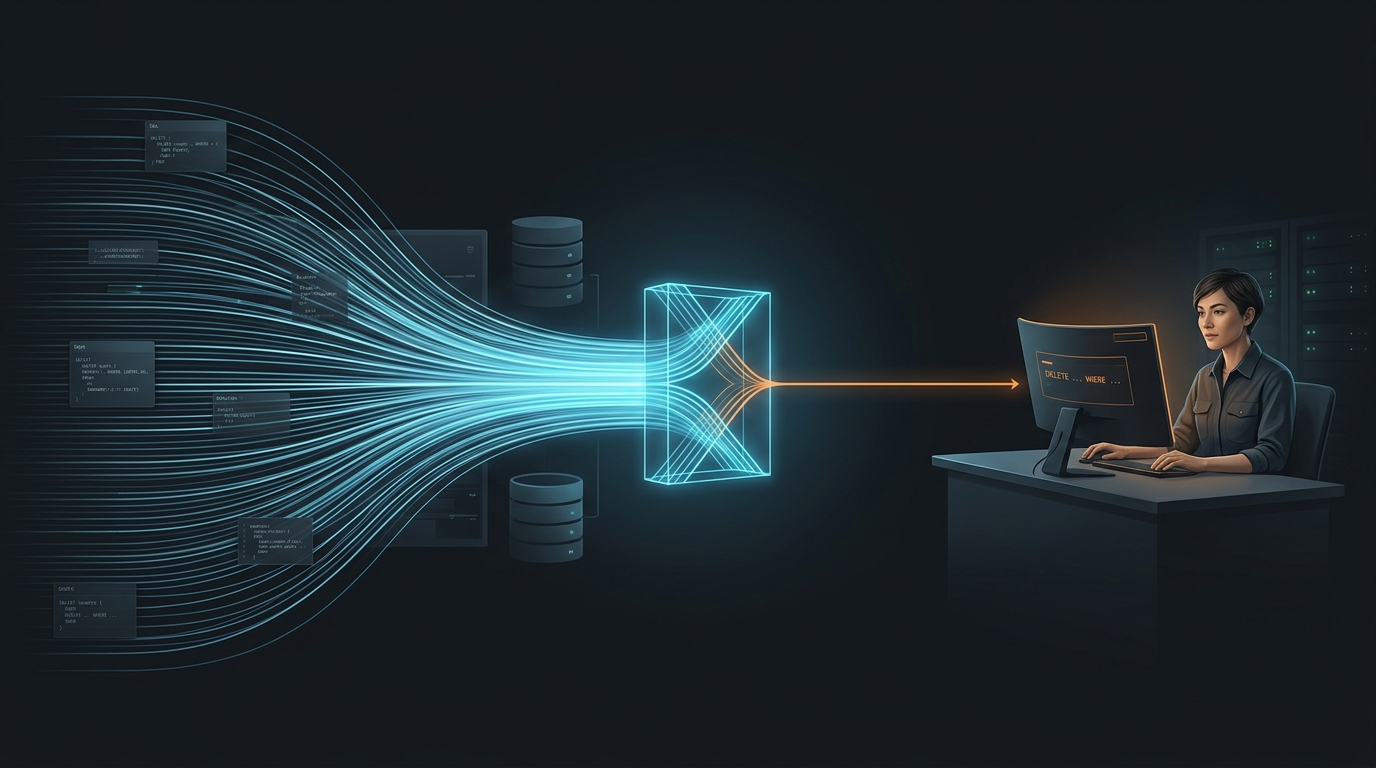
Focus human attention where it drives real data outcomes
Reviewing every AI action is a luxury most teams can't afford. In this piece, the author tackles a familiar bottleneck: how to keep humans in the loop without turning oversight into a full-time job. The answer isn't more checkpoints, it's routing attention to the moments that genuinely need it. We appreciate this practical take on balancing control with momentum. It pairs well with our guide on distributed training, where similar trade-offs between efficiency and oversight come into play.
Navigating Desk Rejections Based on Incorrect Submission History
A desk rejection stings more when the reason doesn't match your reality. This researcher received two desk rejections because the PC claimed the papers were previously reviewed in ARR, yet neither was ever submitted. That is a frustrating contradiction. The right move is to reply directly to the PC chair with a calm, factual note explaining the mix-up. Include submission history if you have it. Mistakes happen, but they are fixable. Do not let a false flag sink your work.
From Rejection to Next Steps: Navigating Your First AI Paper Submission
A rejection with an average of 2.83 stings, especially when your meta-reviewer saw real value. You are not stuck in a doom loop; you are standing at a strategic fork. The rebuttal silence is frustrating, but it doesn't invalidate the work. For NACL, you must go through ARR again; the previous discussion doesn't carry over. Don't count on the old reviewers. Instead, treat this as a fresh submission: incorporate the feedback, tighten the narrative, and resubmit.