Most teams already know the drill: you have a visual idea, you open a tool, you wrestle with the interface, and the result looks nothing like what you imagined. Nano Banana 2.1 takes a different route by letting you describe the visual you want and letting the system figure out the execution. That is a meaningful shift, because it moves the bottleneck from "how do I use this software" to "what do I actually want to see." The four-task test in the review, clay illustration, project chart, comic, and one more style, isn't about chasing novelty. It's about whether a prompt-driven tool can keep up with the messy, everyday needs of people who make things for slides, lessons, and internal docs. The answer, based on the walkthrough, is that it mostly can, but the real value is in how it changes your starting point. This is where the comparison to other AI-driven workflows becomes useful. Tools like the ones covered in Gemini Argon Tops the Charts but Skips the Test That Counts remind us that benchmarks and real-world utility often diverge. Nano Banana 2.1 doesn't need to win a leaderboard; it needs to let you describe a clay illustration and actually get something close to that. That is the practical test that matters. Similarly, when we look at how Explore How Jev Projects Bring Clarity to AI Decision-Making, the throughline is the same: the value is not in raw capability but in how cleanly the output matches intent. Nano Banana 2.1 earns its keep when the gap between what you picture and what you prompt shrinks enough that you stop thinking about the tool altogether. Our take is straightforward: this four-task test is the right way to judge a tool like this, and the results matter less than what they reveal about workflow. Clay illustration, project chart, comic, and one more practical format are not exotic asks. They are the everyday visuals that show up in lesson plans, stakeholder updates, and pitch decks. If Nano Banana 2.1 can handle those without forcing you to switch between apps or rebuild your mental model mid-task, it earns its place in your rotation. The real test is whether it fades into the background, letting you focus on the idea rather than the mechanics. That is the quiet benchmark for any AI-native tool, and it is exactly why this kind of hands-on evaluation matters more than spec sheets. We have been watching this space closely, and the practical angle here echoes what we saw with Explore How Jev Projects Bring Clarity to AI Decision-Making, where the focus stayed on outcomes rather than features. The same logic applies to Nano Banana 2.1: it is not about the model's raw capability, but about whether it turns a prompt into something you would actually drop into a slide deck without embarrassment. The four-task test matters because it mirrors how people really work. Clay illustrations, project charts, and comics are not abstract benchmarks. They are the everyday asks that show up when you are building a lesson, preparing a pitch, or sketching a narrative for stakeholders. What stands out in this review is the emphasis on practical output over theoretical potential. That is the right lens. We have seen plenty of tools that sound impressive in a demo and fall apart when asked to produce something usable. The fact that Nano Banana 2.1 is being judged on concrete tasks, not just generated samples, tells us the tool is being held to a standard that actually matters: does it make your work easier, or does it add another layer of friction? For teams already exploring how Jev Projects bring clarity to AI decision-making, the ability to move from prompt to a usable visual without switching contexts is a meaningful step forward. The four-task test matters because it mirrors how people actually work. Clay illustrations, project charts, and comics are not abstract benchmarks; they are the kinds of visuals that show up in lesson plans, stakeholder updates, and internal decks. Nano Banana 2.1 is being judged on whether it can replace the old loop of sketching in one app, polishing in another, and reformatting in a third.
Nano Banana 2.1
Prompt to Visuals: A Four-Task Test of Nano Banana 2.1
Turning a text prompt into a clay illustration or a project chart sounds like the kind of flexibility spreadsheets have been missing.
4 min readAnalytics Vidhya
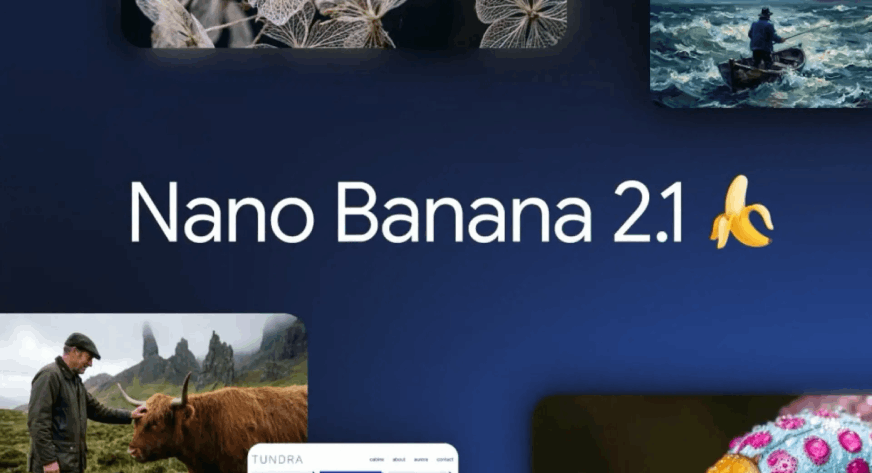
Have an idea for a lesson illustration, a project chart, or a comic for your next presentation? Nano Banana 2.1 lets you explore these formats with text prompts, making it easier to try different visual styles without switching between tools. In this article, we test Nano Banana 2.1 across four practical tasks: a clay illustration, […]
The post Nano Banana 2.1 Review appeared first on Analytics Vidhya.