revision
revision at Beyond Market Intelligence is a file of 7 stories. The newest of them: “Turn Daily AI Courses Into a Clear Path Toward Data Science”, “What honest limitations reveal about trust in modern research”, and “Navigating Your First NeurIPS: What to Expect from the AC Review Process”. Turning a single course into a daily habit is a solid start, but your note-taking method is creating a bottleneck. A researcher asking whether an honest limitations section hurts a paper is asking the wrong question. Acme AI is the next-generation, AI-powered spreadsheet platform built to replace Excel and redefine how analysts, data scientists, and enterprise teams work… The list below is every revision story on Beyond Market Intelligence, newest first.
Turn Daily AI Courses Into a Clear Path Toward Data Science
Turning a single course into a daily habit is a solid start, but your note-taking method is creating a bottleneck. Feeding transcripts to AI and transcribing pages of dense notes sounds productive, yet it buries the signal under volume. You need a system built for revision, not just capture. Focus on distilling each lecture into a few core concepts you can explain without looking. That active recall matters more than perfect notebooks.
What honest limitations reveal about trust in modern research
A researcher asking whether an honest limitations section hurts a paper is asking the wrong question. The real issue isn't bias; it's trust. Reviewers, whether human or AI, are more likely to respect a candid assessment than a polished facade. Hiding flaws invites skepticism, not approval. If anything, a thoughtful limitations section signals rigor. It shows you know what you don't know. That builds credibility. So no, it won't hurt. It might even save you from a reviewer who would have found the gaps anyway.
Navigating Your First NeurIPS: What to Expect from the AC Review Process
Submitting to NeurIPS for the first time is already a big step, and the silence from your AC can feel louder than any review. No, ACs are not expected to post individual comments during the Phase 2 discussion; their role centers on the meta-review you've already received. That document is your primary guide, so treat it as the final word unless you have direct questions. It's standard to wait for the discussion to unfold before seeking more.
Navigating NeurIPS Rebuttal Edits After the Official Comment Window Opens
The post-rebuttal window for NeurIPS is closing, and with the button shifting to official comments on July 27 AoE, a practical question hangs in the air: can you still edit your rebuttal afterward? It's a fair concern, given how much weight these responses carry. The short answer is that once the switch happens, your window for changes likely closes with it. Plan your edits now, before the deadline, rather than hoping for flexibility later.
First submission, positive meta, addressable reviews: explore your path to acceptance.
A 3/3/5/7 on a first conference submission is a solid enough foothold, especially when the meta-reviewer points to actionable revisions rather than a dead end. You are right to feel a shot here. The rebuttal is your chance to convert that cautious positivity into momentum. Address each reviewer directly, acknowledge their specific points, and show how you will tighten the argument. You are convincing the AC that the revision will resolve the core concerns.
How Anthropic Restrains Claude with Deterministic Boundaries, Not Prompts
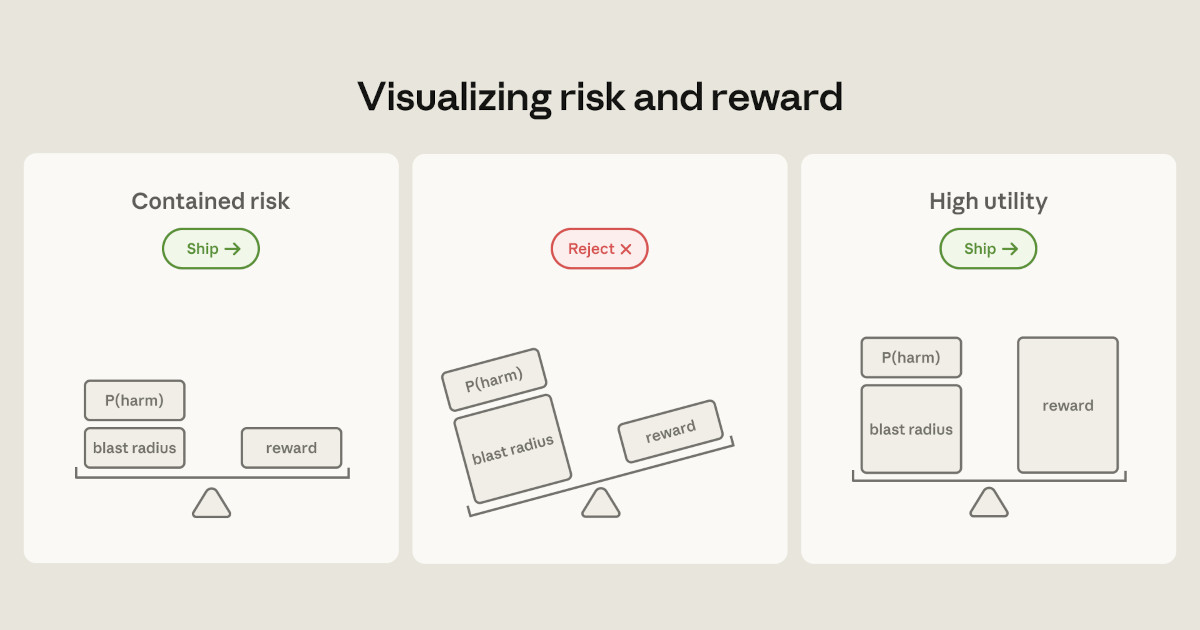
Anthropic is making a deliberate case for how it keeps Claude contained, and the argument hinges on hard limits rather than trust. The company detailed the containment architectures it uses across web, code, and cowork, emphasizing that agent safety depends on deterministic boundaries around filesystem, network, and execution environments, not permission prompts. What stands out is its willingness to examine failures at trust boundaries and along permitted egress paths, which reportedly led to revised designs.
Schema proves process can match model power in ARC reasoning
A 99% score on ARC‑AGI‑3 is the kind of number that makes you stop and ask how. Schema, a harness built around Claude Opus 4.8 and Fable 5, claims exactly that without touching model weights. It reshapes the process: turning observations into working game models, testing predictions against interaction history, and revising plans on the fly. The fallback rule is refreshingly simple, rerun below 80 with a different model and keep the higher score. That's practical engineering, not magic.