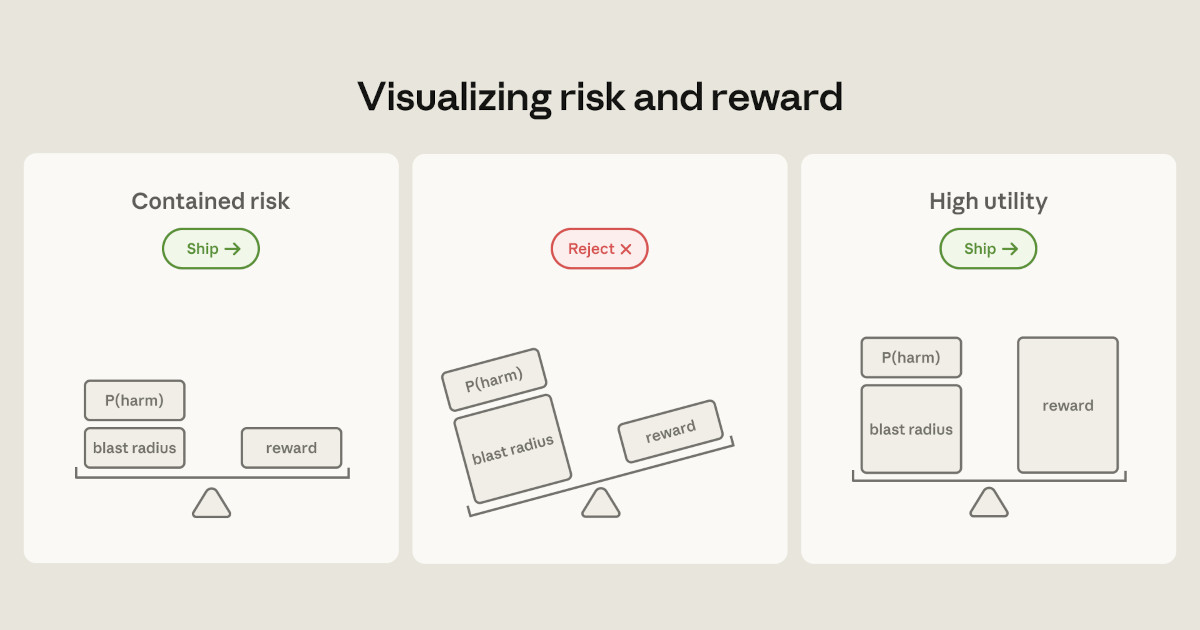
When Anthropic talks about agent safety, it rarely sounds like the breathless demos you see elsewhere. That is exactly why its latest disclosure on how it contains Claude across web, code, and collaborative work deserves your attention. The company's core argument is refreshingly grounded: safety comes from deterministic limits on an agent's filesystem, network, and execution environment, not from permission prompts or well-intentioned safeguards. That distinction matters because it shifts the burden from asking users to make wise security decisions in the moment to engineering systems where those decisions are already made for them. For anyone who has watched a chatbot fumble through a multi-step task, this is not abstract theory. It is the difference between a tool you trust with real work and one you babysit.
What stands out most is Anthropic's willingness to examine its own failures at trust boundaries and along permitted egress paths. That kind of candor is rare in an industry that prefers to announce wins rather than dissect near-misses. The practical lesson for users is straightforward: an agent that can only act within a tightly scoped sandbox is safer than one that asks for forgiveness after the fact. This philosophy also aligns with a broader pattern we are seeing across the sector. Consider how Anthropic Explores Akamai's Cloud for AI-Native Workloads signals a bet on infrastructure that prioritizes control and performance, or how Anthropic Founders Aim for Majority Voting Control Ahead of IPO reflects a leadership team intent on shaping its own governance. In both cases, the through-line is an obsession with agency, whether that means controlling your compute stack or controlling the boundaries of an AI's actions.
If you are a developer or a business user, the takeaway is not that you should avoid AI agents. It is that you should demand to know how they are contained. Ask your vendor whether their agent can write to your production database or only to a staging environment. Ask whether it can call external APIs at will or only through a monitored gateway. Anthropic is effectively telling you that the safest agent is one that cannot be tricked into doing something it was not designed to do, because the environment itself prevents it. That is a concrete, quotable standard: *The best safeguard is not a warning; it is an architecture that makes the dangerous action impossible.* That is the kind of clarity we would all benefit from as these tools become more capable. The question to watch now is how quickly other labs adopt the same discipline, because the difference between a safe agent and a reckless one is rarely the model, and almost always the box you put it in.